 Back
BackOrigin of Species and Macroevolution: Speciation and Reproductive Isolation
Study Guide - Smart Notes
 Tailored notes based on your materials, expanded with key definitions, examples, and context.
Origin of Species and Macroevolution (Chapter 24 (1st))
Introduction to Macroevolution and Speciation
Macroevolution refers to evolutionary changes that occur at or above the species level, including the formation of new species (speciation). Understanding speciation is fundamental to biology, as it explains the diversity of life and the mechanisms that drive evolutionary change.
Identification of Species
Definition of Species
A species is a group of organisms that maintains a distinctive set of attributes in nature. The scientific name of a species consists of the genus and specific epithet, such as Panthera leo for the lion.

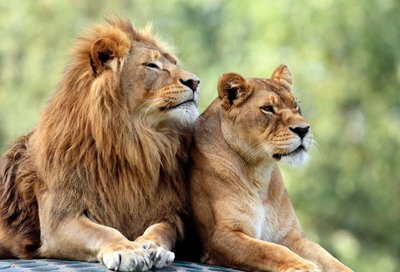
Number of Species and Classification Challenges
Currently, about 2 million species have been identified, but estimates of the total number range from 5 to 50 million. Identifying species can be difficult due to:
Subspecies: Groups within a species with different traits, but not enough to be separate species.
Ecotypes: Genetically distinct populations (especially in bacteria) adapted to local environments.
Species Concepts
Biologists use several concepts to define and identify species, depending on the organism:
Morphological Species Concept: Based on shared measurable traits.
Biological Species Concept: Based on the ability to interbreed and produce viable, fertile offspring.
Molecular Features: DNA sequences, gene order, chromosome structure and number.
Ecological Factors: Habitat and ecological niche.
Evolutionary Relationships: Phylogenetic trees and fossil records.
Morphological Species Concept
All individuals of a species share measurable traits that distinguish them from other species. This concept dates back to Linnaeus’s classification system and binomial nomenclature.
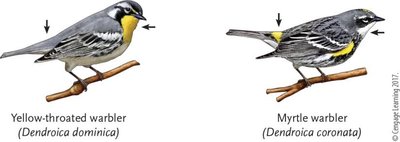
Drawbacks of Morphological Species Concept
Determining species by morphology alone can be problematic:
Members of the same species can look very different (e.g., dyeing poison frog, Dendrobates tinctorius).
Members of different species can look very similar (e.g., northern leopard frog, Rana pipiens vs. southern leopard frog, Rana utricularia).
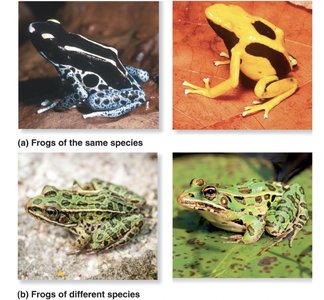
Biological Species Concept
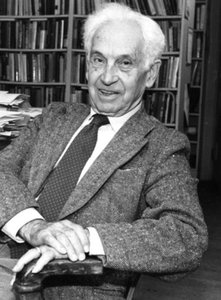
Defined by Ernst Mayr, a biological species is a group of interbreeding individuals that are reproductively isolated from other groups. Members can interbreed in nature to produce viable, fertile offspring, but cannot successfully interbreed with members of other species.
Problems with the Biological Species Concept
Reproductive isolation may be difficult to determine in nature.
Some groups can interbreed but do not.
Does not apply to asexual organisms.
Cannot be applied to extinct organisms.
Molecular Traits
Molecular features such as DNA sequences, gene order, chromosome structure, and chromosome number are used to identify similarities and differences among populations. However, it can be difficult to draw clear boundaries between groups.
Ecological Factors
Species can be distinguished by their habitat and ecological niche. Many bacterial species are categorized based on ecological factors, but similar growth characteristics can make this challenging.
Evolutionary Relationships
Phylogenetic trees and fossil records are used to describe relationships between ancestral and modern species. DNA sequences are also important in constructing evolutionary relationships.
Reproductive Isolating Mechanisms
Overview
Reproductive isolating mechanisms prevent interbreeding between different species, maintaining distinct gene pools. These mechanisms are a consequence of genetic changes as species adapt to their environments.
Intraspecific mating: Mating within the same species.
Interspecies hybrid: Offspring produced by mating between different species, usually with reduced fitness.
Types of Reproductive Isolation
Reproductive isolation can occur before or after zygote formation:
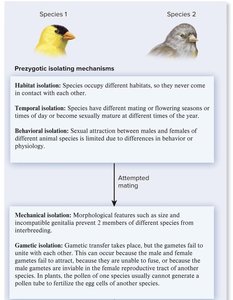
Prezygotic isolating mechanisms: Occur before zygote formation.
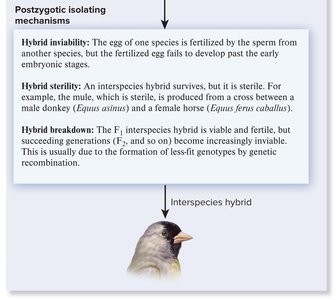
Postzygotic isolating mechanisms: Occur after zygote formation.
Prezygotic Isolating Mechanisms
Types of Prezygotic Isolation
Prezygotic mechanisms prevent the formation of a zygote. These include:
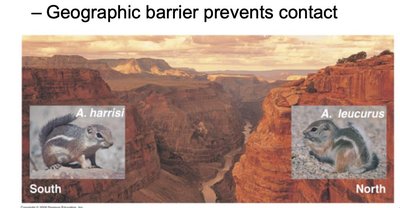
Ecological (Spatial) Isolation: Species occupy different habitats and never come into contact.
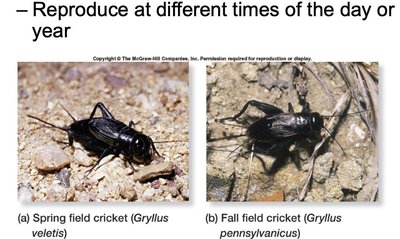
Temporal Isolation: Species reproduce at different times of the day or year.
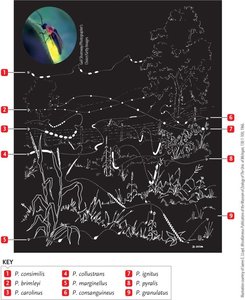
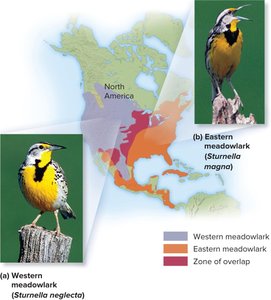
Behavioural Isolation: Differences in mating signals or behaviors prevent mating.
Mechanical Isolation: Morphological differences prevent successful mating.
Gametic Isolation: Gametes are incompatible and cannot fuse.
Ecological Isolation
Species are separated by geographic barriers, preventing contact and interbreeding.
Temporal Isolation
Species reproduce at different times, preventing interbreeding.
Behavioural Isolation
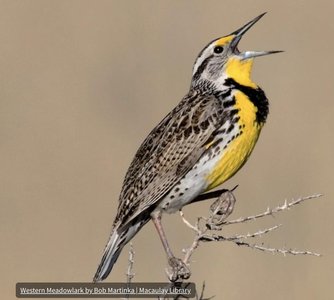
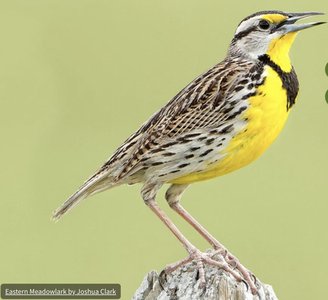
Differences in mating behaviors, such as song or courtship rituals, prevent mating between species. Changes in song can be a key factor in mate choice.
Mechanical Isolation
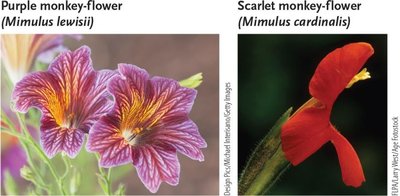
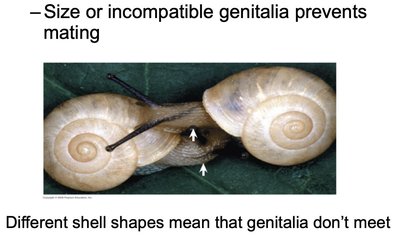
Physical differences in reproductive structures prevent successful mating. For example, differences in flower shape or animal genitalia can prevent mating.

Gametic Isolation
Gametes from different species are unable to fuse, preventing fertilization.
Postzygotic Isolating Mechanisms
Types of Postzygotic Isolation
Postzygotic mechanisms block the development of viable, fertile individuals after fertilization. These include:
Hybrid inviability: Fertilized egg fails to develop past early embryonic stages.
Hybrid sterility: Hybrid offspring survive but are sterile (e.g., mule).
Hybrid breakdown: F1 hybrids are viable and fertile, but subsequent generations become inviable or sterile due to genetic recombination.
Summary Table: Prezygotic and Postzygotic Isolating Mechanisms
Mechanism | Description | Example |
|---|---|---|
Ecological Isolation | Species occupy different habitats | Chipmunks separated by canyon |
Temporal Isolation | Species reproduce at different times | Spring vs. fall crickets |
Behavioural Isolation | Differences in mating signals | Meadowlark song |
Mechanical Isolation | Physical incompatibility | Monkey-flowers, snails |
Gametic Isolation | Gametes cannot fuse | Fish, sea urchins |
Hybrid Inviability | Hybrid embryo fails to develop | Egg fertilized but not viable |
Hybrid Sterility | Hybrid survives but is sterile | Mule (horse × donkey) |
Hybrid Breakdown | F1 hybrids viable, later generations inviable | Genetic recombination issues |
Key Takeaways
Speciation is central to understanding biodiversity and evolutionary processes.
Multiple concepts and mechanisms are used to define and distinguish species.
Reproductive isolating mechanisms are critical for maintaining species boundaries.
