 Back
BackOrigins of Life and Major Evolutionary Transitions
Study Guide - Smart Notes
 Tailored notes based on your materials, expanded with key definitions, examples, and context.
Origins of Life on Earth
Early Earth and the Formation of Life
The study of life's origins explores how living systems first arose from non-living matter on early Earth. Scientists use laboratory experiments and geological evidence to reconstruct these processes.
Abiotic Synthesis: Refers to the formation of organic molecules from inorganic precursors without biological intervention.
Key Question: How did life form, and what evidence supports these hypotheses?
The Miller-Urey Experiment
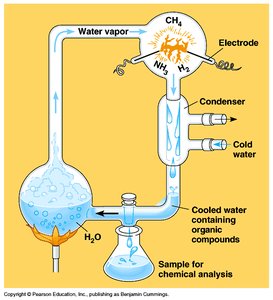
In the 1950s, Stanley Miller and Harold Urey simulated early Earth's atmosphere to test the abiotic synthesis of organic molecules.
Experimental Setup: Used methane (CH4), ammonia (NH3), water, and electric sparks to mimic lightning.
Results: Successfully synthesized amino acids, demonstrating that life's building blocks could form under prebiotic conditions.
Limitations: Later evidence suggested early Earth's atmosphere contained more CO2 and N2 than methane and ammonia.
Atmospheric Conditions and Chemical Reactions
The composition of Earth's early atmosphere influenced the types of chemical reactions possible.
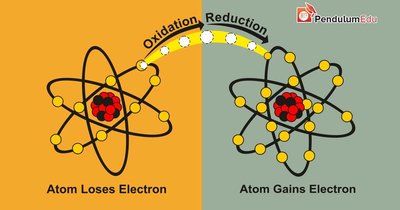
Oxidizing vs. Reducing Atmosphere: Early Earth had a reducing atmosphere (low O2), favoring electron-adding reactions and molecular bonding.
Modern Atmosphere: High O2 content inhibits abiotic synthesis because oxygen tends to accept electrons, preventing the formation of complex molecules.
Defining Features of Life
What Makes Something Alive?
Biologists define life by a set of fundamental properties. Tibor Gánti's chemoton model (1971) proposed three essential features:
Lipid Bilayer: Separates the living entity from its environment.
Metabolism: Chemical processes that sustain life.
Self-Replication: Ability to reproduce and pass on genetic material.
Additional Properties of Life
Order: Living things are organized into coordinated structures.
Sensitivity to Stimuli: Ability to respond to environmental changes.
Growth and Development: Change over time through regulated processes.
Reproduction: Transmission of genetic information to offspring.
Homeostasis: Maintenance of internal stability.
Energy Processing: Acquisition and use of energy for cellular functions.
Origin of Replication: The RNA World Hypothesis
RNA as the First Self-Replicating Molecule
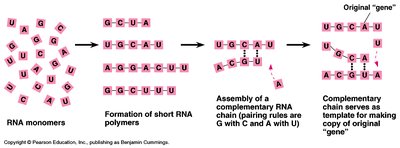
The RNA World Theory posits that RNA was the first molecule capable of both storing genetic information and catalyzing chemical reactions.
Self-Replication: RNA can form complementary strands, enabling passive replication.
Ribozymes: RNA molecules that act as biological catalysts.
Selection: Replicating RNA strands that produced useful molecules persisted, leading to the evolution of more stable DNA.
Modern Research on Abiotic Synthesis
Recent studies use computer models and laboratory simulations to explore nucleotide formation and polymerization.
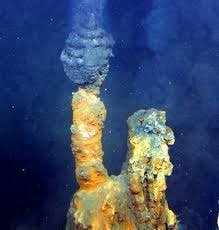
Geothermal Vents: Alkaline, mineral-rich fluids at oceanic vents provide the chemistry needed for nucleotide synthesis.
Experimental Evidence: Laboratory simulations of hydrothermal vents have produced RNA molecules.
Protocells and the Transition to Cellular Life
Formation of Protocells
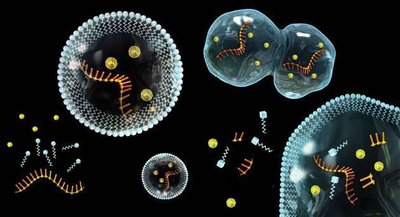
Protocells are simple, cell-like structures formed from abiotic molecules such as liposomes.
Encapsulation: Lipid membranes can trap liquid and molecules inside, forming a protocytoplasm.
Accumulation: RNA and proteins may have become concentrated within protocells, eventually leading to cell division.
Major Evolutionary Transitions
Timeline of Life on Earth
The history of life is marked by several major evolutionary changes, including the origin of prokaryotes, eukaryotes, multicellularity, and the colonization of land.
Prokaryotes: First life forms, lacking a nucleus.
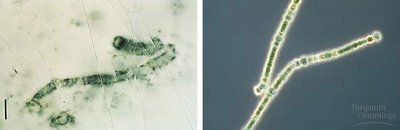
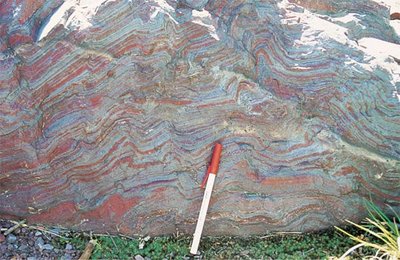
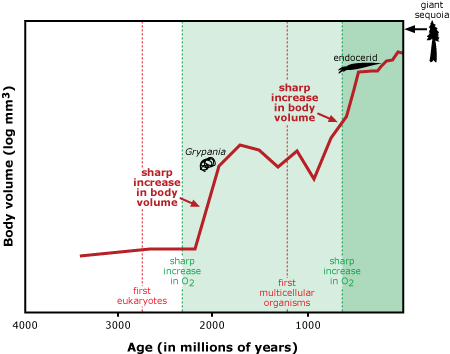
Atmospheric Oxygen: Photosynthesis by cyanobacteria increased O2 levels.
Eukaryotes: Cells with a nucleus and organelles.
Multicellularity: Organisms composed of multiple, specialized cells.
Colonization of Land: Plants and animals adapted to terrestrial environments.
Changes in the Atmosphere
Anaerobic Life: Dominated early Earth (3.5–2.0 billion years ago).
Photosynthesis: Evolved in cyanobacteria, leading to the "Great Oxidation Event" and new metabolic pathways.
Multicellular Organisms: First appeared around 1 billion years ago.
Energy Acquisition: Chemosynthesis and Photosynthesis
Energy Sources for Life
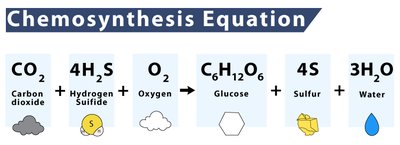
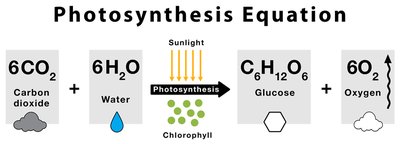
Organisms obtain energy through chemosynthesis or photosynthesis, converting it into ATP for cellular functions.
Chemosynthesis: Energy from the oxidation of sulfur bonds.
Photosynthesis: Energy from sunlight.
Aerobic Respiration: Uses oxygen to convert glucose to ATP.
Anaerobic Respiration: Occurs without oxygen.
Evolution of Eukaryotes and Multicellularity
Prokaryotes vs. Eukaryotes
Prokaryotes: Lack a nucleus and membrane-bound organelles.
Eukaryotes: Possess a nucleus and various organelles.
Endosymbiotic Theory
The endosymbiotic theory explains the origin of mitochondria and chloroplasts in eukaryotic cells.
Compartmentalization: Organelles allow specialized chemical reactions.
Symbiosis: Early eukaryotes engulfed free-living bacteria, forming mitochondria (aerobic bacteria) and chloroplasts (photosynthetic bacteria).
Genomic Evidence: Both organelles have their own genomes.
Multicellularity
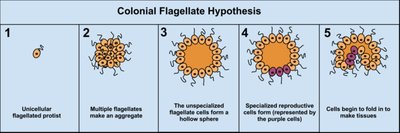
Multicellularity evolved multiple times in Eukarya and some prokaryotes.
Colonial Theory: Single-celled organisms formed colonies and developed specialized functions.
Incomplete Cytokinesis: Daughter cells failed to separate, resulting in multicellular structures.
Colonization of Land
Adaptations in Plants
Plants evolved several adaptations to survive on land.
Desiccation Prevention: Waxy coverings and stomata.
Support Structures: Lignin for rigidity.
Vascular System: Roots, xylem, and phloem for transport.
Reproductive Strategies: Adaptations for gamete dispersal without water.
Adaptations in Animals
Animals developed features for terrestrial life.
Limbs: For locomotion.
Lungs: For oxygen distribution.
Water Conservation: Impermeable skin, kidneys, sweat glands.
Support Structures: Exoskeletons, cartilage, bones.
Thermoregulation: Feathers and fur.
Fossil Record and Evolutionary Sequence
The fossil record documents the transition from aquatic to terrestrial life: fishes → amphibians → reptiles → birds → mammals. 
Summary Table: Major Evolutionary Transitions
Event | Approximate Time (bya) | Key Features |
|---|---|---|
Origin of Prokaryotes | 3.5 | Single-celled, anaerobic |
Photosynthesis in Cyanobacteria | 2.4 | Increase in atmospheric O2 |
Origin of Eukaryotes | 2.1 | Nucleus, organelles |
Multicellularity | 1.2 | Specialized cells, cooperation |
Colonization of Land | 0.5 | Adaptations for terrestrial life |
Conclusion
The origin and evolution of life on Earth involved complex chemical, cellular, and ecological transitions. Understanding these processes provides insight into the fundamental principles of biology and the diversity of life observed today.
