 Back
BackOsmoregulation: Balancing Water and Solutes in Animals
Study Guide - Smart Notes
 Tailored notes based on your materials, expanded with key definitions, examples, and context.
Osmoregulation and Osmolarity
Introduction to Osmoregulation
Osmoregulation is the process by which organisms regulate the balance of water and solutes within their bodies, ensuring cellular and physiological stability. This process is essential for survival in diverse environments, as it maintains the proper concentration gradients across cell membranes.
Osmosis: The movement of water across a selectively permeable membrane from a region of lower solute concentration to higher solute concentration.
Osmolarity: The total concentration of solute particles in a solution, measured in osmoles per liter (Osm/L). For example, human blood has an osmolarity of about 300 mOsm/L, while seawater is about 1,000 mOsm/L.
Isoosmotic solutions: Solutions with equal osmolarity; water moves equally in both directions across the membrane.
Hyperosmotic vs. Hypoosmotic: A hyperosmotic solution has a higher solute concentration, while a hypoosmotic solution has a lower solute concentration. Water moves from hypoosmotic to hyperosmotic regions.
Note: The terms isoosmotic, hypoosmotic, and hyperosmotic refer specifically to osmolarity, while isotonic, hypotonic, and hypertonic refer to the effect on animal cells.
Osmoregulatory Strategies in Animals
Osmoconformers vs. Osmoregulators
Animals employ two main strategies to maintain water balance:
Osmoconformers: Animals that are isoosmotic with their environment, primarily marine invertebrates. They do not actively regulate their internal osmolarity, which matches the surrounding water.
Osmoregulators: Animals that regulate their internal osmolarity independently of the environment. This allows them to inhabit diverse habitats, including freshwater and terrestrial environments.
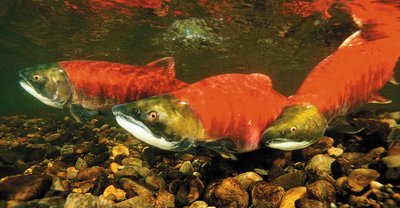
Most animals are stenohaline (tolerate only narrow changes in external osmolarity), while euryhaline animals can survive large fluctuations (e.g., salmon, barnacles).
Osmoregulation in Aquatic Environments
Marine Animals
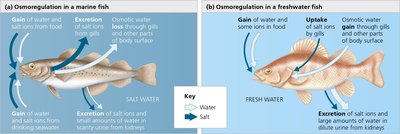
Marine invertebrates are typically osmoconformers, but marine vertebrates are osmoregulators facing dehydration due to the high osmolarity of seawater.
Marine bony fishes: Constantly lose water by osmosis and compensate by drinking seawater and excreting excess salts through gills and kidneys.
Sharks and chondrichthyans: Maintain high concentrations of urea and TMAO, making their body fluids slightly hyperosmotic to seawater, resulting in a slow influx of water and excretion of excess salts via urine and specialized glands.
Freshwater Animals
Freshwater animals are hyperosmotic to their environment and face the challenge of water influx and salt loss.
They excrete large amounts of dilute urine and actively uptake salts through gills and food.
Euryhaline fishes like salmon adjust their osmoregulatory mechanisms when migrating between fresh and salt water, aided by hormonal changes (e.g., increased cortisol for salt secretion in seawater).
Adaptations to Extreme and Terrestrial Environments
Animals in Temporary Waters: Anhydrobiosis
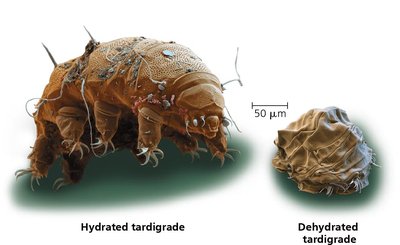
Some invertebrates, such as tardigrades, survive extreme dehydration by entering a dormant state called anhydrobiosis. They can lose nearly all body water and revive upon rehydration.
Adaptation: Accumulation of protective sugars like trehalose, which stabilize proteins and membranes during desiccation.
Applications: Insights from anhydrobiosis are used in biotechnology for room-temperature preservation of biological samples.
Land Animals
Terrestrial animals face constant threats of dehydration. Adaptations to minimize water loss include:
Body coverings (e.g., waxy exoskeletons, shells, keratinized skin)
Nocturnal behavior to reduce evaporative loss
Water intake from food and metabolic water production
Specialized physiological adaptations (e.g., camels tolerate high body temperature and water loss)
Case Study: Osmoregulation in Desert Mice
Experimental Data on Water Deprivation
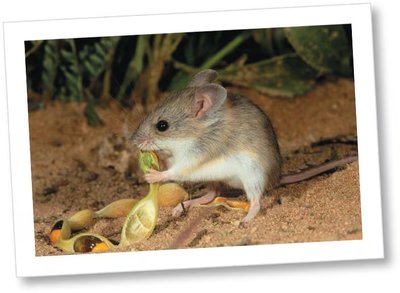
The sandy inland mouse (Pseudomys hermannsburgensis) can survive indefinitely on dry seeds without drinking water. Laboratory experiments measured urine and blood osmolarity and urea concentration under two conditions: unlimited water and no water for 35 days.
Access to Water | Mean Osmolarity (mOsm/L) | Mean Urea Concentration (mM) | ||
|---|---|---|---|---|
Urine | Blood | Urine | Blood | |
Part A: Unlimited | 490 | 350 | 330 | 7.6 |
Part B: None | 4,700 | 320 | 2,700 | 11 |
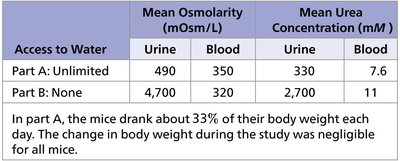
Without water, mice produce highly concentrated urine and maintain relatively stable blood osmolarity, demonstrating effective homeostatic regulation.
Urea concentration in urine increases dramatically under water deprivation, while blood urea rises only slightly.
Energetics of Osmoregulation
Energy Costs and Adaptations
Osmoregulation requires energy, especially when maintaining large osmotic gradients. The energy cost depends on:
The difference between internal and external osmolarity
The permeability of the animal's surface to water and solutes
The amount of active transport required
Animals minimize energy expenditure by adapting their body fluid composition to their environment, reducing the osmotic gradient when possible.
Transport Epithelia in Osmoregulation
Structure and Function
Transport epithelia are specialized layers of cells that regulate solute movement, crucial for both osmoregulation and excretion. These epithelia are often organized into tubular structures with large surface areas for efficient transport.
In vertebrates, the kidney is a key organ containing transport epithelia.
Marine birds and reptiles possess nasal salt glands with transport epithelia that actively secrete excess salt, allowing them to drink seawater without dehydration.
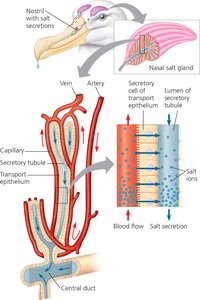
Example: The albatross uses nasal salt glands to excrete concentrated salt solutions, enabling survival on seawater. In contrast, humans cannot survive on seawater due to the inability to excrete highly concentrated salt.
Concept Check: Key Questions
Why does the movement of salt from water to blood in freshwater fish require ATP? (Active transport against a concentration gradient.)
Why are there no freshwater osmoconformers? (Freshwater environments are too dilute for animal cells to function isoosmotically.)
How does fur insulation relate to osmoregulation in camels? (Fur reduces water loss by minimizing heat gain and the need for evaporative cooling.)
