 Back
Overview of Animal Diversity and Animal Body Plans
Study Guide - Smart Notes
 Tailored notes based on your materials, expanded with key definitions, examples, and context.
Overview of Animal Diversity
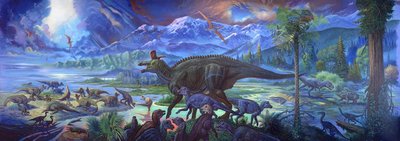
San Diego in the Cretaceous Period
The Cretaceous Period (100–66 million years ago) was a time of significant animal diversity, including the presence of dinosaurs and other prehistoric life forms. This period is important for understanding the evolutionary history and diversity of animals.
Characteristics of Animals
Defining Features of Animals
Animals are distinguished from other life forms by several key characteristics:
Multicellularity: Animals are composed of multiple cells, allowing for division of labor and specialization.
Eukaryotic: Animal cells contain membrane-bound organelles, including a nucleus.
Heterotrophy: Animals obtain energy by ingesting organic material from their environment.
Lack of Cell Walls: Unlike plants and fungi, animal cells do not have cell walls. Instead, they are held together by an extracellular matrix, with collagen as the most abundant protein.
Tissues: Most animals have tissues—groups of similar cells that function as a unit.
Distinguishing Animals from Plants and Fungi
Animals can be distinguished from plants and fungi by the following:
Cell Wall Composition: Plants have cell walls made of cellulose, fungi have cell walls made of chitin, and animals lack cell walls.
Mode of Nutrient Acquisition: Animals ingest food, plants are phototrophic (photosynthesize), and fungi absorb nutrients.
Dominant Life Cycle: Animals have a dominant diploid stage, while fungi often have a dominant haploid stage.
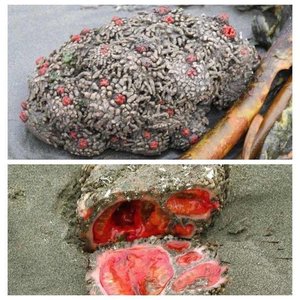
Example: Pyura chilensis
Pyura chilensis is a colonial tunicate, a close relative of vertebrates. It is an animal, not a plant or fungus, and can be identified by its lack of cell walls and its mode of nutrient acquisition.
Animal Life History
Reproduction and Development
Most animals reproduce sexually, with the diploid stage dominating the life cycle. The process involves:
Meiosis: Formation of haploid gametes.
Fertilization: Fusion of gametes restores diploid number, forming a zygote.
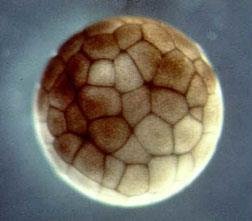
Cleavage: The zygote undergoes mitosis to form a multicellular blastula.
Gastrulation: Formation of embryonic germ layers, resulting in a gastrula.
Larval Stage: Many animals have a larval stage that is morphologically distinct from the adult, followed by metamorphosis.
Embryonic Germ Layers
Embryonic germ layers are cell layers that give rise to tissues in adult animals:
Ectoderm: Outermost layer; forms skin and nervous system.
Endoderm: Innermost layer; forms lining of digestive tract.
Mesoderm: Middle layer (only in triploblastic animals); forms muscles and most organs.
Animals are classified as:
Diploblastic: Two germ layers (ectoderm and endoderm); found in radial animals.
Triploblastic: Three germ layers; found in bilateral animals.
Larval Forms
Larvae are immature forms of animals that differ morphologically from adults. Examples include bryozoan larvae, butterfly larvae, and starfish larvae.
Animal Body Plans
Body Symmetry
Most animals exhibit some form of body symmetry:
Radial Symmetry: Any plane through the central axis divides the animal into equal halves. Common in sessile animals (e.g., sea anemones).
Bilateral Symmetry: Only one plane divides the animal into equal halves. Associated with motile animals and cephalization (development of a head region).
Asymmetry: No definable symmetry (e.g., sponges).
Body Cavities
Triploblastic animals may possess a body cavity (coelom):
Coelomate: True coelom, a fluid-filled cavity lined by mesoderm. Functions as a hydrostatic skeleton and isolates organs.
Haemocoelomate: Hemocoel, a fluid-filled cavity between mesoderm and endoderm, transports nutrients and waste.
Acoelomate: Lacks fluid-filled cavities; body is compact.
Type | Body Cavity | Function |
|---|---|---|
Coelomate | True coelom | Hydrostatic skeleton, organ isolation |
Haemocoelomate | Hemocoel | Nutrient/waste transport |
Acoelomate | None | Compact body |
Early Animal Development: Protostomes vs. Deuterostomes
Animals are categorized based on early developmental events:
Cleavage: Protostomes have spiral and determinate cleavage; deuterostomes have radial and indeterminate cleavage.
Coelom Formation: Protostomes form coelom from solid masses of mesoderm; deuterostomes form coelom from folds of archenteron.
Fate of Blastopore: In protostomes, the mouth develops from the blastopore; in deuterostomes, the anus develops from the blastopore.
Feature | Protostome | Deuterostome |
|---|---|---|
Cleavage | Spiral, determinate | Radial, indeterminate |
Coelom Formation | Solid mesoderm splits | Archenteron folds |
Blastopore Fate | Mouth | Anus |
Animal Phylogeny & Evolution
Major Clades and Evolutionary Relationships
Animals are part of the Eukarya domain and share a common ancestor. The sister taxa to animals are choanoflagellates, unicellular or colonial protists that are structurally similar to collar cells (choanocytes) in sponges.
Monophyletic: All animals share a common ancestor.
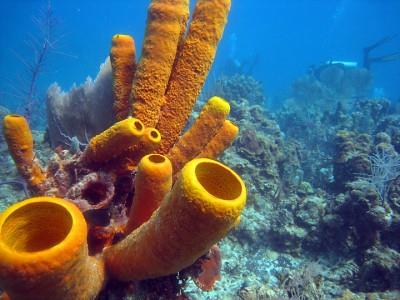
Sponges: Sister to all other animals.
Eumetazoa: Clade of animals with true tissues.
Bilateria: Most animals belong to this clade, characterized by bilateral symmetry and three germ layers.
Invertebrates vs. Vertebrates: Most bilaterians are invertebrates; only Chordata are vertebrates (have a backbone).
Evolutionary Timeline
The common ancestor of all animals lived approximately 770–700 million years ago. Major animal clades appeared during the Cambrian Explosion (~535–525 million years ago), which saw a rapid diversification of animal forms, most of which were bilaterians with complete digestive systems.
Choanoflagellates and Animal Origins
Choanoflagellates are heterotrophic filter feeders and are considered the closest relatives to animals. Their structure is similar to the collar cells found in sponges, supporting the evolutionary link.
Summary Table: Animal Phylogeny
Clade | Key Features |
|---|---|
Metazoa | Multicellular animals |
Eumetazoa | True tissues |
Bilateria | Bilateral symmetry, three germ layers |
Deuterostomia | Anus develops from blastopore |
Lophotrochozoa | Distinct larval stage (trochophore) |
Ecdysozoa | Molting of exoskeleton |
Conclusion
Animals are multicellular, eukaryotic heterotrophs that ingest their food, lack cell walls, and possess specialized tissues. Their diversity is reflected in body plans, developmental processes, and evolutionary relationships. Understanding these features is fundamental to the study of animal biology and the broader field of General Biology.
