 Back
Overview of Invertebrate Body Plans: Flatworms, Roundworms, and Segmented Worms
Study Guide - Smart Notes
 Tailored notes based on your materials, expanded with key definitions, examples, and context.
Overview of Invertebrate Body Plans
Introduction
This study guide covers the comparative anatomy and physiology of three major groups of invertebrates: flatworms (Platyhelminthes), roundworms (Nematoda), and segmented worms (Annelida). These phyla illustrate key evolutionary advances in body structure, organ systems, and modes of life, and are foundational for understanding animal diversity.
Flatworms (Phylum Platyhelminthes)
Body Structure and Organization
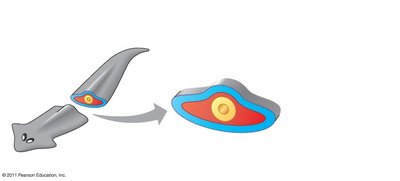
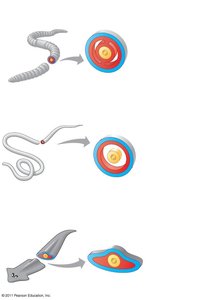
Acoelomate: Flatworms lack a body cavity (coelom); their bodies are solid except for the digestive cavity.
Triploblastic: Composed of three germ layers: ectoderm, mesoderm, and endoderm.
Bilateral symmetry: Body has distinct head and tail ends, and right and left sides are mirror images.
Digestive System
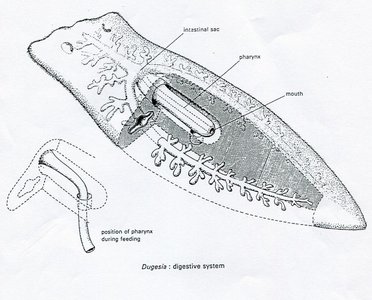
Gastrovascular cavity: A single opening serves as both mouth and anus; digestion is both extracellular and intracellular.
Pharynx: Muscular tube that can be extended out of the body to suck up food.
Example: Dugesia (planarian) uses its pharynx to feed on small animals and detritus.
Nervous and Sensory Systems
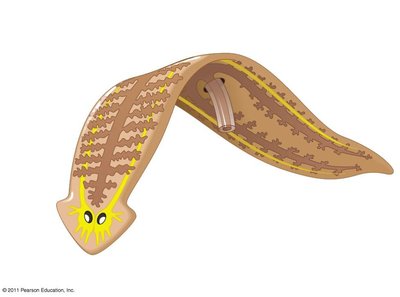
Cephalization: Concentration of nerve tissue and sensory organs at the anterior end (head).
Ventral nerve cords: Paired nerve cords run the length of the body, connected by transverse nerves.
Eyespots: Light-sensitive organs that help the animal detect the direction of light.
Excretory System
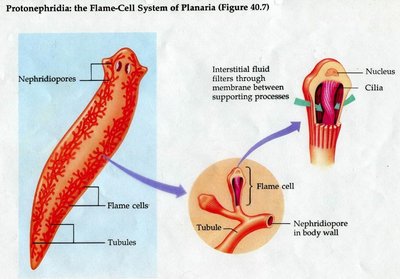
Protonephridia (Flame-cell system): Specialized cells (flame cells) remove excess water and waste from the body fluids.
Nephridiopores: Openings through which waste is expelled.
Parasitic Flatworms: Flukes and Tapeworms
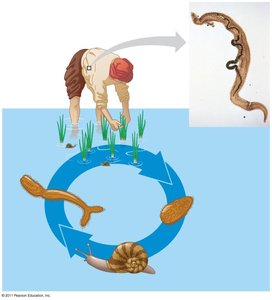
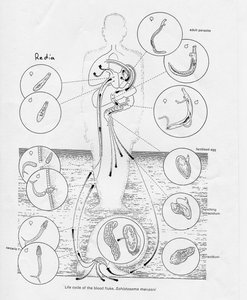
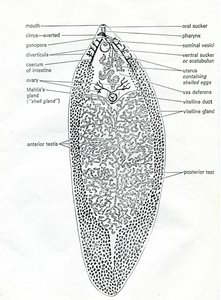
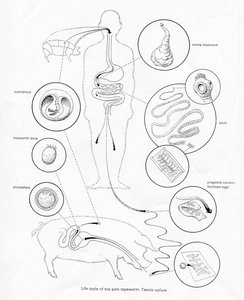
Flukes (Trematoda): Internal parasites with complex life cycles involving multiple hosts (e.g., Schistosoma).
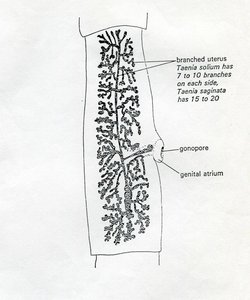
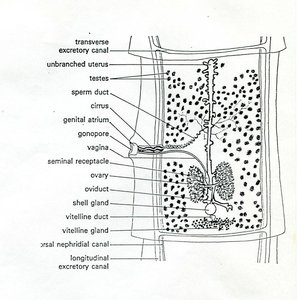
Tapeworms (Cestoda): Intestinal parasites with a body divided into segments (proglottids); lack a digestive system and absorb nutrients through their body surface.
Roundworms (Phylum Nematoda)
Body Structure and Organization
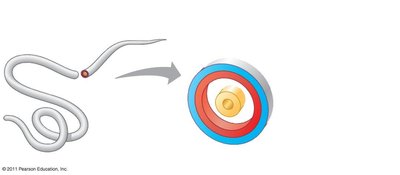
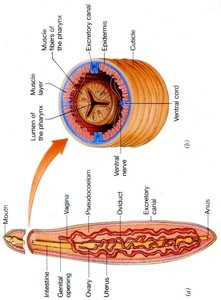
Pseudocoelomate: Body cavity (pseudocoelom) is not completely lined by mesoderm-derived tissue.
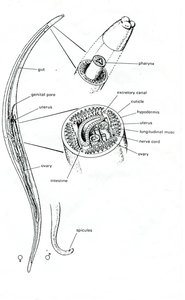
Unsegmented, cylindrical body: Covered by a tough cuticle that is periodically molted.
Complete digestive tract: Separate mouth and anus, allowing for a one-way flow of food.
Internal Anatomy
Longitudinal muscles: Allow for thrashing movement.
Simple excretory system: Excretory canals run along the body, removing metabolic waste.
Reproductive system: Most nematodes are dioecious (separate sexes).
Segmented Worms (Phylum Annelida)
Body Structure and Segmentation
Coelomate: True body cavity completely lined by mesoderm-derived tissue.
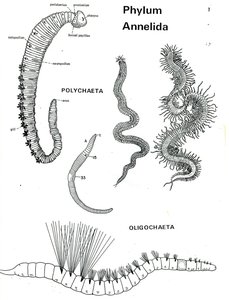
Segmented body: Body divided into repeated segments, each containing similar sets of organs.
Examples: Earthworms, leeches, and polychaetes.
Internal Anatomy of Earthworms
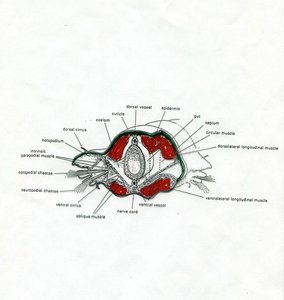
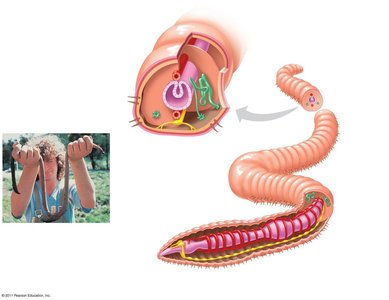
Body wall: Consists of circular and longitudinal muscles, epidermis, and cuticle.
Coelom: Fluid-filled cavity that acts as a hydrostatic skeleton.
Digestive system: Includes mouth, pharynx, esophagus, crop, gizzard, and intestine.
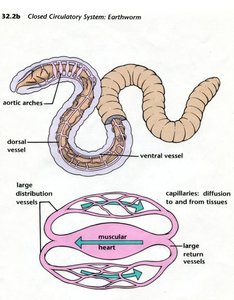
Closed circulatory system: Blood is contained within vessels; dorsal and ventral vessels connected by aortic arches (hearts).
Nervous system: Cerebral ganglia (brain), ventral nerve cord with segmental ganglia.
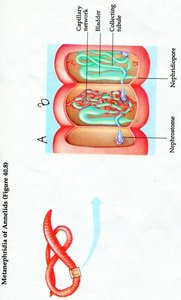
Excretory System: Metanephridia
Metanephridia: Excretory organs in each segment that filter coelomic fluid and expel waste through nephridiopores.
Locomotion and Segmentation
Movement: Coordinated contraction of circular and longitudinal muscles, aided by setae (bristles) for anchoring.
Segmentation: Allows for more efficient and flexible movement.
Comparative Table: Body Cavities in Invertebrates
Body Plan | Body Cavity | Example Phylum | Key Features |
|---|---|---|---|
Acoelomate | None | Platyhelminthes | Solid body, gastrovascular cavity |
Pseudocoelomate | Pseudocoelom | Nematoda | Body cavity not fully lined by mesoderm |
Coelomate | Coelom | Annelida | True body cavity, segmentation |
Summary
Flatworms, roundworms, and segmented worms represent major evolutionary steps in animal body plans.
Key differences include the presence and type of body cavity, segmentation, and complexity of organ systems.
Understanding these groups provides insight into the diversity and adaptation of invertebrate animals.
