 Back
parasite lec 11
Study Guide - Smart Notes
 Tailored notes based on your materials, expanded with key definitions, examples, and context.
Parasites and Evolution
Introduction
Parasites play a significant role in the evolution of sexual reproduction and the maintenance of genetic diversity in host populations. This section explores the evolutionary interplay between parasites and their hosts, focusing on the Red Queen hypothesis, the advantages of sexual reproduction, and the unique case of the reproductive parasite Wolbachia.
Sexual vs. Asexual Reproduction
Why Sexual Reproduction?
Sexual reproduction (SR) involves the combination of genetic material from two parents, resulting in genetically diverse offspring.
Asexual reproduction produces genetically identical offspring, often giving a two-fold reproductive advantage since all individuals can reproduce.
Despite the apparent advantage of asexuality, sexual reproduction is widespread, suggesting evolutionary benefits that offset its costs.
Advantages of Sexual Reproduction
Recombinational DNA repair: Sexual reproduction allows for the repair of damaged DNA by providing a homologous template.
Muller's Ratchet: In asexual populations, deleterious mutations accumulate irreversibly, while sexual reproduction can eliminate these mutations through recombination.
Genetic diversity: Sexual reproduction shuffles genes, producing offspring with new combinations that may be better suited to changing environments.
Sexual Reproduction as a Response to Parasites: The Red Queen Hypothesis
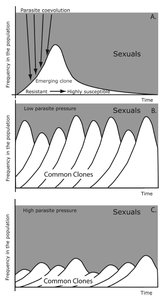
Red Queen Hypothesis: Proposes that sexual reproduction is maintained because it enables hosts to rapidly generate genetic diversity, helping them keep pace with evolving parasites.
Parasites adapt to infect the most common host genotypes; sexual reproduction creates rare or novel genotypes that may escape infection.
This evolutionary arms race is likened to the Red Queen's race in Alice in Wonderland, where continuous adaptation is necessary just to maintain relative fitness.
Empirical Evidence for the Red Queen Hypothesis
Experimental Studies
Kerstes et al. (2012): Flour beetles coevolving with parasites showed increased recombination rates, supporting the Red Queen hypothesis.
Jokela et al. (2009): In New Zealand snails, sexual populations were more stable over time compared to asexuals, which experienced population booms and busts.
Host-Parasite Systems
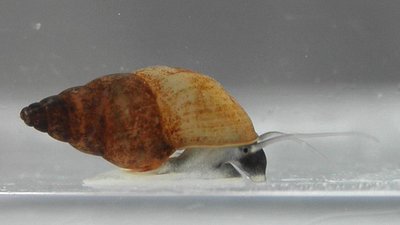
Snails and flukes: Sexual snails are more common in populations with high parasite pressure.
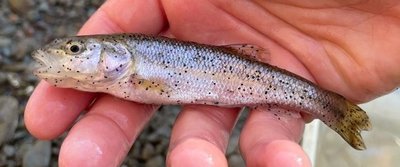
Minnows and black spot disease: Asexual minnows are more susceptible to parasite outbreaks.
Parasites and the Evolution of Sexual Traits
Sexual Selection and Parasite Resistance
In many species, males display exaggerated traits (e.g., bright colors, long tails) that are subject to female choice.
Hamilton & Zuk Hypothesis (1982): Females prefer males with pronounced secondary sexual traits because these traits signal parasite resistance.
Heritable variation in parasite resistance is maintained through ongoing host-parasite coevolution.
Wolbachia: A Reproductive Parasite
Introduction to Wolbachia
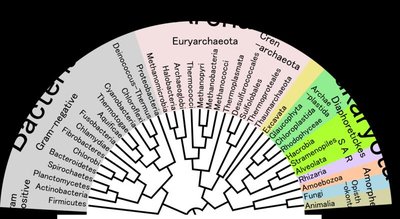
Wolbachia are intracellular α-proteobacteria found in up to 70% of arthropod species and many nematodes.
They manipulate host reproduction to enhance their own transmission, often resulting in dramatic effects on host populations.
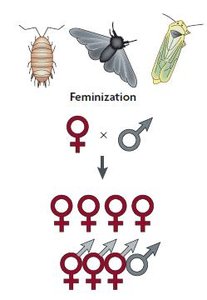
Effects of Wolbachia on Hosts
Feminization: Converts genetic males into functional females.
Cytoplasmic incompatibility: Causes reproductive failure when infected males mate with uninfected females or females infected with a different Wolbachia strain.
Parthenogenesis: Induces female reproduction without fertilization, reducing the proportion of males.
Male killing: Selectively kills male embryos.
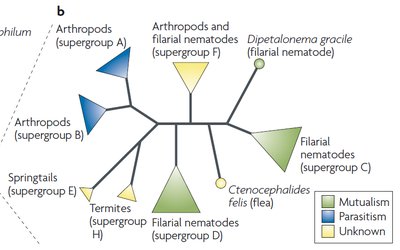
Wolbachia: From Parasitism to Mutualism
In some nematodes, Wolbachia is essential for normal development and fertility, forming a mutualistic relationship.
In arthropods, Wolbachia can shift from being parasitic to mutualistic, sometimes increasing host fecundity or providing essential nutrients.
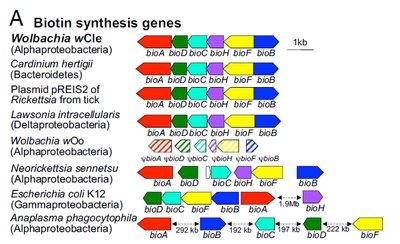
Wolbachia and Vitamin B7 (Biotin) Synthesis
Some Wolbachia strains provide essential vitamins, such as biotin (vitamin B7), to their hosts.
In the bedbug Cimex lectularius, dependence on Wolbachia for biotin synthesis has led to an obligate mutualism.
Gene transfer events have enabled Wolbachia to acquire and express biotin synthesis genes, benefiting both bacterium and host.
Summary Table: Effects of Wolbachia on Arthropod Hosts
Effect | Description | Outcome |
|---|---|---|
Feminization | Genetic males develop as females | Increased proportion of females |
Parthenogenesis | Females reproduce without males | All-female offspring |
Male killing | Male embryos die during development | Female-biased sex ratio |
Cytoplasmic incompatibility | Reproductive failure in incompatible matings | Spread of Wolbachia in population |
Conclusion
Parasites, particularly Wolbachia, have profound effects on the evolution of sexual reproduction and host biology. The Red Queen hypothesis provides a compelling explanation for the maintenance of sex in the face of parasitism, while Wolbachia demonstrates how reproductive parasites can drive evolutionary transitions from parasitism to mutualism.
