 Back
Parasitism and Mutualism: Symbiotic Relationships in Biology
Study Guide - Smart Notes
 Tailored notes based on your materials, expanded with key definitions, examples, and context.
Parasitism and Mutualism
Symbiosis: Types and Definitions
Symbiosis refers to the intimate and prolonged association between two or more organisms of different species. These relationships can be classified based on their effects:
Mutualism (+/+): Both organisms benefit.
Parasitism (+/-): One organism benefits at the expense of the other.
Commensalism (+/0): One organism benefits, the other is unaffected.
Parasites are symbionts that live on or within their host for a period, drawing resources without usually killing the host.
Parasites Draw Resources from Hosts
Parasites are typically much smaller than their hosts, highly specialized, and reproduce rapidly. They benefit from food, habitat, and dispersal, while hosts may suffer stunted growth, emaciation, or behavioral changes.
Microparasites: Small, short generation time, rapid development and multiplication within the host. Examples: Viruses, bacteria, protists.
Macroparasites: Larger, longer generation time, do not complete their life cycle within a single host. Examples: Flatworms, flukes, roundworms, lice, fleas, fungi.
Parasites can be transmitted directly from host to host or via carriers/intermediate hosts.
Host as Habitat: Ectoparasites and Endoparasites
The host provides a diverse habitat for parasites:
Ectoparasites: Live on the outside of the host (skin, feathers, scales, hair).
Endoparasites: Live within the host (blood, organs, tissues).
Some plants are parasitic on other plants, using specialized structures:
Haustorium: Modified root that penetrates host tissues.
Hemiparasites: Photosynthetic plants obtaining water and nutrients from host xylem.
Holoparasites: Nonphotosynthetic plants using host phloem and xylem for carbon, water, and nutrients.
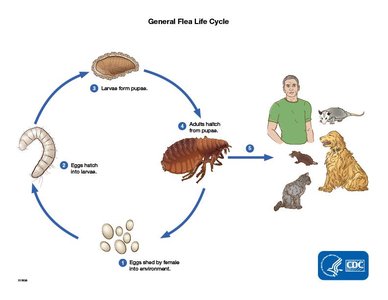
General Flea Life Cycle
Fleas are macroparasites that undergo a complex life cycle involving multiple stages:
Eggs: Shed by female fleas into the environment.
Larvae: Hatch from eggs and eventually form pupae.
Pupae: Develop into adult fleas.
Adults: Hatch from pupae and infest hosts such as humans, cats, dogs, and rodents.
Mutualisms: Diverse Species Interactions
Mutualism is a symbiotic relationship where both organisms benefit. Benefits include resources, protection, reduced competition, and enhanced reproduction. Mutualists can be:
Obligate: Essential for survival.
Facultative: Not essential, but beneficial.
Specialist: Interact with specific partners.
Generalist: Interact with many partners.
Examples:
Corals and Zooxanthellae: Corals obtain carbon from photosynthetic algae; algae receive shelter and nutrients.
Lichens: Fusion of fungus and algae into a thallus; fungus protects algae and provides water/nutrients.
Mutualisms in Nutrient Transfer
Many herbivorous mammals, birds, and lizards rely on microorganisms to digest cellulose. Ruminant mammals have multi-chambered stomachs housing bacteria and protists that break down plant material.
Legumes and Rhizobium: Legumes attract rhizobia, which form root nodules. The plant receives nitrogen; bacteria receive carbon and nutrients.
Defensive Mutualisms
Some mutualisms provide defense against predators or herbivores:
Endophytic fungi: Increase plant growth, produce alkaloids toxic to grazers.
Acacia trees and ants: Ants protect trees from herbivores.
Cleaner shrimp/fish: Remove ectoparasites and dead tissue from fish.
Oxpeckers and mammals: Birds eat ectoparasites from mammals, but may also exhibit parasitic behavior by pecking and drinking blood.
Summary Table: Types of Symbiotic Relationships
Type | Effect on Host | Effect on Symbiont | Example |
|---|---|---|---|
Mutualism | + | + | Coral and zooxanthellae |
Parasitism | - | + | Fleas on mammals |
Commensalism | 0 | + | Barnacles on whales |
Additional info: Academic context was added to clarify definitions, examples, and the life cycle of fleas, as well as to expand on mutualistic and defensive relationships.
