 Back
BackPatterns of Inheritance: Extensions of Mendelian Genetics
Study Guide - Smart Notes
 Tailored notes based on your materials, expanded with key definitions, examples, and context.
Genes with Multiple Alleles and Dominance Hierarchies
Allelic Variation in Coat Color
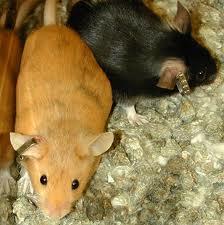
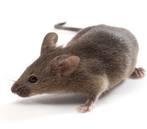
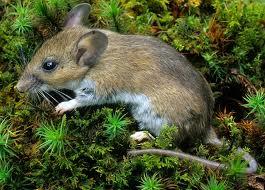
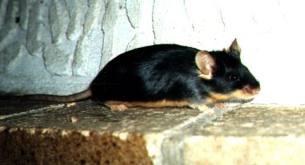
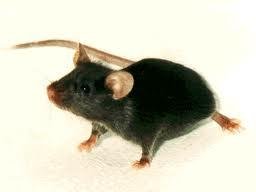
Some genes exist in more than two allelic forms within a population, leading to a variety of phenotypes. In mice, the gene controlling coat color has several alleles, each with a specific dominance relationship.
Key Alleles: Ay (yellow), A1 (agouti-light), A+ (agouti), a1 (black & tan), a (black)
Dominance Hierarchy: Ay > A1 > A+ > a1 > a
Phenotypic Expression: The allele highest in the hierarchy determines the phenotype in heterozygotes.
Pleiotropy
One Gene, Multiple Effects
Pleiotropy occurs when a single gene influences multiple phenotypic traits. An example is the yellow coat color gene in mice, which also affects viability.
Cuenot’s Yellow Mice: The Y allele is dominant for yellow color but recessive lethal.
Genotypes and Phenotypes:
yy: White (viable)
Yy: Yellow (viable)
YY: Lethal (not viable)
Example: Breeding two yellow mice (Yy x Yy) never produces true-breeding yellow offspring because YY is lethal.
Epistasis
Gene Interactions Affecting Phenotype
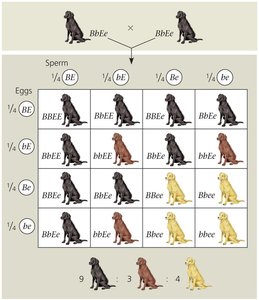
Epistasis describes a situation where one gene affects the expression of another gene. This interaction can modify expected Mendelian ratios.
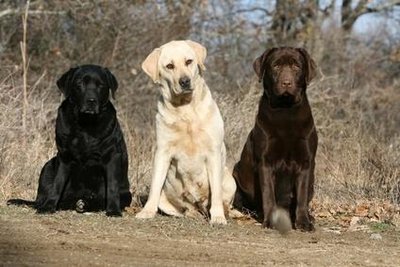
Labrador Retriever Coat Color: Two genes interact to determine coat color.
'E' Gene: Determines pigment deposition (EE or Ee = dark, ee = yellow).
'B' Gene: Determines pigment color (BB or Bb = black, bb = chocolate).
Phenotypes:
EE/Ee + BB/Bb = Black Lab
EE/Ee + bb = Chocolate Lab
ee (any B) = Yellow Lab
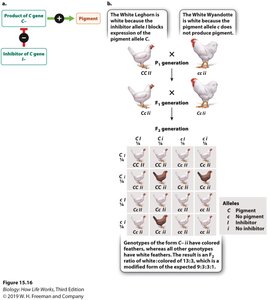
Example: Epistasis is also seen in chickens, where an inhibitor gene can block pigment production regardless of other pigment genes.
Polygenic Inheritance
Quantitative Traits
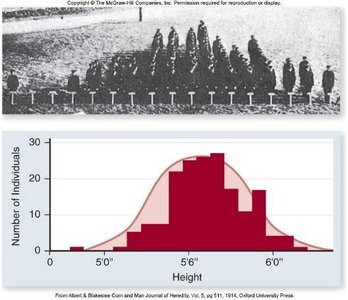
Some traits are controlled by multiple genes, each contributing to the phenotype in an additive way. These are called polygenic traits and often show continuous variation (quantitative traits).
Examples: Human height, skin color, and intelligence.
Distribution: Traits typically follow a bell-shaped curve in the population.
Gene Expression Influenced by the Environment
Environmental Effects on Phenotype
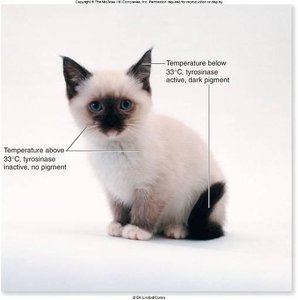
The expression of some genes can be modified by environmental factors. For example, the coat color of Himalayan rabbits and Siamese cats is temperature-sensitive.
Mechanism: An allele produces an enzyme for pigment production only at temperatures below 33°C.
Result: Cooler body parts (ears, nose, paws) are darker due to active pigment production.
Pedigree Analysis and Patterns of Inheritance in Humans
Tracking Traits in Families
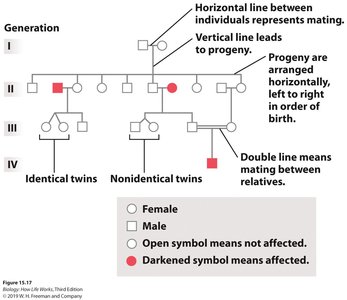
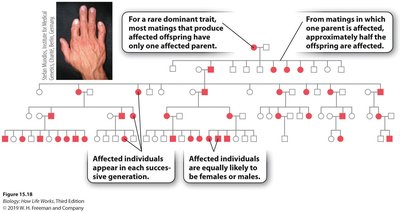
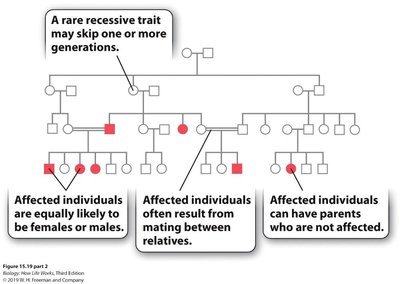
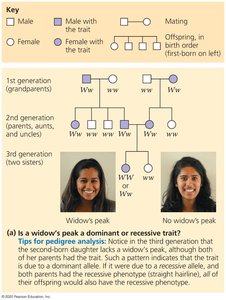
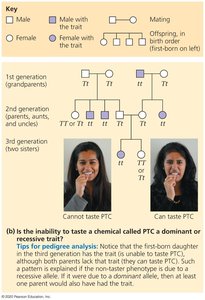
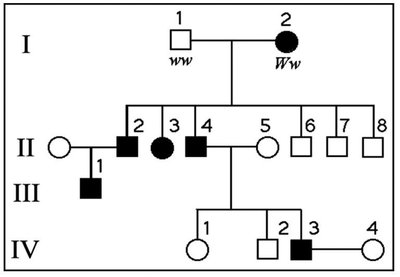
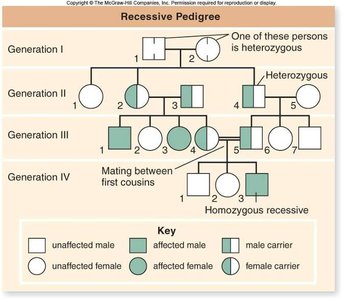
Pedigree analysis is used to study inheritance patterns of traits in humans, especially for traits controlled by a single gene. Symbols are used to represent individuals and their relationships.
Dominant Inheritance: Trait appears in every generation; affected individuals have at least one affected parent.
Recessive Inheritance: Trait can skip generations; affected individuals may have unaffected parents.
Recessively Inherited Disorders
Genetic Disorders and Carriers
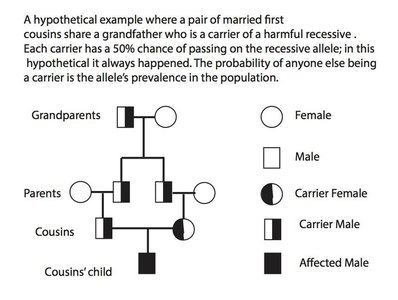
Many genetic disorders are inherited in a recessive manner. Carriers are heterozygous individuals who do not show symptoms but can pass the allele to offspring.
Consanguinity: Mating between close relatives increases the chance of recessive disorders appearing.
Examples: Sickle-cell disease, cystic fibrosis, albinism.
Sickle-Cell Disease: A Case Study
Molecular and Evolutionary Aspects
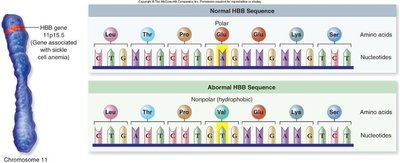
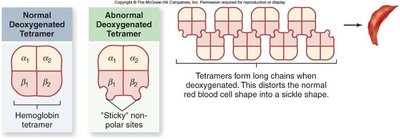
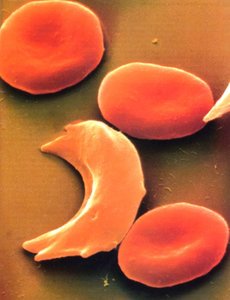
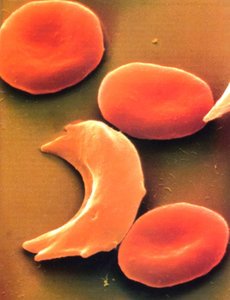
Sickle-cell disease is caused by a single amino acid substitution in the hemoglobin protein, leading to abnormal red blood cell shape and function.
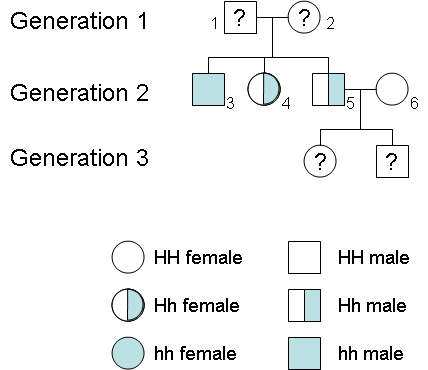
Genotypes:
HH: Normal, not a carrier
Hh: Carrier, usually asymptomatic (sickle cell trait)
hh: Affected, sickle-cell disease
Symptoms: Weakness, pain, organ damage, stroke, paralysis
Evolutionary Implication: Heterozygotes (Hh) are resistant to malaria, explaining the persistence of the allele in some populations.
Sex-Linked Traits and Chromosomal Basis of Inheritance
Sex-Linked Genes and Inheritance Patterns
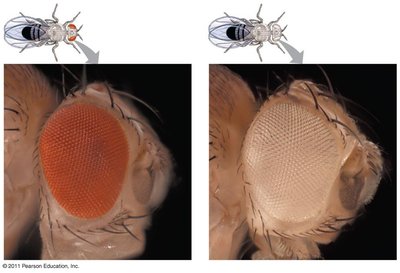
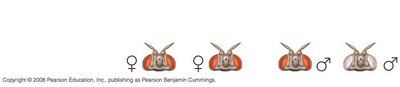
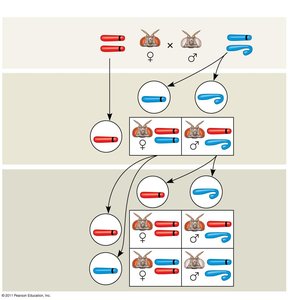
Sex-linked genes are located on sex chromosomes (X or Y). X-linked recessive traits are more common in males, as they have only one X chromosome.
Examples: Color blindness, Duchenne muscular dystrophy, hemophilia
Inheritance: Females need two copies of the allele to express the trait; males need only one.
Historical Context: Nettie Stevens and Chromosomal Sex Determination
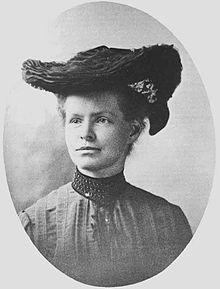
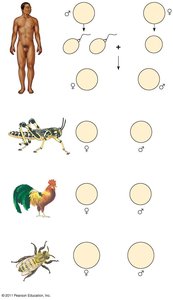
Nettie Stevens and Edmund Beecher Wilson independently described the chromosomal basis of sex in 1905. Stevens found that females have two X chromosomes, while males have one X and one Y.
Human Sex Chromosomes and Inheritance
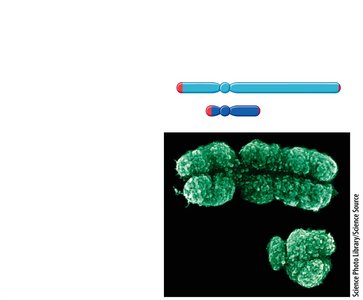
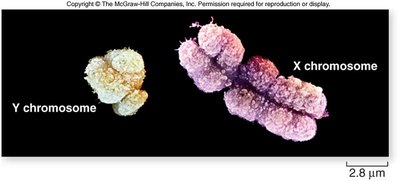
The X and Y chromosomes differ in size and gene content. Most X-linked genes have no counterpart on the Y chromosome. The SRY gene on the Y chromosome determines male development.

Patterns of X-Linked Inheritance
Females: Need two copies of a recessive X-linked allele to express the trait (homozygous).
Males: Need only one copy (hemizygous), making X-linked recessive disorders more common in males.
Examples: Color blindness, hemophilia, Duchenne muscular dystrophy.
