 Back
Patterns of Inheritance: Mendelian and Non-Mendelian Genetics
Study Guide - Smart Notes
 Tailored notes based on your materials, expanded with key definitions, examples, and context.
Patterns of Inheritance
Introduction to Inheritance and Genetic Information
The inheritance of traits in living organisms is governed by the transmission of genetic information from parents to offspring. This process is explained by the principles of Mendelian genetics, as well as more complex patterns of inheritance. Understanding these mechanisms is crucial for predicting genetic disorders and traits in families.
Key Genetic Terms
Definitions
Allele: An alternative form of a gene found at a specific locus on a chromosome.
Dominant Allele: An allele that expresses its phenotype even in the presence of a different allele.
Recessive Allele: An allele whose phenotype is masked in the presence of a dominant allele; only expressed when two copies are present.
Genotype: The genetic makeup of an organism, represented by the alleles present (e.g., HbA/HbS).
Phenotype: The observable traits or characteristics of an organism resulting from its genotype.
Homozygous: Having two identical alleles for a particular gene (e.g., AA or SS).
Heterozygote: Having two different alleles for a gene (e.g., AS).
Chromosomes, Genes, and Meiosis
Relationship Between Genes and Chromosomes
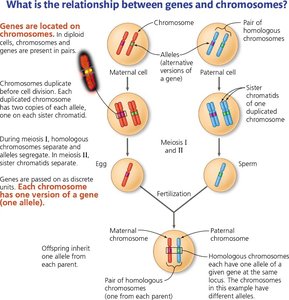
Genes are located on chromosomes, which are inherited from both parents. During meiosis, homologous chromosomes separate, ensuring that each gamete receives only one allele for each gene. Fertilization restores the diploid number, combining alleles from both parents.
Alleles and Sickle Cell Disease
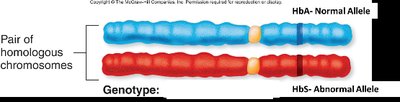
The sickle cell gene exists in two main allelic forms: HbA (normal) and HbS (abnormal). Individuals with one copy of each allele (HbA/HbS) are carriers, while those with two abnormal alleles (HbS/HbS) have sickle cell disease.
Mendelian Inheritance
Law of Segregation
Mendel's law of segregation states that allele pairs separate during gamete formation, and randomly unite at fertilization. Each parent contributes one allele for each gene to their offspring.
Punnett Squares and Predicting Inheritance
Punnett squares are used to predict the probability of offspring inheriting particular alleles. For example, if both parents are heterozygous (AS), the possible genotypes for their children are:
25% AA (normal)
50% AS (carrier)
25% SS (sickle cell disease)
Non-Mendelian Patterns of Inheritance
Complex Inheritance Mechanisms
Incomplete Dominance: The heterozygote displays an intermediate phenotype (e.g., red and white flowers producing pink offspring).
Codominance: Both alleles are fully expressed in the heterozygote (e.g., AB blood type).
Pleiotropy: One gene influences multiple phenotypic traits (e.g., sickle cell gene affects blood cells, resistance to malaria).
Polygenic Inheritance: Multiple genes contribute to a single trait (e.g., skin color, height).
Sex Linkage: Genes located on sex chromosomes (X or Y) show unique inheritance patterns (e.g., hemophilia, color blindness).
Patterns of Inheritance and Pedigrees
Autosomal Recessive Inheritance
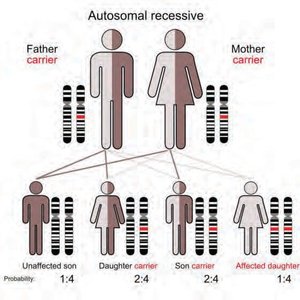
Both parents must be carriers for a child to be affected. The trait often skips generations and affects males and females equally.
Autosomal Dominant Inheritance
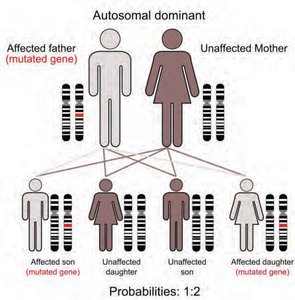
Only one copy of the mutated allele is needed for the trait to be expressed. The trait does not skip generations and affects both sexes equally.
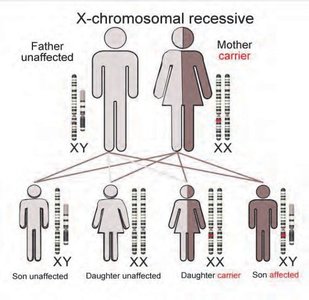
X-Linked Recessive Inheritance
More common in males, as they have only one X chromosome. Carrier mothers can pass the trait to sons, while daughters can be carriers if they inherit one affected X.
X-Linked Dominant Inheritance
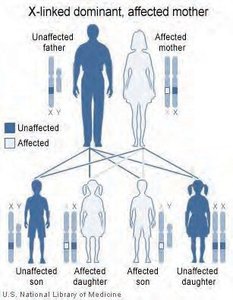
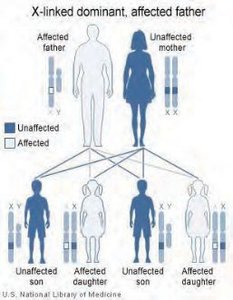
Both males and females can be affected, but affected fathers pass the trait to all daughters and no sons, while affected mothers can pass it to both sons and daughters.
Pedigree Analysis
A pedigree is a diagram that shows the occurrence of a trait in a family across generations. Symbols: squares (males), circles (females), shaded (affected), unshaded (unaffected), half-shaded (carrier).
Examples of Inherited Diseases
Autosomal Recessive Disorders
Tay-Sachs Disease: Caused by a recessive allele; leads to lipid accumulation in brain cells. Both parents must be carriers for a child to be affected.
Cystic Fibrosis: Also recessive; causes thick mucus in lungs and digestive tract.
Sickle Cell Disease: Recessive; abnormal hemoglobin causes sickle-shaped red blood cells.
Autosomal Dominant Disorders
Huntington's Disease: Caused by a dominant allele; neurodegenerative disorder with late onset. Only one copy of the allele is needed for the disease to develop.
Blood Typing and Paternity Testing
ABO Blood Groups
Blood type inheritance is an example of codominance and multiple alleles. ABO testing can exclude paternity if the child's blood type is incompatible with the alleged father's genotype, but cannot always confirm paternity due to shared alleles in the population.
Factors Affecting Inheritance Patterns
Population Distribution: Recessive diseases are not evenly distributed due to factors like genetic drift, founder effect, and consanguinity.
Increased Risk: Consanguineous marriages (between relatives) increase the chance of recessive traits appearing in offspring.
Chromosome Theory of Inheritance
Genes are located on chromosomes, which segregate and assort independently during meiosis. This theory explains the physical basis of Mendel's laws.
Sex Chromosomes and Inheritance
Mark's Genotype: XY (male)
Jeanna's Genotype: XX (female)
Males pass their X chromosome to their daughters and Y chromosome to their sons.
Females pass on their X chromosomes to both sons and daughters.
Summary Table: Patterns of Inheritance
Pattern | Key Features | Example Disease |
|---|---|---|
Autosomal Recessive | Both sexes equally affected, skips generations, carriers possible | Sickle Cell, Tay-Sachs, Cystic Fibrosis |
Autosomal Dominant | Both sexes equally affected, does not skip generations | Huntington's Disease |
X-Linked Recessive | More males affected, no father-to-son transmission | Hemophilia A |
X-Linked Dominant | Affected fathers pass to all daughters, not sons | Hypophosphatemic rickets |
Additional info: This guide integrates textbook-level explanations with case studies and pedigree analysis to provide a comprehensive overview of inheritance patterns relevant to college biology.
