 Back
BackPatterns of Inheritance: Mendelian Genetics and Beyond
Study Guide - Smart Notes
 Tailored notes based on your materials, expanded with key definitions, examples, and context.
Patterns of Inheritance: Mendelian Genetics and Beyond
Introduction to Genetics
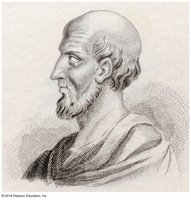
Genetics is the scientific study of heredity, focusing on how traits are transmitted from one generation to the next. Early ideas about inheritance, such as Hippocrates's "pangenes" and the blending hypothesis, were later disproven by experimental evidence.
Pangenes Theory: Proposed that particles from all parts of the body are collected in the gametes. Disproven because changes in somatic cells do not affect gametes.
Blending Hypothesis: Suggested that offspring are a blend of parental traits. Disproven because traits can reappear after skipping generations.
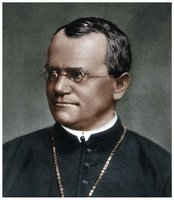
Gregor Mendel and the Foundations of Genetics
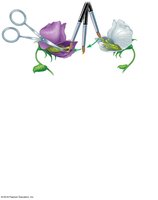
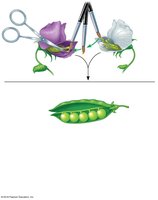
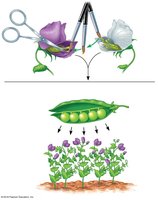
Modern genetics began with Gregor Mendel's experiments on pea plants, where he systematically crossed plants and analyzed patterns of inheritance.
Heredity: Transmission of traits from parents to offspring.
Genetics: The study of heredity and variation.
Alleles: Alternative versions of a gene that account for variations in inherited characters.
True-breeding: Organisms that produce offspring of the same variety when self-pollinated.
Hybrid: Offspring of two different true-breeding varieties.
P Generation: Parental generation.
F1 Generation: First filial generation, offspring of the P generation.
F2 Generation: Second filial generation, offspring of F1 individuals.
Mendel’s Laws of Inheritance
Law of Segregation
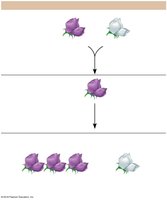
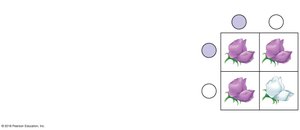
Mendel’s law of segregation states that allele pairs separate during gamete formation, and randomly unite at fertilization.
Each organism inherits two alleles for each gene, one from each parent.
If the alleles differ, the dominant allele determines the phenotype, while the recessive allele is masked.
Homozygous: Two identical alleles (e.g., PP or pp).
Heterozygous: Two different alleles (e.g., Pp).
Law of Independent Assortment
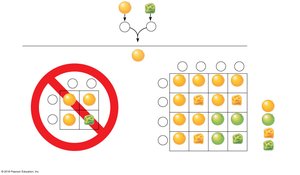
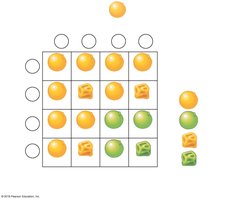
Mendel’s law of independent assortment states that alleles of different genes assort independently during gamete formation. This is observed in dihybrid crosses.
Monohybrid Cross: Cross between individuals heterozygous for one character.
Dihybrid Cross: Cross between individuals heterozygous for two characters.
Probability in Genetics
Genetic outcomes can be predicted using the rules of probability:
Rule of Multiplication: Probability of two independent events both occurring is the product of their individual probabilities.
Rule of Addition: Probability of an event that can occur in multiple ways is the sum of the probabilities for each way.
Genetic Relationships and Chromosomes
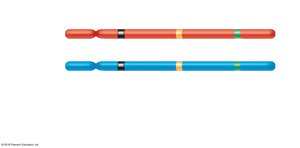
Homologous chromosomes carry alleles for the same genes at the same loci. The physical separation of homologous chromosomes during meiosis underlies Mendel’s laws.
Pedigree Analysis and Human Genetics
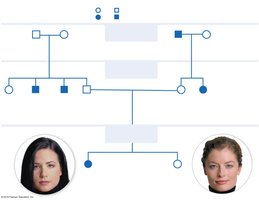
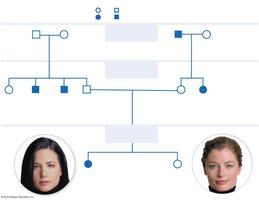
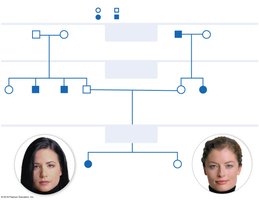
Family pedigrees are used to track inheritance patterns of traits in humans, helping to determine genotypes and predict genetic disorders.
Single-Gene Inheritance and Genetic Disorders
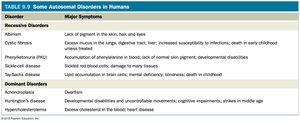
Many human traits and disorders are controlled by single genes, which may be dominant or recessive. Most individuals with recessive disorders are born to carrier parents.
Disorder | Major Symptoms |
|---|---|
Cystic Fibrosis | Excess mucus in lungs, digestive tract, liver; increased susceptibility to infections; death in early childhood unless treated |
Phenylketonuria (PKU) | Accumulation of phenylalanine in blood; lack of normal skin pigment; developmental disabilities |
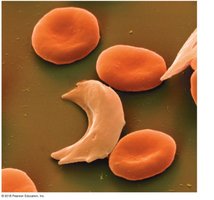
Sickle-cell disease | Abnormal hemoglobin; sickled red blood cells; damage to organs |
Tay-Sachs disease | Lipid accumulation in brain cells; mental deficiency; blindness; death in childhood |
Achondroplasia | Dwarfism |
Huntington’s disease | Developmental disabilities and uncontrollable movements; cognitive impairments; strikes in middle age |
Hypercholesterolemia | Excess cholesterol in blood; heart disease |
Variations on Mendel’s Laws
Incomplete Dominance
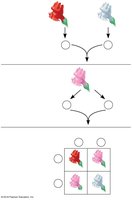
In incomplete dominance, the phenotype of heterozygotes is intermediate between the phenotypes of the two homozygotes.
Example: Crossing red (RR) and white (rr) snapdragons produces pink (Rr) offspring.
Codominance and Multiple Alleles
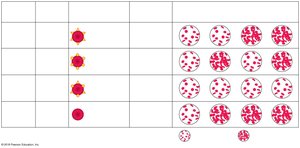
Some genes have more than two alleles, and in codominance, both alleles are fully expressed in heterozygotes. The ABO blood group is an example, with three alleles (IA, IB, i) producing four blood types.
Pleiotropy
Pleiotropy occurs when one gene influences multiple phenotypic traits. Sickle-cell disease is a classic example, affecting hemoglobin structure, red blood cell shape, and resistance to malaria.
Polygenic Inheritance
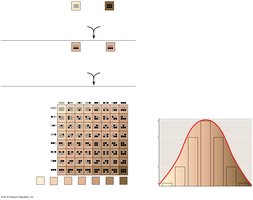
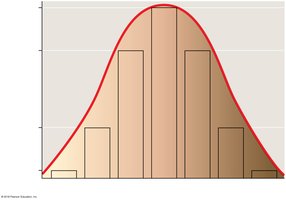
Polygenic inheritance involves multiple genes contributing to a single phenotypic trait, resulting in continuous variation. Human skin color is a well-known example.
Chromosomal Basis of Inheritance
The chromosome theory of inheritance states that genes are located on chromosomes, which segregate and independently assort during meiosis, providing the physical basis for Mendel’s laws.
Linked Genes and Crossing Over
Genes located close together on the same chromosome (linked genes) tend to be inherited together. Crossing over during meiosis can separate linked genes, producing recombinant offspring. The frequency of recombination can be used to map gene loci on chromosomes.
Sex Chromosomes and Sex-Linked Genes
Sex determination in humans is based on the presence of X and Y chromosomes. Genes located on sex chromosomes are called sex-linked genes. X-linked recessive disorders are more common in males because they have only one X chromosome.
Summary Table: Key Genetic Terms
Term | Definition |
|---|---|
Genotype | Genetic makeup of an organism |
Phenotype | Observable traits of an organism |
Homozygous | Two identical alleles for a gene |
Heterozygous | Two different alleles for a gene |
Dominant allele | Allele that determines phenotype in heterozygotes |
Recessive allele | Allele masked in heterozygotes |
Pleiotropy | One gene affects multiple traits |
Polygenic inheritance | Multiple genes affect one trait |
Key Equations
Probability of independent events (rule of multiplication):
Probability of mutually exclusive events (rule of addition):
Additional info: This guide covers the core concepts of Mendelian genetics, extensions to Mendel’s laws, and the chromosomal basis of inheritance, as outlined in a typical college biology curriculum.
