 Back
BackPatterns of Inheritance: Mendelian Genetics and Beyond
Study Guide - Smart Notes
 Tailored notes based on your materials, expanded with key definitions, examples, and context.
Patterns of Inheritance
Introduction to Genetics
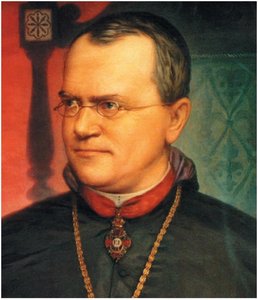
Genetics is the scientific study of heredity, focusing on how traits are transmitted from one generation to the next. The foundational principles of genetics were established by Gregor Mendel through his experiments with pea plants, leading to the formulation of Mendel's Laws.
Mendel’s Laws
Ancient Theories and Mendel’s Experiments
Pangenesis Theory: Proposed by Hippocrates, this theory suggested that particles from all parts of the body are collected in the gametes. This idea is now rejected because changes in somatic cells do not affect gametes.
Blending Hypothesis: Suggested that offspring are a blend of parental traits. This was disproven as traits can reappear after skipping generations.
Heredity: The transmission of traits from parents to offspring.
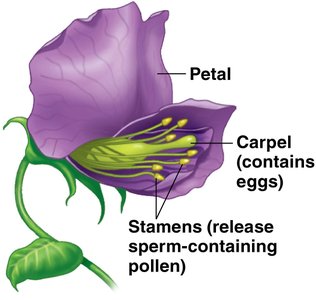
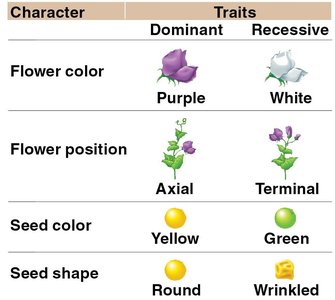
Character: A heritable feature that varies among individuals (e.g., flower color).
Trait: A variant of a character (e.g., purple or white flowers).
Mendel’s Experimental Approach
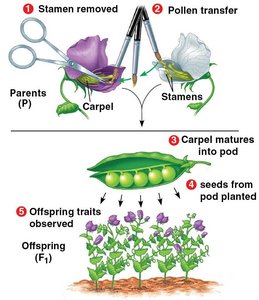
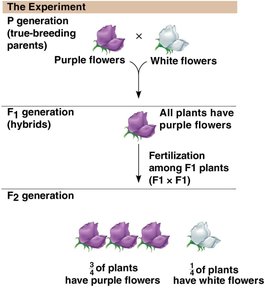
True-breeding: Plants that produce offspring of the same variety when self-pollinated. These are the P generation (parental generation).
Hybrids: Offspring of two different true-breeding varieties, called the F1 generation.
When F1 individuals self-fertilize, their offspring are the F2 generation.
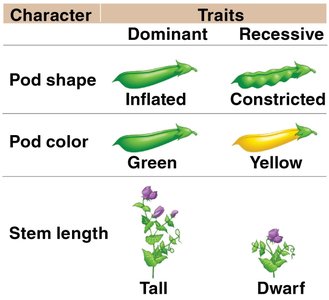
Mendel’s Law of Segregation
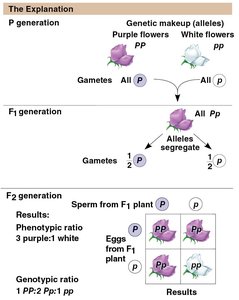
Mendel’s law of segregation describes how pairs of gene variants (alleles) are separated into reproductive cells.
Each organism inherits two alleles for each gene, one from each parent.
If the alleles differ, the dominant allele determines the organism’s appearance, while the recessive allele has no noticeable effect.
Allele pairs segregate during gamete formation, so each gamete carries only one allele for each gene.
Key Genetic Terms
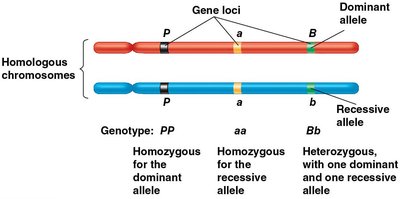
Homozygous: Two identical alleles for a gene (e.g., PP or pp).
Heterozygous: Two different alleles for a gene (e.g., Pp).
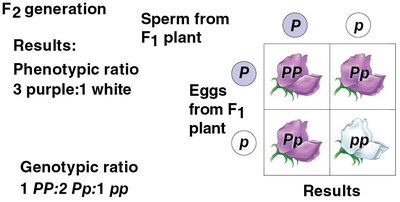
Genotype: The genetic makeup of an organism.
Phenotype: The observable traits of an organism.
Homologous Chromosomes and Gene Loci
Homologous chromosomes carry alleles for the same genes at corresponding loci. Each diploid cell contains pairs of homologous chromosomes.
Mendel’s Law of Independent Assortment
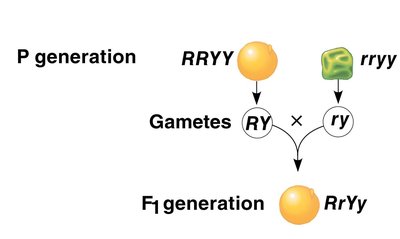
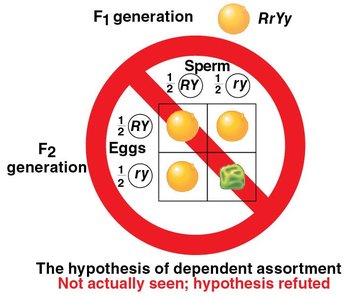
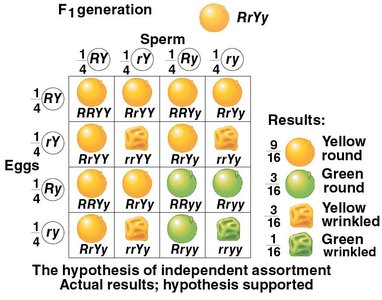
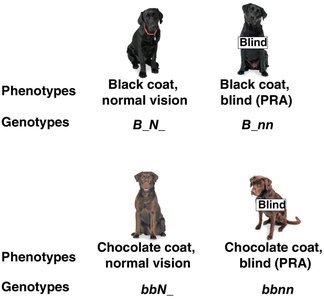
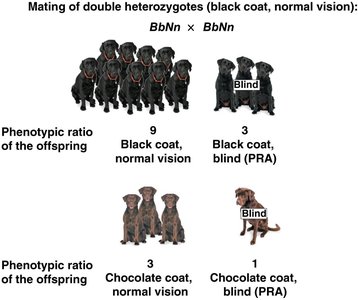
This law states that allele pairs separate independently during the formation of gametes. It is revealed by tracking two characters at once (dihybrid cross).
Monohybrid cross: Cross between individuals heterozygous for one character.
Dihybrid cross: Cross between individuals heterozygous for two characters.
Testcrosses
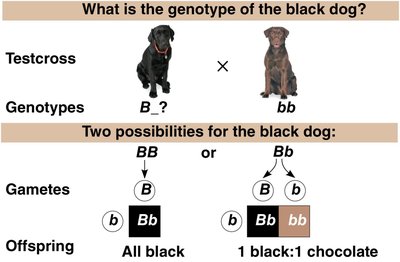
A testcross is used to determine the genotype of an individual with a dominant phenotype by crossing it with a homozygous recessive individual.
Probability in Genetics
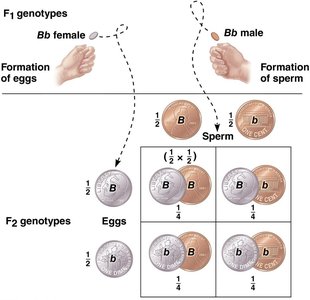
Rule of multiplication: Probability of two independent events both occurring is the product of their individual probabilities.
Rule of addition: Probability of an event that can occur in multiple ways is the sum of the probabilities of each way.
Human Genetics and Pedigrees
Pedigree Analysis
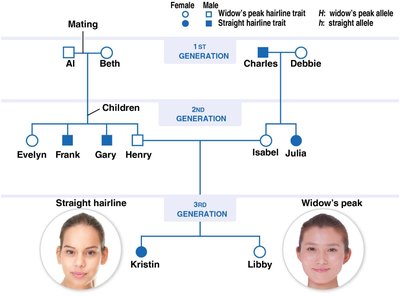
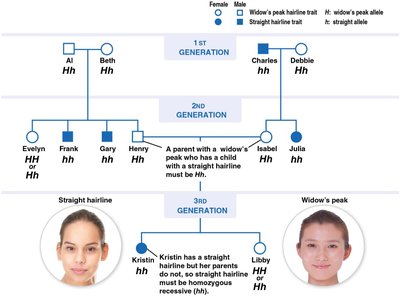
Pedigrees are family trees that track the inheritance of traits across generations, helping to determine genotypes and inheritance patterns.

Single-Gene Disorders
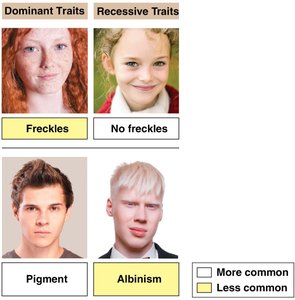
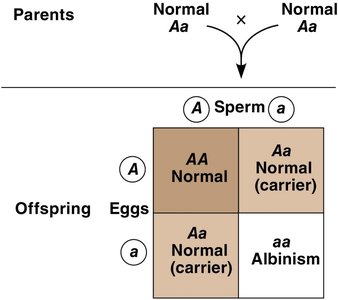
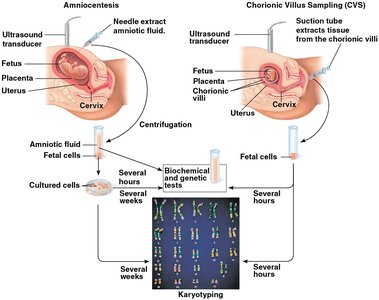
Many inherited disorders are controlled by a single gene and can be dominant or recessive. Most individuals with recessive disorders are born to carrier parents.
Disorder | Major Symptoms | Inheritance |
|---|---|---|
Albinism | Lack of pigment in skin, hair, eyes | Recessive |
Cystic fibrosis | Excess mucus, infections, early death | Recessive |
Phenylketonuria (PKU) | Phenylalanine accumulation, developmental disabilities | Recessive |
Sickle-cell disease | Sickled red blood cells, tissue damage | Recessive |
Tay-Sachs disease | Lipid accumulation in brain, mental deficiency | Recessive |
Achondroplasia | Dwarfism | Dominant |
Huntington’s disease | Uncontrollable movements, cognitive decline | Dominant |
Hypercholesterolemia | High cholesterol, heart disease | Dominant |
Variations on Mendel’s Laws
Incomplete Dominance
In incomplete dominance, the phenotype of heterozygotes is intermediate between the two parental varieties. For example, crossing red and white snapdragons produces pink flowers.
Multiple Alleles and Codominance
Some genes have more than two alleles. The ABO blood group in humans is controlled by three alleles, with IA and IB being codominant (both expressed in type AB individuals).
Pleiotropy
Pleiotropy occurs when one gene influences multiple phenotypic traits. Sickle-cell disease is an example, affecting hemoglobin, red blood cell shape, and resistance to malaria.
Polygenic Inheritance
Polygenic inheritance occurs when a single trait is controlled by two or more genes, resulting in a range of phenotypes. Human height is a classic example.
Environmental Effects
Many traits are influenced by both genetic and environmental factors, leading to variation in phenotypes.
The Chromosomal Basis of Inheritance
Chromosome Theory of Inheritance
Genes occupy specific loci on chromosomes, which segregate and assort independently during meiosis, providing the physical basis for Mendel’s laws.
Linked Genes and Crossing Over
Genes located close together on the same chromosome (linked genes) tend to be inherited together. Crossing over during meiosis can separate linked genes, producing recombinant offspring. The frequency of recombination can be used to map gene loci on chromosomes (linkage maps).
Sex Chromosomes and Sex-Linked Genes
Sex Determination
In mammals, sex is determined by the presence of XX (female) or XY (male) chromosomes. The Y chromosome carries genes for male development. In some species, environmental factors such as temperature can determine sex.
Sex-Linked Inheritance
Genes located on sex chromosomes are called sex-linked genes. X-linked recessive disorders are more common in males, as they have only one X chromosome. Examples include color blindness and hemophilia.
Y Chromosome and Human Evolution
The Y chromosome is passed from father to son and can be used to trace paternal ancestry and study human evolution.
Summary Table: Key Genetic Concepts
Term | Definition |
|---|---|
Allele | Alternative version of a gene |
Genotype | Genetic makeup of an organism |
Phenotype | Observable traits of an organism |
Homozygous | Two identical alleles for a gene |
Heterozygous | Two different alleles for a gene |
Dominant | Allele that determines phenotype in heterozygotes |
Recessive | Allele masked in heterozygotes |
Pleiotropy | One gene affects multiple traits |
Polygenic inheritance | Multiple genes affect one trait |
Linked genes | Genes located close together on a chromosome |
Sex-linked gene | Gene located on a sex chromosome |
Additional info: This guide covers the core concepts of Mendelian genetics, extensions to Mendel’s laws, and the chromosomal basis of inheritance, as well as human genetic disorders and the use of pedigrees in genetic analysis.
