 Back
Patterns of Inheritance: Mendelian Genetics and Probability
Study Guide - Smart Notes
 Tailored notes based on your materials, expanded with key definitions, examples, and context.
Patterns of Inheritance
Introduction to Mendelian Genetics
Mendelian genetics forms the foundation of classical genetics, describing how traits are inherited from one generation to the next. Gregor Mendel's experiments with pea plants led to the formulation of key principles that explain the transmission of hereditary characteristics.
Mendel’s Model of Inheritance
Concept 1: Alternative Versions of Genes (Alleles)
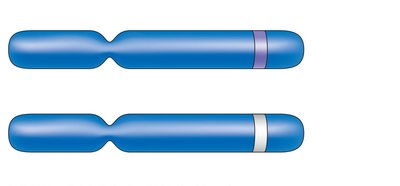
Alternative versions of genes, known as alleles, account for variations in inherited characters. For example, the gene for flower color in pea plants exists in two allelic forms: one for purple flowers and one for white flowers.
Gene locus: The specific location of a gene on a chromosome.
Allele: A variant form of a gene.
Each individual inherits two alleles for each gene, one from each parent.
Alleles can be dominant or recessive, influencing the organism's phenotype.
Concept 2: Inheritance of Two Alleles for Each Gene
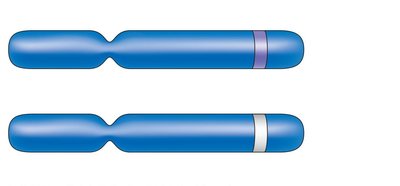
For each character, an organism inherits two alleles, one from each parent. These alleles may be identical (homozygous) or different (heterozygous).
Homozygous: Having two identical alleles for a gene (e.g., PP or pp).
Heterozygous: Having two different alleles for a gene (e.g., Pp).
True-breeding plants are homozygous for the trait in question.


Concept 3: Dominant and Recessive Alleles
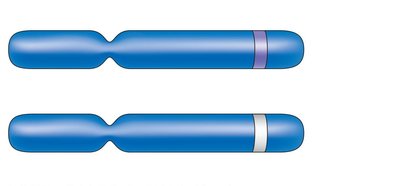
If the two alleles at a locus differ, the dominant allele determines the organism’s appearance, while the recessive allele has no noticeable effect on appearance. Dominant alleles are represented by uppercase letters (e.g., P), and recessive alleles by lowercase letters (e.g., p).
In Mendel’s pea plants, the allele for purple flowers (P) is dominant over the allele for white flowers (p).
Heterozygous plants (Pp) display the dominant phenotype (purple flowers).
Concept 4: The Law of Segregation
The law of segregation states that allele pairs separate during the formation of gametes, so each gamete carries only one allele for each gene. This explains why offspring inherit one allele from each parent.
This segregation corresponds to the distribution of homologous chromosomes during meiosis.
Punnett Squares and Genetic Crosses
Punnett Square
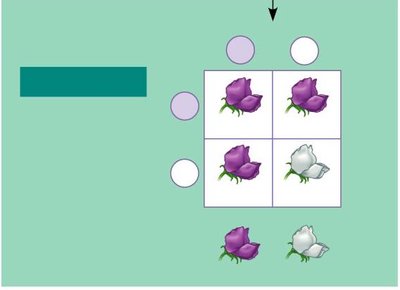
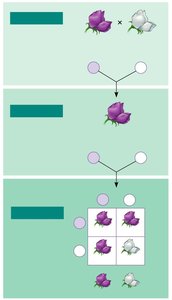
A Punnett Square is a diagram used to predict the outcome of a genetic cross by showing all possible combinations of gametes and their resulting offspring.
It is especially useful for visualizing monohybrid and dihybrid crosses.
Genotype and Phenotype
The genotype refers to the genetic makeup of an organism, while the phenotype refers to its physical appearance. Organisms with the same phenotype may have different genotypes (e.g., PP and Pp both produce purple flowers).
Genotypic ratio: The ratio of different genotypes in the offspring (e.g., 1:2:1 for PP:Pp:pp).
Phenotypic ratio: The ratio of different phenotypes in the offspring (e.g., 3:1 for purple:white flowers).
The Testcross
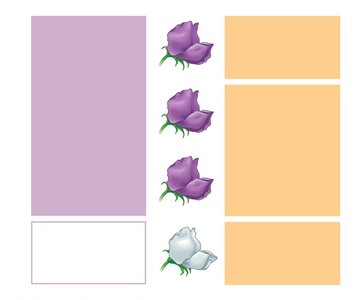
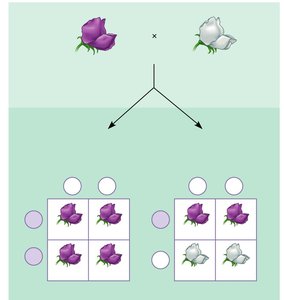
A testcross is used to determine the genotype of an individual with a dominant phenotype by crossing it with a homozygous recessive individual. If any offspring display the recessive phenotype, the unknown parent must be heterozygous.
Testcrosses help distinguish between homozygous dominant and heterozygous individuals.
Monohybrid and Dihybrid Crosses
Monohybrid Cross
A monohybrid cross involves individuals heterozygous for one character. The classic Mendelian monohybrid cross yields a 3:1 phenotypic ratio in the F2 generation.
The Law of Independent Assortment
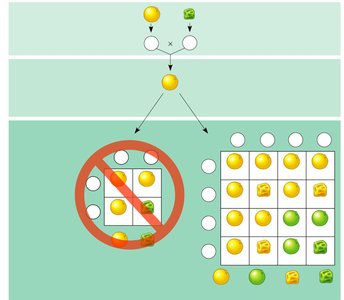
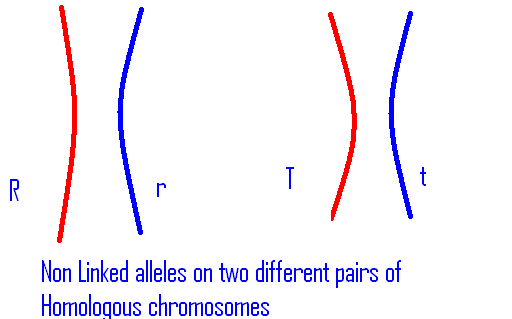
The law of independent assortment states that each pair of alleles segregates independently during gamete formation. This law applies to genes located on different chromosomes (non-linked genes).
Mendel discovered this law by following two characters at the same time (dihybrid cross).
A dihybrid cross between F1 hybrids (heterozygous for both traits) produces a 9:3:3:1 phenotypic ratio in the F2 generation.
Linked Genes
Genes located close together on the same chromosome are called linked genes and tend to be inherited together. Linked genes do not follow the law of independent assortment and usually exhibit dependent assortment.
Probability and Mendelian Inheritance
Probability Rules in Genetics
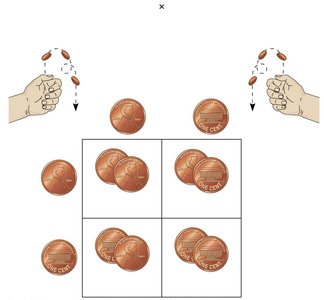
Mendelian inheritance follows the laws of probability. The outcome of one genetic event does not affect the outcome of another, similar to independent coin tosses.
Addition Rule: The probability that an event can occur in two or more alternative ways is the sum of the separate probabilities of those ways.
Multiplication Rule: The probability that two or more independent events will occur together is the product of their individual probabilities.
Key Equations
Probability of heterozygote (Rr) in F2 generation:
Probability of two independent events (e.g., both coins landing heads):
Summary Table: Key Genetic Terms
Term | Definition |
|---|---|
Gene | Unit of heredity encoding a trait |
Allele | Alternative form of a gene |
Homozygous | Two identical alleles for a gene |
Heterozygous | Two different alleles for a gene |
Genotype | Genetic makeup of an organism |
Phenotype | Physical appearance of an organism |
Dominant allele | Allele that determines phenotype in heterozygotes |
Recessive allele | Allele masked in heterozygotes |
Punnett Square | Diagram to predict genetic crosses |
Testcross | Cross to determine unknown genotype |
Law of Segregation | Allele pairs separate during gamete formation |
Law of Independent Assortment | Allele pairs segregate independently |
Linked genes | Genes inherited together due to proximity on chromosome |
Additional info: Mendel’s principles laid the groundwork for modern genetics, and understanding these concepts is essential for studying more complex patterns of inheritance, such as incomplete dominance, codominance, and polygenic traits.
