 Back
BackPatterns of Inheritance: Monogenic and Polygenic Traits, Genetic Diseases, and Sex-Linked Inheritance
Study Guide - Smart Notes
 Tailored notes based on your materials, expanded with key definitions, examples, and context.
Single-Gene (Monogenic) Traits and Diseases
Definition and Examples
Monogenic traits are controlled by a single gene and typically exhibit clear dominant or recessive inheritance patterns. These traits can be observed in physical characteristics and certain genetic diseases.
Widow’s peak: Dominant (WW or Ww); straight hairline is recessive (ww).
Freckles: Dominant (FF or Ff); no freckles is recessive (ff).
Albinism: Recessive (aa); normal pigmentation is dominant (AA or Aa).
Other monogenic traits: earlobe attachment, dimples, handedness, brachydactyly, PTC taste, blood type, tongue rolling, hand clasping.
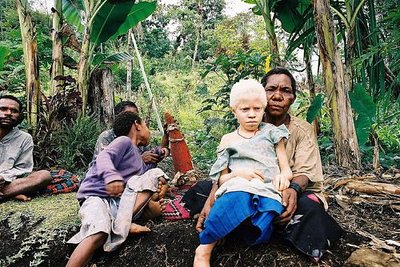
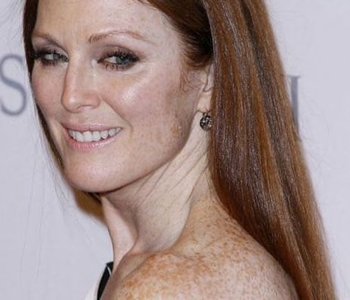
Monogenic Diseases: Inheritance and Features
Many human diseases are caused by mutations in a single gene. The mode of inheritance can be dominant, recessive, or incompletely dominant.
Disease or Trait | Mode of Inheritance | Clinical Features | Incidence | Gene |
|---|---|---|---|---|
Sickle Cell Anemia | Recessive | “Sickled” RBC; anemia | 1/400 (African Americans) | HBB |
Familial Hypercholesterolemia (FH) | Incompletely dominant | Elevated plasma cholesterol | 1/500 or 1/1,000,000 | LDLR |
Achondroplasia | Dominant | Dwarfism with normal trunk and short limbs | 1/25,000 | FGFR3 |
Huntington’s Disease | Dominant | Uncontrolled movements | 1/25,000 | HTT |
Oculocutaneous Albinism (OCA) | Recessive | Lack of pigment in skin and eyes | 1/22,000 or 1/10,000 | TYR |
Cystic Fibrosis (CF) | Recessive | Prone to lung infections | 1/2,500 (Caucasians) | CFTR |
Phenylketonuria (PKU) | Recessive | Severe mental retardation | 1/10,000 | PAH |
Monogenic Diabetes | Usually dominant | Hyperglycemia | ~2% of all diabetes | ≥ 20 genes, including KCNJ11 |
Enzyme Deficiencies: PKU and OCA
Phenylketonuria (PKU)
PKU is a genetic deficiency of the enzyme phenylalanine hydroxylase (PAH), which is necessary to degrade the amino acid phenylalanine. Without this enzyme, phenylalanine accumulates to toxic levels, causing brain damage if untreated.
Inheritance: Autosomal recessive
Symptoms: Severe intellectual disability if untreated
Treatment: Avoid phenylalanine in the diet, especially in early childhood
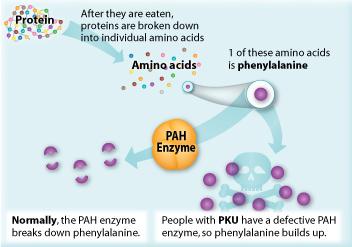
Pedigree Analysis of PKU
Pedigree charts can reveal the recessive nature of PKU, showing how the disease can skip generations and appear in siblings whose parents are both carriers.
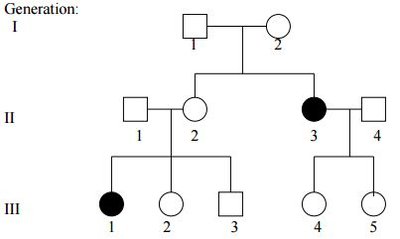
Dietary Management of PKU
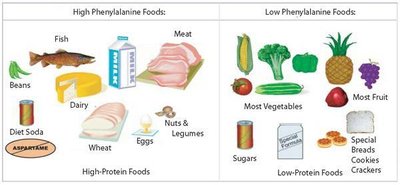
Individuals with PKU must avoid foods high in phenylalanine, such as meat, fish, dairy, eggs, and products containing aspartame. Most fruits and vegetables are safe.
Oculocutaneous Albinism (OCA)
OCA is caused by a genetic deficiency of the enzyme tyrosinase (TYR), which is required for the synthesis of melanin from tyrosine. The condition results in a lack of pigment in the skin and eyes, increasing the risk of skin cancer but is otherwise generally benign.
Genetic Testing
Purpose and Methods
Genetic testing is used to detect genetic diseases, especially when there is a family history or when early treatment is possible. Methods include parental carrier screening, fetal screening (amniocentesis, chorionic villus sampling, ultrasound, maternal blood), and newborn screening.
Modifications of Mendel’s Laws
Environmental Effects
Most traits result from a combination of genetic and environmental factors. Few diseases or traits are purely genetic or purely environmental. The question is not whether a trait is genetic, but to what extent genetics and environment contribute.
Polygenic (Quantitative) Traits
Definition and Examples
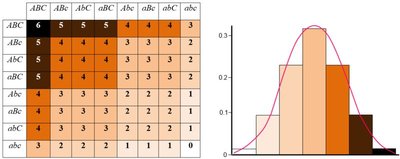
Polygenic traits are influenced by multiple genes, often resulting in continuous variation (quantitative traits) such as height or plasma cholesterol. Each gene contributes additively to the phenotype.
Example: Fur color in a hypothetical organism determined by three genes (A, B, C). Each dominant allele darkens the fur.
Chromosomal Basis of Inheritance and Linkage
Genes and Chromosomes
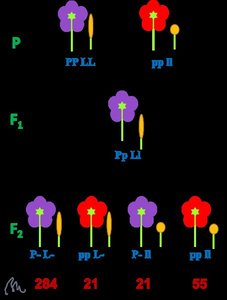
Genes occupy specific locations (loci) on chromosomes. During meiosis, chromosomes assort independently, but genes located close together on the same chromosome (linked genes) tend to be inherited together, which is an exception to Mendel’s law of independent assortment.
Linkage and Recombination
Linked genes do not always assort independently. Crossing over during meiosis can recombine alleles, but the closer two genes are, the less likely they are to be separated by recombination.
Sex and Sex-Linked Genes
Human Sex Chromosomes
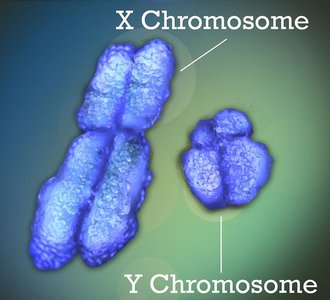
Humans have 44 autosomes and 2 sex chromosomes (XX for females, XY for males). The SRY gene on the Y chromosome determines male development. Eggs always carry an X chromosome, while sperm carry either X or Y, determining the sex of the offspring.
Sex-Linked Inheritance: Hemophilia
Hemophilia is a genetic disease of uncontrolled bleeding, inherited in an X-linked recessive pattern. Most affected individuals are male, as they have only one X chromosome. Females can be carriers if they have one mutant allele.
Genotypes: XHXH (female, not hemophilic), XHXh (female, carrier), XhXh (female, hemophilic), XHY (male, not hemophilic), XhY (male, hemophilic)
Pedigree analysis can trace the inheritance of hemophilia in families, such as in European royalty.
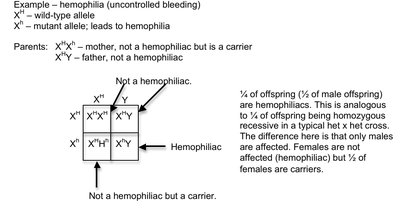
Probability in Sex-Linked Inheritance
If neither parent has hemophilia but their first son does, the probability that a second child will also have the disease depends on the carrier status of the mother and the sex of the child. For X-linked recessive diseases, each son has a 50% chance of being affected if the mother is a carrier.
Summary Table: Monogenic vs. Polygenic Traits
Feature | Monogenic Traits | Polygenic Traits |
|---|---|---|
Number of Genes | One | Multiple |
Phenotype | Discrete (e.g., attached vs. free earlobes) | Continuous (e.g., height, skin color) |
Inheritance Pattern | Mendelian (dominant/recessive) | Quantitative, additive |
Examples | Widow’s peak, PKU, cystic fibrosis | Height, skin color, intelligence |
