 Back
pH, Carbon, and Biomolecules: Foundations of Biological Chemistry
Study Guide - Smart Notes
 Tailored notes based on your materials, expanded with key definitions, examples, and context.
pH and Its Biological Importance
Definition and Significance of pH
The pH of a solution is a measure of its hydrogen ion concentration, which directly affects the structure and function of biomolecules. Biological systems are highly sensitive to pH changes, as many biochemical reactions depend on optimal pH conditions.
pH is defined as the negative logarithm (base 10) of the hydrogen ion concentration:
Water is neutral at pH 7, where M.
The pH scale is logarithmic: a change of one pH unit represents a tenfold change in .
Acids donate H+ ions (lowering pH), while bases accept H+ ions (raising pH).
Example: A solution with M has a pH of 3, which is 1000 times more acidic than a solution with pH 6.
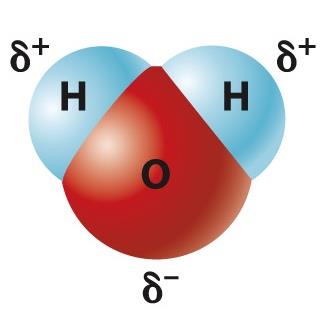

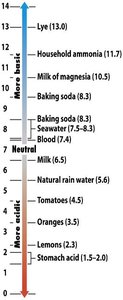

Acidic solutions: pH < 7, high
Basic solutions: pH > 7, low
Chemistry of Carbon: The Backbone of Life
Properties of Carbon
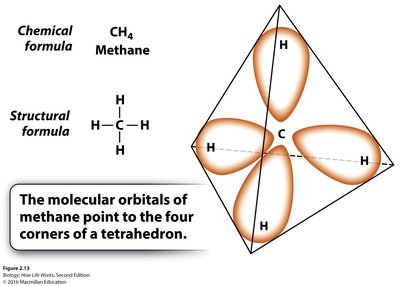
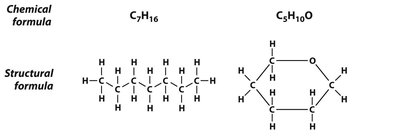
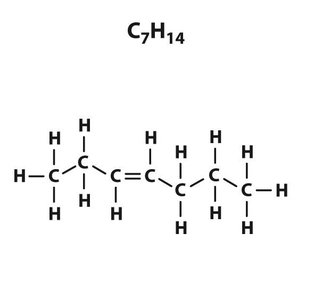
Carbon is the central element in organic molecules due to its ability to form four covalent bonds, allowing for a diversity of stable structures such as chains, branches, and rings.
Carbon atoms can bond to other carbons and a variety of other elements (H, O, N, S, P).
Organic compounds are defined by the presence of carbon-carbon (C–C) bonds.
Carbon's tetravalency allows for complex molecular architectures.
Elemental Composition of Cells
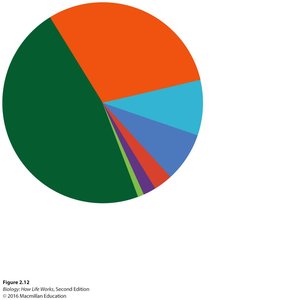
Cells are primarily composed of a few key elements, with carbon being the most abundant in organic molecules.
Element | Approximate % of Cell Mass |
|---|---|
Carbon (C) | 47% |
Oxygen (O) | 30% |
Hydrogen (H) | 9% |
Nitrogen (N) | 8% |
Others (P, S, K, Ca, Na, Cl, Mg) | 6% |

Functional Groups in Biomolecules
Definition and Importance
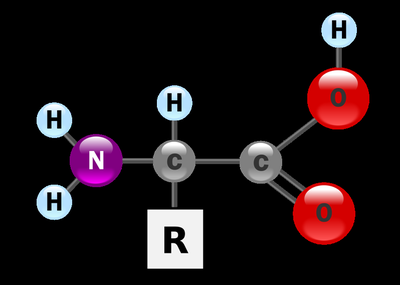
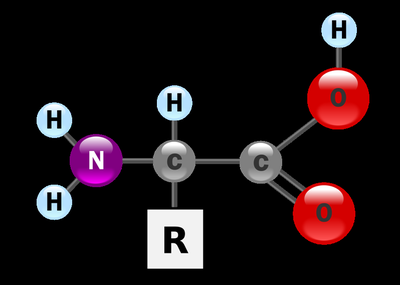
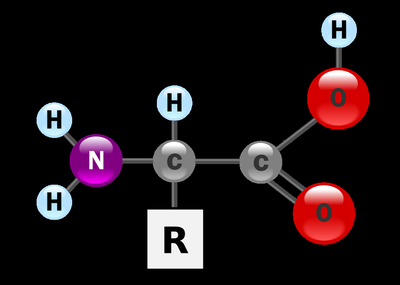
Functional groups are specific groups of atoms within molecules that are responsible for the characteristic chemical reactions of those molecules. They determine the properties and reactivity of organic compounds.
Common functional groups include hydroxyl, carbonyl, carboxyl, amino, and phosphate groups.
The chemical behavior of a biomolecule is largely determined by its functional groups.
Example: The carboxyl group (–COOH) acts as an acid, while the amino group (–NH2) acts as a base.





Macromolecules: Polymers and Monomers
Classes of Biological Macromolecules
Cells contain four major classes of macromolecules, each with distinct monomers and functions:
Nucleic acids (e.g., DNA, RNA): store and transmit genetic information.
Proteins: perform a wide range of functions including catalysis, structure, and signaling.
Carbohydrates: provide energy and structural support.
Lipids: form membranes and store energy.
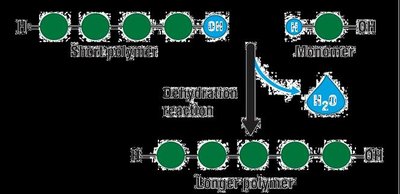
Macromolecules are polymers, built from repeating units called monomers.
Polymerization and Depolymerization
Dehydration synthesis (condensation): Monomers are joined by covalent bonds through the removal of a water molecule.
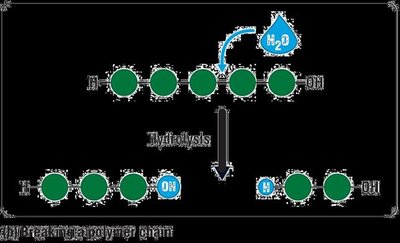
Hydrolysis: Polymers are broken down into monomers by the addition of water.
Both processes require enzymes to proceed efficiently.
Practice and Application
Calculate pH from using .
Identify functional groups in biomolecules and predict their behavior in aqueous environments.
Predict the formula of a disaccharide formed from two glucose molecules: C12H22O11 (due to loss of H2O in dehydration synthesis).
Summary Table: Functional Groups and Their Properties
Functional Group | Structure | Properties |
|---|---|---|
Hydroxyl | –OH | Polar, forms hydrogen bonds |
Carbonyl | –C=O | Polar, found in sugars |
Carboxyl | –COOH | Acidic, can donate H+ |
Amino | –NH2 | Basic, can accept H+ |
Phosphate | –PO4 | Acidic, energy transfer |
Additional info: The notes above integrate foundational chemistry concepts with biological context, providing a comprehensive overview suitable for introductory biology students.
