 Back
pH, Carbon, Functional Groups, and Biomolecules: Study Notes for General Biology
Study Guide - Smart Notes
 Tailored notes based on your materials, expanded with key definitions, examples, and context.
pH and Water
Understanding pH
The concept of pH is fundamental in biology, as it describes the concentration of hydrogen ions ([H+]) in a solution. pH affects the structure and function of biomolecules, influencing biological processes.
Definition: pH is the negative logarithm of the hydrogen ion concentration:
Neutral pH: Water is neutral at pH 7, where M.
Logarithmic Scale: Each unit change in pH represents a tenfold change in [H+]. Lower pH means higher [H+], and higher pH means lower [H+].
Acids: Molecules that donate H+ ions, decreasing pH.
Bases: Molecules that accept H+ ions, increasing pH.
Biological Impact: pH determines the ionization state of functional groups, affecting biomolecule activity.
Example: Stomach acid has a pH of 1-2, while blood is slightly basic at pH 7.4.

Chemistry of Carbon
Carbon: Life's Chemical Backbone
Carbon is the central element in organic molecules, forming the backbone of life due to its versatile bonding properties.
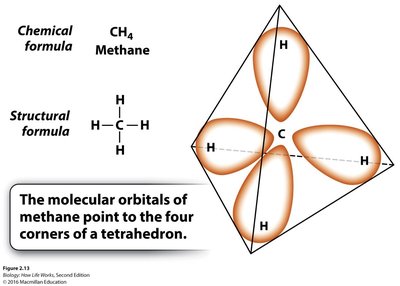
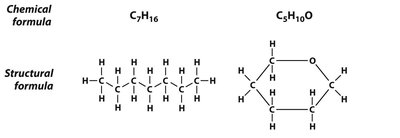
Bonding: Carbon can form four covalent bonds, allowing for straight chains, branched chains, rings, and double bonds.
Organic Compounds: Molecules containing carbon-carbon (C-C) bonds are called organic compounds.
Molecular Diversity: The ability of carbon to bond in multiple ways leads to a vast diversity of biological molecules.
Example: Methane (CH4) is a simple carbon compound; glucose (C6H12O6) is a complex carbohydrate.
Functional Groups in Biomolecules
Key Functional Groups
Functional groups are specific groups of atoms within molecules that determine their chemical properties and reactions. They are essential for the structural and functional diversity of biomolecules.
Hydroxyl (-OH): Found in alcohols; increases solubility in water.
Carbonyl (C=O): Found in aldehydes and ketones; affects reactivity.
Carboxyl (-COOH): Acts as an acid; can donate H+.
Amino (-NH2): Acts as a base; can accept H+.
Phosphate (-PO4): Important in energy transfer (ATP).
Example: Amino acids contain both amino and carboxyl groups.

Bond Types and Electronegativity
Covalent and Ionic Bonds
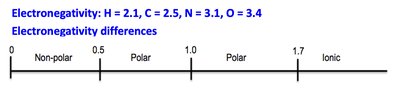
Bonds between atoms are classified based on electronegativity differences, which affect molecular structure and function.
Non-Polar Covalent: Electronegativity difference < 0.5; electrons shared equally.
Polar Covalent: Electronegativity difference 0.5–1.7; electrons shared unequally, creating partial charges.
Ionic: Electronegativity difference > 1.7; electrons transferred, forming ions.
Hydrogen Bonds: Weak bonds between polar molecules, important in DNA and protein structure.
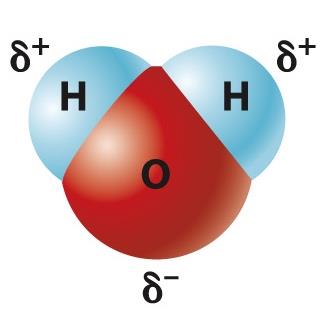
Example: Water is a polar molecule; sodium chloride forms ionic bonds.
Biomolecules: Structure and Synthesis
Macromolecules and Monomers
Cells are composed of four major classes of biomolecules, each built from smaller units called monomers.
Nucleic Acids: DNA and RNA; monomers are nucleotides.
Proteins: Made of amino acids; perform structural and enzymatic functions.
Carbohydrates: Sugars and polysaccharides; energy storage and structure.
Lipids: Fats, oils, and phospholipids; energy storage and membrane structure.
Example: Glucose is a monomer for starch and glycogen.
Polymer Formation and Breakdown
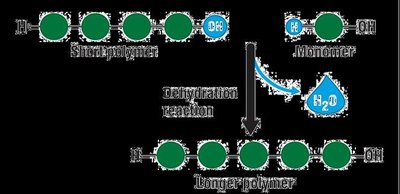
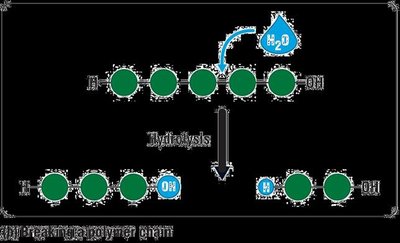
Macromolecules are synthesized and degraded by specific chemical reactions.
Dehydration Synthesis (Condensation): Joins monomers by removing water, forming polymers.
Hydrolysis: Breaks polymers into monomers by adding water.
Enzymes: Catalyze both synthesis and breakdown reactions.
Example: Formation of a disaccharide from two glucose molecules via dehydration synthesis.
DNA Structure and Hydrogen Bonding
Base Pairing in DNA
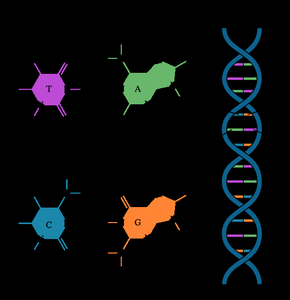
DNA is composed of two strands held together by hydrogen bonds between complementary bases.
Adenine (A) pairs with Thymine (T): 2 hydrogen bonds.
Cytosine (C) pairs with Guanine (G): 3 hydrogen bonds.
Hydrogen Bonds: Provide stability while allowing strand separation during replication.
Example: The double helix structure of DNA is stabilized by these base pair interactions.
Summary Table: Functional Groups and Their Properties
The following table summarizes the main functional groups found in biological molecules, their properties, and their behavior in aqueous environments.
Functional Group | Structure | Property | Behavior at Cellular pH |
|---|---|---|---|
Hydroxyl | -OH | Polar, increases solubility | Remains uncharged |
Carbonyl | C=O | Polar, reactive | Remains uncharged |
Carboxyl | -COOH | Acidic, can donate H+ | Forms negative ion |
Amino | -NH2 | Basic, can accept H+ | Forms positive ion |
Phosphate | -PO4 | Acidic, energy transfer | Usually negatively charged |
