 Back
Photosynthesis and Cell Communication: Core Concepts for General Biology
Study Guide - Smart Notes
 Tailored notes based on your materials, expanded with key definitions, examples, and context.
Photosynthesis
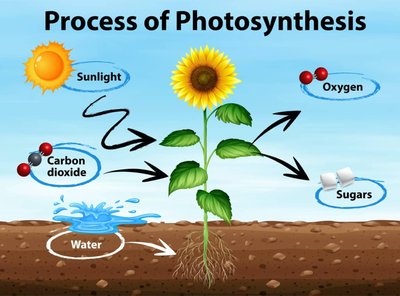
Overview of Photosynthesis
Photosynthesis is the process by which plants, algae, and some bacteria convert solar energy into chemical energy, producing organic molecules and oxygen. This process is fundamental for life on Earth, as it provides food and oxygen for most living organisms.
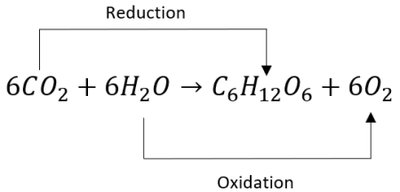
Photosynthesis Equation:
Importance: Nourishes most of the living world directly or indirectly.
Opposite of Cellular Respiration: While cellular respiration breaks down glucose to release energy, photosynthesis builds glucose using energy from sunlight.
Autotrophs and Heterotrophs
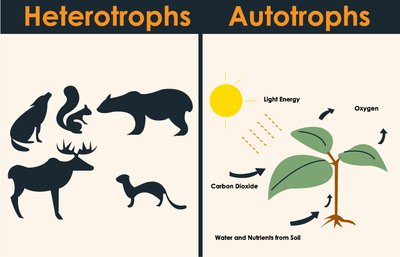
Organisms are classified based on how they obtain organic molecules:
Autotrophs: "Self-feeders" that produce organic molecules from CO2 and other inorganic substances. They are the producers of the biosphere (e.g., plants, algae).
Heterotrophs: Obtain organic material by consuming other organisms or decomposing organic matter. They depend on autotrophs for food and oxygen (e.g., animals, fungi, many bacteria).
Chloroplast Structure and Function
Chloroplasts are the organelles where photosynthesis occurs in plants and algae. They contain the pigment chlorophyll, which captures light energy.
Location: Most photosynthesis occurs in the mesophyll cells of leaves.
Gas Exchange: CO2 enters and O2 exits through stomata.
Structure: Chloroplasts have a double membrane, a fluid-filled stroma, and internal thylakoid membranes (often stacked into grana).
Chlorophyll: The green pigment located in thylakoid membranes, essential for capturing light energy.
The Splitting of Water
During photosynthesis, water molecules are split to provide electrons and protons, releasing oxygen as a byproduct. This process is essential for the generation of energy-rich molecules.
Photosynthesis as a Redox Process
Photosynthesis involves redox reactions, where electrons are transferred between molecules:
Oxidation: Water (H2O) is oxidized, losing electrons to form O2.
Reduction: Carbon dioxide (CO2) is reduced, gaining electrons to form glucose (C6H12O6).
Endergonic Process: Requires an input of energy, provided by sunlight.
Stages of Photosynthesis
Photosynthesis occurs in two main stages:
Light Reactions ("photo"): Occur in the thylakoid membranes. Water is split, O2 is released, NADP+ is reduced to NADPH, and ATP is generated by photophosphorylation.
Calvin Cycle ("synthesis"): Occurs in the stroma. CO2 is fixed into organic molecules and reduced to carbohydrates using NADPH and ATP from the light reactions.
Nature of Sunlight and Pigments
Light is a form of electromagnetic energy. Photosynthetic organisms use pigments to absorb light energy for photosynthesis.
Wavelength: Distance between crests of electromagnetic waves; determines energy of photons.
Visible Light: Drives photosynthesis; different pigments absorb different wavelengths.
Chlorophyll a: Main pigment, absorbs violet-blue and red light.
Chlorophyll b and Carotenoids: Accessory pigments that broaden the spectrum of light used for photosynthesis.
Action Spectrum and Absorption Spectrum
The action spectrum shows the effectiveness of different wavelengths in driving photosynthesis, while the absorption spectrum shows which wavelengths are absorbed by pigments.
Spectrophotometer: Measures pigment absorption.
Accessory Pigments: Broaden the range of light that can be used for photosynthesis.
Cell Communication
Overview of Cell Communication
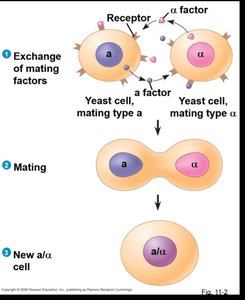
Cell communication is essential for coordinating activities in multicellular and unicellular organisms. Cells communicate using chemical signals that trigger specific responses.
Signal Transduction Pathway: A series of steps by which a signal is converted into a specific cellular response.
Example: Yeast mating involves signal transduction to coordinate cell fusion.
Types of Cell Communication
Direct Contact (Cell Junctions): Adjacent cells share materials directly through channels (e.g., gap junctions in animals, plasmodesmata in plants).
Cell-to-Cell Recognition: Membrane proteins on one cell bind directly to receptors on another, important for immune response and tissue formation.
Paracrine Signaling: Cells release local regulators that affect nearby cells (e.g., growth factors, histamines).
Synaptic Signaling: Specialized paracrine signaling in neurons; neurotransmitters cross synapses to target cells (e.g., acetylcholine, dopamine).
Endocrine Signaling: Hormones travel through the bloodstream to distant target cells (e.g., insulin, epinephrine).
Key Takeaways: The distance between cells determines the speed and range of signaling. Only cells with the correct receptors respond to signals. Disruption in communication can lead to diseases.
Signal Transduction Pathways
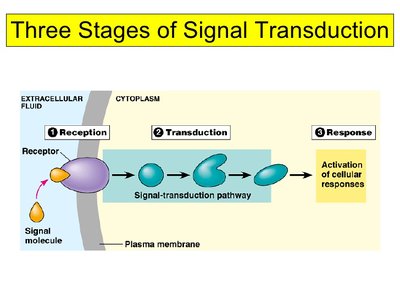
Signal transduction involves three main stages: reception, transduction, and response.
Reception: A signal molecule binds to a receptor protein on the cell surface.
Transduction: The signal is relayed through a series of molecular changes inside the cell.
Response: The cell carries out a specific activity, such as gene expression or enzyme activation.
Types of Receptors in the Plasma Membrane
Receptor Tyrosine Kinases (RTKs): Enzymatic receptors that attach phosphate groups to tyrosine residues, triggering multiple signaling pathways.
Ion Channel Receptors: Act as gates for specific ions, important in nervous system signaling.
G-Protein Coupled Receptors (GPCRs): Work with G proteins to transmit signals; play roles in development and sensory reception.
Second Messengers and Intracellular Targets
Cyclic AMP (cAMP): A common second messenger that relays signals from receptors to target molecules inside the cell.
Kinases: Enzymes that phosphorylate target proteins, altering their activity.
Transcription Factors: Proteins that regulate gene expression by binding to DNA.
Structural Proteins: Affect cell shape and movement.
Fight or Flight Response
The "fight or flight" response is triggered by the hormone epinephrine (adrenaline), causing physiological changes such as increased heart rate, dilated pupils, and elevated blood glucose levels to prepare the body for rapid action.
Type of Signaling | Distance | Speed | Example |
|---|---|---|---|
Direct Contact | Adjacent cells | Fast | Gap junctions |
Paracrine | Nearby cells | Fast | Growth factors |
Synaptic | Across synapse | Very fast | Neurotransmitters |
Endocrine | Whole body | Slow | Hormones |
Additional info: Understanding these processes is crucial for topics such as metabolism, genetics, and physiology, as they form the foundation for more advanced biological concepts.
