 Back
Photosynthesis and Cellular Respiration: Core Concepts and Processes
Study Guide - Smart Notes
 Tailored notes based on your materials, expanded with key definitions, examples, and context.
Photosynthesis and Cellular Respiration: An Overview
Introduction to Energy Transformations in Living Systems
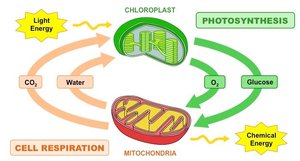
Photosynthesis and cellular respiration are two fundamental biochemical processes that sustain life on Earth. These processes are interconnected in a biological cycle, where the products of one serve as the reactants for the other, ensuring the continuous flow of energy and matter through ecosystems.
Photosynthesis converts light energy into chemical energy stored in glucose.
Cellular respiration releases the chemical energy in glucose to produce ATP, the energy currency of cells.
The exchange of CO2 and O2 between these processes maintains atmospheric balance.
Photosynthesis
Definition and Chemical Equation
Photosynthesis is an endothermic chemical reaction in which light energy is absorbed and converted into chemical energy by autotrophic organisms. This process stores energy in the bonds of glucose molecules.
General equation:
Endothermic reaction: Energy is absorbed from sunlight and stored in glucose.
Site of Photosynthesis
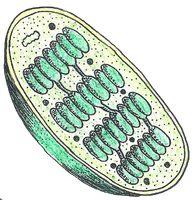
Photosynthesis occurs in the chloroplasts of plant cells and photosynthetic protists, as well as in photosynthetic bacteria. The process is divided between the thylakoid membranes (light-dependent reactions) and the stroma (light-independent reactions) of the chloroplast.
Organisms That Perform Photosynthesis
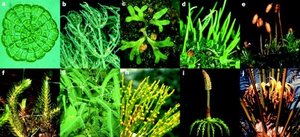
Photosynthesis is carried out by autotrophic producers, including plants, algae, photosynthetic bacteria, and some protists.
Key Terms: Autotrophs vs. Producers
Autotrophs: Organisms that can synthesize their own food from inorganic substances using light or chemical energy.
Producers: Organisms that produce organic compounds (food) for themselves and other organisms in the ecosystem.
Difference: All producers are autotrophs, but the term "producer" emphasizes their role in the food chain.
Steps of Photosynthesis
Light-Dependent Reactions (Thylakoid):
Photolysis: Water is split to release oxygen, protons, and electrons.
Electron Transport Chain: Electrons are transferred to NADP+ to form NADPH.
Photophosphorylation: ATP is produced from ADP and inorganic phosphate via ATP synthase.
Light-Independent Reactions (Calvin-Benson Cycle, Stroma):
CO2 is fixed and, with ATP and NADPH, used to synthesize glucose.
Glucose: The Main Product of Photosynthesis
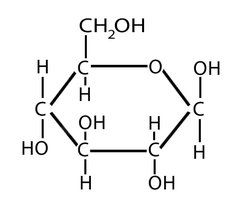
Glucose (C6H12O6) is the primary carbohydrate produced during photosynthesis. It serves as an energy source for both producers and consumers.
Cellular Respiration
Definition and Chemical Equation
Cellular respiration is an exothermic chemical reaction in which the chemical energy stored in glucose is released to produce ATP, the universal energy carrier in cells. This process occurs in all eukaryotic organisms.
General equation:
Exothermic reaction: Energy is released from glucose bonds and captured in ATP.
Site of Cellular Respiration
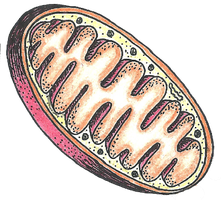
Cellular respiration primarily takes place in the mitochondria of eukaryotic cells. The initial step, glycolysis, occurs in the cytoplasm, while subsequent steps occur in the mitochondrial matrix and inner membrane (cristae).
Organisms That Perform Cellular Respiration
All eukaryotic organisms (plants, animals, fungi, protists) perform cellular respiration.
Both autotrophs and heterotrophs rely on cellular respiration to generate ATP.
Key Terms: Heterotrophs vs. Consumers
Heterotrophs: Organisms that cannot synthesize their own food and must obtain energy by consuming other organisms.
Consumers: Organisms that eat other organisms to obtain energy.
Difference: All consumers are heterotrophs, but "consumer" refers specifically to their role in the food chain.
Steps of Cellular Respiration
Glycolysis (Cytoplasm): Glucose is split into two pyruvate molecules, producing a net gain of 2 ATP and 2 NADH.
Oxidative Decarboxylation of Pyruvate (Mitochondrial Matrix): Pyruvate is converted to acetyl-CoA, releasing CO2.
Krebs Cycle (Citric Acid Cycle, Mitochondrial Matrix): Acetyl-CoA is oxidized, generating NADH, FADH2, ATP, and CO2.
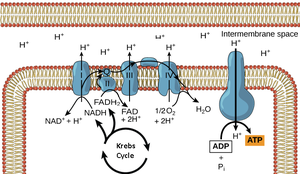
Electron Transport Chain (Cristae): Electrons from NADH and FADH2 are transferred through protein complexes, pumping protons to create a gradient.
Oxidative Phosphorylation (Chemiosmosis): Protons flow through ATP synthase, driving ATP production. Oxygen is the final electron acceptor, forming water.
Anaerobic Respiration: Fermentation Pathways
When oxygen is absent, cells can undergo fermentation to regenerate NAD+ and allow glycolysis to continue.
Lactic Acid Fermentation: Occurs in animal cells; pyruvate is converted to lactic acid. This process is reversible when oxygen becomes available.
Alcohol Fermentation: Occurs in yeast and some plant cells; pyruvate is converted to ethanol and CO2. This process is irreversible.
Photosynthesis and Cellular Respiration in the Ecosystem
Energy Flow and Trophic Levels
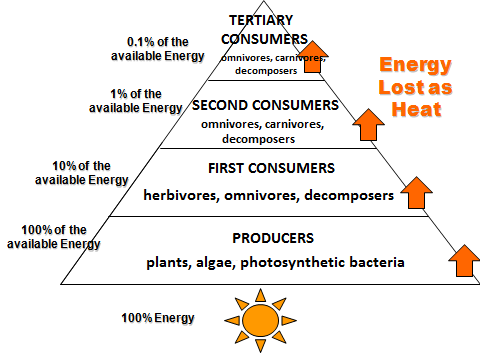
Photosynthetic organisms (producers) capture solar energy and convert it into chemical energy, which is then transferred through the food chain to consumers. At each trophic level, energy is lost as heat, limiting the number of levels in an ecosystem.
Trophic Level | Examples | Energy Available |
|---|---|---|
Producers | Plants, algae, photosynthetic bacteria | 100% |
First Consumers | Herbivores, omnivores, decomposers | 10% |
Second Consumers | Omnivores, carnivores, decomposers | 1% |
Tertiary Consumers | Omnivores, carnivores, decomposers | 0.1% |
Summary Table: Photosynthesis vs. Cellular Respiration
Feature | Photosynthesis | Cellular Respiration |
|---|---|---|
Type of Reaction | Endothermic (stores energy) | Exothermic (releases energy) |
Location | Chloroplast | Mitochondria (mainly) |
Reactants | CO2, H2O, light energy | Glucose, O2 |
Products | Glucose, O2 | CO2, H2O, ATP |
Organisms | Autotrophs (producers) | All eukaryotes |
Conclusion
Photosynthesis and cellular respiration are complementary processes that drive the flow of energy and cycling of matter in ecosystems. Understanding these processes is fundamental to the study of biology, as they explain how energy from the sun is transformed and utilized by living organisms.
