 Back
Photosynthesis and Cellular Respiration Study Guide
Study Guide - Smart Notes
 Tailored notes based on your materials, expanded with key definitions, examples, and context.
Q1. Below is the equation for photosynthesis. Describe the role of each reactant and product in the equation. Which molecules are oxidized and reduced?
Background
Topic: Photosynthesis Chemical Equation & Redox Reactions
This question tests your understanding of the photosynthesis equation, the function of each reactant and product, and the identification of oxidation and reduction processes.
Key Terms and Formulas:
Photosynthesis equation:
Oxidation: Loss of electrons
Reduction: Gain of electrons
Step-by-Step Guidance
Identify the reactants: carbon dioxide (), water (), and light energy.
Identify the products: glucose () and oxygen ().
Consider the role of each reactant: provides carbon for glucose, supplies electrons and hydrogen, and light energy powers the reaction.
Determine which molecules are oxidized and which are reduced by analyzing electron transfer: water is split, releasing electrons, and is reduced to form glucose.
Set up the identification of oxidation and reduction: Which molecule loses electrons (is oxidized) and which gains electrons (is reduced)?
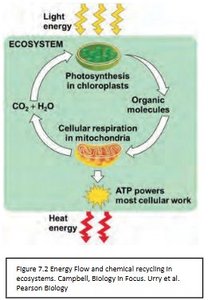
Try solving on your own before revealing the answer!
Final Answer:
In photosynthesis, water () is oxidized to oxygen (), and carbon dioxide () is reduced to glucose (). Water loses electrons (oxidation), and carbon dioxide gains electrons (reduction).
Each reactant and product plays a role: is the carbon source, provides electrons and hydrogen, light energy drives the process, glucose is the energy storage molecule, and is released as a byproduct.
Q2. How does photosynthesis relate and depend on cellular respiration?
Background
Topic: Relationship Between Photosynthesis and Cellular Respiration
This question explores the interdependence of photosynthesis and cellular respiration in biological systems.
Key Terms:
Photosynthesis: Converts light energy to chemical energy (glucose)
Cellular respiration: Converts glucose to ATP, releasing energy
ATP: Energy currency of the cell
Step-by-Step Guidance
Recall the products of photosynthesis: glucose and oxygen.
Recall the reactants of cellular respiration: glucose and oxygen.
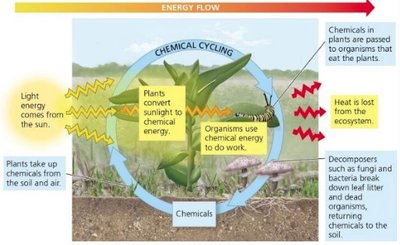
Consider how the products of one process serve as the reactants for the other.
Think about the energy flow: light energy is stored in glucose, then released as ATP during respiration.
Set up your explanation of how these cycles are interconnected and why organisms depend on both.
Try solving on your own before revealing the answer!
Final Answer:
Photosynthesis produces glucose and oxygen, which are used in cellular respiration to generate ATP. Cellular respiration releases carbon dioxide and water, which are then used in photosynthesis. The two processes form a cycle that sustains life by recycling energy and matter.
Q3. Describe the general structure of a plant cell and chloroplast. Describe the role of the following structures: Stomata, Stroma, Thylakoid/membrane.
Background
Topic: Plant Cell and Chloroplast Structure
This question tests your knowledge of plant cell anatomy and the specific structures involved in photosynthesis.
Key Terms:
Stomata: Pores for gas exchange
Stroma: Fluid inside chloroplast where Calvin cycle occurs
Thylakoid/membrane: Site of light reactions
Step-by-Step Guidance
Describe the basic structure of a plant cell, including cell wall, membrane, and organelles.
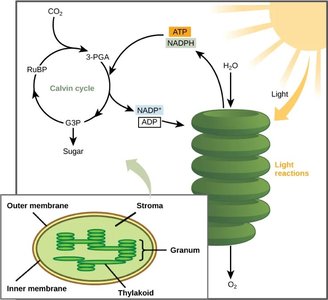
Identify the chloroplast and its main parts: outer membrane, inner membrane, stroma, thylakoids, and grana.
Explain the function of stomata in gas exchange (CO2 in, O2 out).
Describe the stroma as the site of the Calvin cycle and the thylakoid membrane as the site of light reactions.
Set up your explanation for how these structures work together in photosynthesis.
Try solving on your own before revealing the answer!
Final Answer:
Stomata allow gas exchange, stroma is the site of the Calvin cycle, and thylakoid membranes are where light reactions occur. The chloroplast's structure is specialized to maximize photosynthesis efficiency.
Q4. Compare and contrast the structures and function of the mitochondria and chloroplast. Plant cells use both. Explain why this is important.
Background
Topic: Organelle Structure and Function
This question examines the similarities and differences between mitochondria and chloroplasts, and their roles in plant cells.
Key Terms:
Mitochondria: Site of cellular respiration
Chloroplast: Site of photosynthesis
ATP: Produced in both organelles
Step-by-Step Guidance
Describe the structure of mitochondria: double membrane, matrix, cristae.
Describe the structure of chloroplast: double membrane, stroma, thylakoids, grana.
Compare their functions: mitochondria generate ATP from glucose, chloroplasts produce glucose from light energy.
Explain why plant cells need both organelles for energy conversion and storage.
Set up your explanation for the importance of having both organelles.
Try solving on your own before revealing the answer!
Final Answer:
Chloroplasts capture light energy to make glucose, while mitochondria break down glucose to produce ATP. Both are essential for plant cell energy needs: chloroplasts for energy storage, mitochondria for energy release.
Q5. Why do plants need both chloroplast and mitochondria? How do their roles differ in the cell?
Background
Topic: Energy Conversion in Plant Cells
This question focuses on the distinct roles of chloroplasts and mitochondria in plant cells.
Key Terms:
Chloroplast: Photosynthesis, glucose production
Mitochondria: Cellular respiration, ATP production
Step-by-Step Guidance
Recall that chloroplasts convert light energy to chemical energy (glucose).
Recall that mitochondria convert chemical energy (glucose) to usable energy (ATP).
Explain why both processes are necessary for plant survival.
Set up your explanation for how these organelles complement each other.
Try solving on your own before revealing the answer!
Final Answer:
Plants need chloroplasts to make glucose from sunlight and mitochondria to convert glucose into ATP for cellular work. Their roles differ: chloroplasts store energy, mitochondria release it.
