 Back
Photosynthesis and Cellular Respiration: The Flow of Energy in Living Systems
Study Guide - Smart Notes
 Tailored notes based on your materials, expanded with key definitions, examples, and context.
Photosynthesis and Cellular Respiration
Overview of Energy Flow in Living Systems
Photosynthesis and cellular respiration are complementary biological processes that cycle carbon and energy through ecosystems. Photosynthesis transforms light energy into chemical energy stored in glucose, while cellular respiration releases that energy for cellular activities.
Photosynthesis: Occurs in plants, algae, and some bacteria, converting carbon dioxide and water into glucose and oxygen using sunlight.
Cellular Respiration: Occurs in both plants and animals, breaking down glucose with oxygen to produce carbon dioxide, water, and ATP (energy).
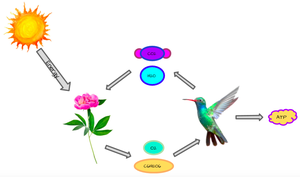
Photosynthesis
Definition and Location
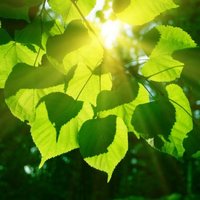
Photosynthesis is the process by which plants synthesize their own food using carbon dioxide, water, and sunlight. This process primarily occurs in the leaves of plants, within specialized organelles called chloroplasts.
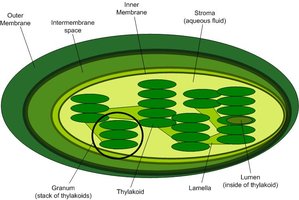
Chloroplast Structure and Function
Chloroplasts are the site of photosynthesis in plant cells. They contain the pigment chlorophyll, which absorbs light energy necessary for the process.
Thylakoids: Membranous sacs where the light-dependent reactions occur.
Stroma: Fluid-filled space where the Calvin cycle (light-independent reactions) takes place.
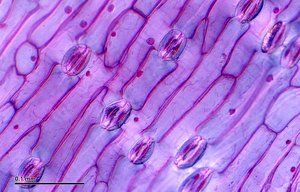
Stomata and Gas Exchange
Stomata are small openings on the underside of leaves, regulated by guard cells. They allow for the exchange of gases: carbon dioxide enters, and oxygen exits as a byproduct of photosynthesis.
Photosynthesis: Reactants and Products
The overall process of photosynthesis can be summarized by the following equation:
Reactants: Carbon dioxide (CO2), water (H2O), and sunlight
Products: Glucose (C6H12O6), oxygen (O2)

Stages of Photosynthesis
Light-dependent reactions: Sunlight splits water molecules, releasing oxygen as a waste product.
Light-independent reactions (Calvin Cycle): Hydrogen from water combines with carbon dioxide to form glucose.
Factors Affecting the Rate of Photosynthesis
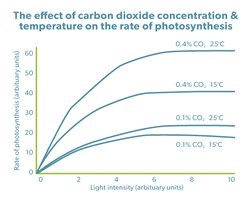
The rate of photosynthesis is influenced by several environmental factors, including light intensity, carbon dioxide concentration, and temperature.
Higher light intensity and CO2 levels generally increase the rate, up to a point.
Temperature affects enzyme activity involved in the process.
Seasonal Carbon Flux
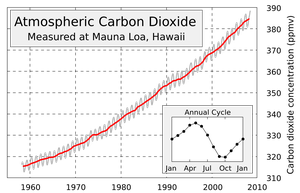
Photosynthesis rates fluctuate seasonally, with higher rates in summer due to increased leaf area and sunlight. This is reflected in annual carbon flux patterns.
Cellular Respiration
Definition and Location
Cellular respiration is the process by which cells break down glucose in the presence of oxygen to release energy in the form of ATP. This process occurs in the mitochondria of both plant and animal cells.
Stages of Cellular Respiration
Glycolysis: Glucose is split into two molecules of pyruvate in the cytoplasm.
Krebs Cycle (Citric Acid Cycle): Pyruvate is further broken down, releasing CO2 and transferring energy to electron carriers.
Electron Transport Chain & ATP Synthase: Energy from electrons is used to produce ATP; oxygen acts as the final electron acceptor, forming water.
Cellular Respiration Equation
The overall process of aerobic cellular respiration can be summarized by the following equation:
ATP: The Energy Currency of the Cell
Adenosine triphosphate (ATP) is the main energy carrier in cells. Energy is released when the bond between the second and third phosphate groups is broken, forming ADP (adenosine diphosphate).
Aerobic vs. Anaerobic Respiration
Type | Oxygen Required? | ATP Yield | End Products | Example |
|---|---|---|---|---|
Aerobic | Yes | ~36 ATP per glucose | CO2, H2O | Running at moderate pace |
Anaerobic | No | 2 ATP per glucose | Lactic acid (animals), ethanol + CO2 (yeast) | Sprinting, heavy lifting |
Conservation of Matter and Energy
Photosynthesis and cellular respiration demonstrate the conservation of matter and energy. Atoms are rearranged, not created or destroyed, and energy flows through the system but is not lost.
Human Impact on the Carbon Cycle
Human activities such as fossil fuel combustion and deforestation disrupt the natural carbon cycle, increasing atmospheric CO2 and contributing to climate change. Forests act as carbon sinks, while oceans help regulate Earth's temperature.
Summary Table: Photosynthesis vs. Cellular Respiration
Process | Location | Reactants | Products | Energy Conversion |
|---|---|---|---|---|
Photosynthesis | Chloroplasts (plants) | CO2, H2O, sunlight | Glucose, O2 | Light → Chemical (glucose) |
Cellular Respiration | Mitochondria (all eukaryotes) | Glucose, O2 | CO2, H2O, ATP | Chemical (glucose) → Chemical (ATP) |
Additional info: The notes above expand on the provided material with academic context, including definitions, equations, and tables for clarity and completeness.
