 Back
Photosynthesis: Converting Light Energy to Chemical Energy
Study Guide - Smart Notes
 Tailored notes based on your materials, expanded with key definitions, examples, and context.
Photosynthesis: Overview and Importance
Introduction to Photosynthesis
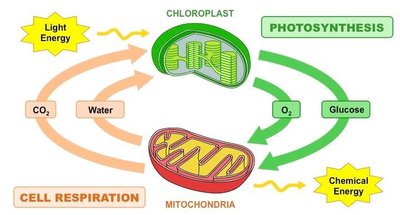
Photosynthesis is the process by which photoautotrophic organisms convert solar energy into chemical energy, primarily in the form of glucose. This process is essential for sustaining life on Earth, as it provides both food and oxygen for heterotrophic organisms.
Photoautotrophs include plants, algae, some protists, and certain bacteria.
Heterotrophs must consume organic material for energy and rely on autotrophs for food and oxygen.
Organisms Capable of Photosynthesis
Types of Photoautotrophs
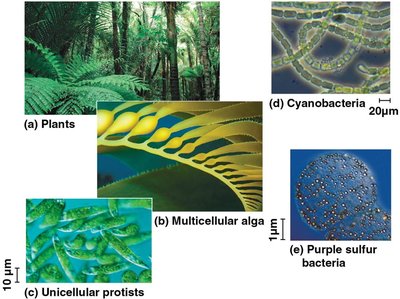
Photoautotrophs are organisms that can produce their own food using light energy, carbon dioxide, and water. They are found in various domains of life.
Plants: The most familiar photoautotrophs, responsible for the majority of photosynthesis on land.
Algae: Both unicellular and multicellular forms contribute significantly to aquatic photosynthesis.
Cyanobacteria: Prokaryotic organisms capable of oxygenic photosynthesis.
Purple sulfur bacteria: Use alternative electron donors like hydrogen sulfide instead of water.
Heterotrophs: Organisms Dependent on Others
Types of Heterotrophs
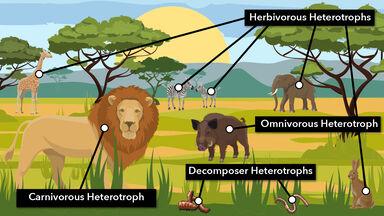
Heterotrophs cannot produce their own food and must obtain energy by consuming other organisms or organic matter.
Herbivores: Eat plants (e.g., cows, parrots).
Carnivores: Eat other animals (e.g., lions, sharks).
Omnivores: Eat both plants and animals (e.g., humans, pigs).
Detritivores/Decomposers: Consume dead organic matter (e.g., earthworms, fungi).
Chloroplast Structure and Function
Where Photosynthesis Occurs
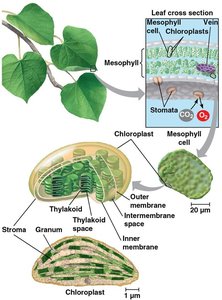
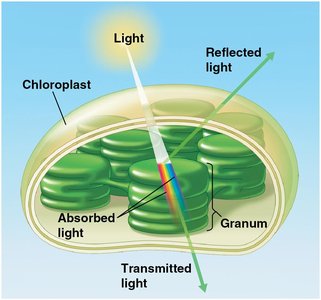
Photosynthesis primarily takes place in the chloroplasts of plant cells, especially within the mesophyll tissue of leaves. Chloroplasts are specialized organelles with a complex internal structure that supports the photosynthetic process.
Thylakoids: Flattened sacs where light reactions occur.
Stroma: Fluid-filled space where the Calvin cycle takes place.
Chlorophyll: The main pigment that absorbs light energy.
Stomata: Pores in leaves that allow gas exchange (CO2 in, O2 out).
The Overall Photosynthesis Equation
Chemical Equation and Atom Flow
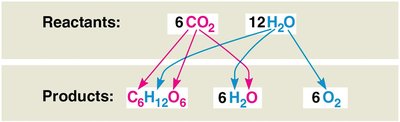
The overall process of photosynthesis can be summarized by the following equation:
Carbon dioxide and water are used as reactants.
Glucose, oxygen, and water are produced.
Water is both consumed and produced, but the oxygen released comes from water, not CO2.
Redox Reactions in Photosynthesis
Oxidation and Reduction
Photosynthesis involves a series of redox reactions. Water is oxidized (loses electrons), and carbon dioxide is reduced (gains electrons) to form glucose. The process is endergonic, requiring an input of energy from sunlight.
CO2 is reduced to glucose.
H2O is oxidized to O2.

Stages of Photosynthesis
Light Reactions and the Calvin Cycle
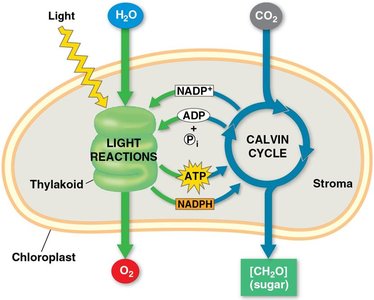
Photosynthesis occurs in two main stages: the light reactions and the Calvin cycle. Both stages take place within the chloroplast but in different locations.
Light Reactions: Occur in the thylakoid membranes. Light energy is used to split water, releasing oxygen, and to produce ATP and NADPH.
Calvin Cycle: Occurs in the stroma. Uses ATP and NADPH to fix carbon dioxide and synthesize glucose.
Light: The Energy Source for Photosynthesis
Nature of Light and the Electromagnetic Spectrum
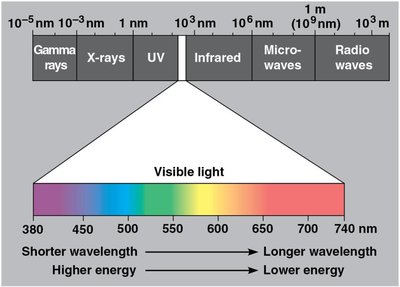
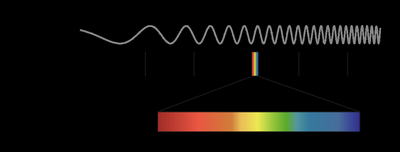
Light is a form of electromagnetic energy that travels in waves. The electromagnetic spectrum includes all wavelengths of electromagnetic radiation, but only a small portion (visible light) is used in photosynthesis.
Wavelength: The distance between two peaks of a wave; determines the energy of light (shorter wavelength = higher energy).
Visible Light: Ranges from about 380 nm (violet) to 740 nm (red).
Light as a Particle: Photons
Photon Energy and Pigment Absorption
Light also behaves as particles called photons, each carrying a fixed amount of energy inversely related to its wavelength. Pigments absorb photons of specific wavelengths, which excites electrons to higher energy states.
Shorter wavelength photons (e.g., blue light) have more energy than longer wavelength photons (e.g., red light).
Unabsorbed light is reflected or transmitted, giving plants their green color.
Measuring Light Absorption: Spectrophotometry
Absorption Spectrum and Action Spectrum
Spectrophotometers are used to measure how much light a pigment absorbs at different wavelengths. The absorption spectrum shows which wavelengths are absorbed, while the action spectrum indicates which wavelengths are most effective for photosynthesis.
Chlorophyll a: Main pigment for light reactions.
Chlorophyll b and carotenoids: Accessory pigments that broaden the spectrum of light used.
Photosystems and Pigment Function
Photosystems I and II
Photosystems are complexes of proteins and pigments in the thylakoid membrane that capture light energy and initiate electron transport. There are two types: Photosystem II (PSII, P680) and Photosystem I (PSI, P700), named for their optimal absorption wavelengths.
Light-harvesting complex: Contains various pigments that absorb light and transfer energy to the reaction center.
Reaction center: Contains chlorophyll a and a primary electron acceptor.
Excited electrons are transferred from chlorophyll a to the electron acceptor, starting the light reactions.
Summary of Photosynthesis
Photosynthesis is the process by which light energy is converted into chemical energy, producing glucose and oxygen from carbon dioxide and water. It involves two main stages: the light reactions (which generate ATP and NADPH) and the Calvin cycle (which synthesizes sugars). Pigments such as chlorophyll absorb light, and photosystems organize the transfer of energy and electrons.
