 Back
Photosynthesis: Matter, Energy, and Variations
Study Guide - Smart Notes
 Tailored notes based on your materials, expanded with key definitions, examples, and context.
Photosynthesis
Matter and Energy in Photosynthesis
Photosynthesis is the process by which producers, such as plants, capture light energy and convert it into chemical energy stored in sugar molecules. This transformation is fundamental for life on Earth, as it provides energy and organic matter for consumers and regulates Earth's environment.
Producers (plants, algae, some bacteria) use sunlight to create chemical bonds in sugars.
Consumers obtain energy and nutrients by digesting plant matter; indigestible matter is excreted as waste.
Energy transfer begins with the sun and moves through the food chain.

Transformation of Energy: Sun to Consumer
Energy from the sun is captured by plants through photosynthesis and stored in glucose. When animals, such as pandas, eat plants, they obtain this energy and nutrients, demonstrating the flow of energy from the sun to consumers.
Light energy → chemical energy in plants → transferred to animals via consumption.
Energy is used for cellular processes; excess matter is excreted.

Modelling Photosynthesis
Photosynthesis Overview
Photosynthesis is essential for nearly all life on Earth. It can be modelled as a process where light energy is converted into chemical energy, and its products are used by other organisms.
Plants, algae, and some bacteria perform photosynthesis.
Photosynthesis regulates atmospheric gases and sustains food webs.
Light and Photosynthesis
Electromagnetic Radiation and Light Absorption
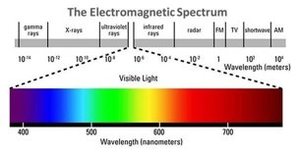
Light is a form of electromagnetic radiation, traveling in waves of various wavelengths. Plants absorb specific wavelengths of visible light for photosynthesis, primarily in the blue and red regions, while reflecting green light.
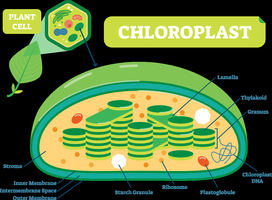
Chloroplasts are the organelles where light absorption and photosynthesis occur.
Most plants reflect green light, which is why they appear green.
Absorbed light powers the photosynthetic reactions.
Comparing Producers: Photosynthesis vs. Chemosynthesis
Alternative Energy Acquisition
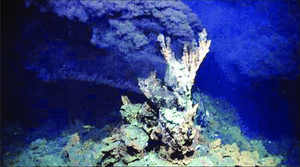
While most organisms rely on sunlight and photosynthesis, some in extreme environments (deep oceans, hydrothermal vents, caves) use chemosynthesis to produce sugars from chemical energy.
Chemosynthesis uses chemical energy (e.g., from hydrogen sulfide) to convert carbon dioxide into sugars.
Supports life in environments without sunlight.
Examples include bacteria near hydrothermal vents.
Stages of Photosynthesis
The Light-Dependent Reactions
The light-dependent reactions occur in the thylakoid membranes of chloroplasts and require sunlight. They produce ATP and NADPH, which are used in the next stage.
Energy absorbed from sunlight: Chlorophyll in Photosystem II absorbs sunlight, energizing electrons.
Water molecules split: Enzymes break down H2O, replacing electrons and releasing O2 as waste.
H+ transported: Energized electrons move through the electron transport chain, pumping H+ across the membrane.
Energy absorbed in Photosystem I: Chlorophyll absorbs more sunlight, further energizing electrons.
NADPH produced: Electrons are added to NADP+ to form NADPH.
H+ diffusion: H+ diffuses through ATP synthase, generating ATP from ADP.
The Light-Independent Reactions (Calvin Cycle)
The light-independent reactions, also known as the Calvin Cycle, use ATP and NADPH to convert CO2 into glucose.
CO2 added: CO2 combines with a 5-carbon molecule, forming a 6-carbon molecule.
Three-carbon molecules formed: The 6-carbon molecule splits into two 3-carbon molecules, which are energized by ATP and NADPH.
Three-carbon molecules exit: One high-energy 3-carbon molecule leaves the cycle; two exiting molecules form one glucose.
Three-carbon molecules recycled: Remaining molecules are rearranged to continue the cycle.
Variation in Photosynthesis
Adaptations and Environmental Impact
Photosynthesis varies among organisms and environments. Some plants have adaptations for different light intensities or water availability, while chemosynthetic organisms thrive in extreme conditions.
Photosynthetic efficiency depends on light, water, and CO2 availability.
Chemosynthetic organisms expand the range of life beyond sunlight-dependent ecosystems.
Key Equations
Photosynthesis Equation
The overall chemical equation for photosynthesis is:
$6\mathrm{CO}_2 + 12\mathrm{H}_2\mathrm{O} + \text{light energy} \xrightarrow{\text{chlorophyll}} \mathrm{C}_6\mathrm{H}_{12}\mathrm{O}_6 + 6\mathrm{O}_2 + 6\mathrm{H}_2\mathrm{O}$
Chemosynthesis Equation
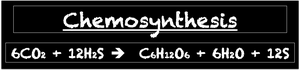
The chemical equation for chemosynthesis (using hydrogen sulfide) is:
$6\mathrm{CO}_2 + 12\mathrm{H}_2\mathrm{S} \rightarrow \mathrm{C}_6\mathrm{H}_{12}\mathrm{O}_6 + 6\mathrm{H}_2\mathrm{O} + 12\mathrm{S}$
Comparison Table: Photosynthesis vs. Chemosynthesis
Process | Energy Source | Location | Key Organisms |
|---|---|---|---|
Photosynthesis | Sunlight | Surface environments | Plants, algae, cyanobacteria |
Chemosynthesis | Chemical energy (e.g., H2S) | Deep ocean, hydrothermal vents | Certain bacteria, archaea |
Additional info: The notes include expanded explanations and context for each step and process, as well as relevant equations and comparisons for exam preparation.
