 Back
BackPhotosynthesis: Mechanisms, Adaptations, and Energy Conversion
Study Guide - Smart Notes
 Tailored notes based on your materials, expanded with key definitions, examples, and context.
Photosynthesis: The Process That Feeds the Biosphere
Introduction to Photosynthesis
Photosynthesis is the process by which autotrophic organisms convert solar energy into chemical energy, sustaining nearly all life on Earth. This process is fundamental to the biosphere, as it provides organic molecules and oxygen necessary for most living organisms.
Autotrophs are organisms that produce their own food from inorganic substances.
Photoautotrophs use sunlight to synthesize organic molecules from carbon dioxide and water.
Photosynthesis occurs in plants, algae, certain unicellular eukaryotes, and some prokaryotes.
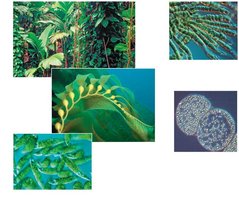
Photosynthetic Structures and Sites
Chloroplasts and Leaf Anatomy
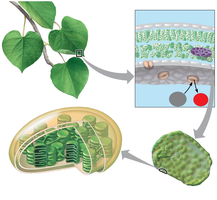
Photosynthesis primarily takes place in the chloroplasts of plant cells, which are mainly located in the mesophyll tissue of leaves. The exchange of gases (CO2 and O2) occurs through microscopic pores called stomata.
Chloroplasts contain the pigment chlorophyll, which captures light energy.
Stomata regulate gas exchange between the plant and the atmosphere.
Photosynthesis: An Overview
General Equation and Energy Flow
Photosynthesis is an endergonic process, meaning it requires an input of energy, which is provided by sunlight. The overall chemical equation for photosynthesis is:
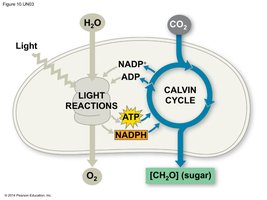
This process consists of two main stages: the light reactions and the Calvin cycle.
The Light Reactions
Electromagnetic Spectrum and Light Absorption
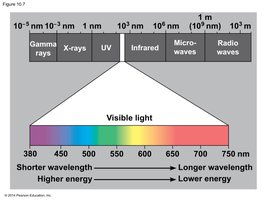
Light reactions occur in the thylakoid membranes of chloroplasts, where light energy is converted into chemical energy in the form of ATP and NADPH. Light is a form of electromagnetic radiation, and only a small portion (visible light) is used in photosynthesis.
Wavelength is the distance between the crests of waves; shorter wavelengths have higher energy.
Photons are discrete particles of light energy.
Absorption and Action Spectra
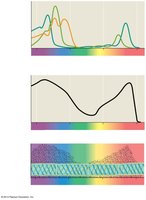
Pigments absorb specific wavelengths of light. The absorption spectrum shows which wavelengths are absorbed by different pigments, while the action spectrum indicates the effectiveness of different wavelengths in driving photosynthesis.
Chlorophyll a is the main pigment; chlorophyll b and carotenoids are accessory pigments that broaden the range of light absorption and provide photoprotection.
Photosystems and Electron Flow
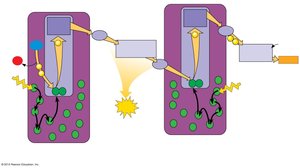
Photosystems are complexes of proteins and pigments that capture light energy. There are two types: Photosystem II (PS II) and Photosystem I (PS I), which work together in the thylakoid membrane to drive electron flow.
PS II absorbs light best at 680 nm (P680).
PS I absorbs light best at 700 nm (P700).
Linear Electron Flow
Linear electron flow is the primary pathway, involving both photosystems and resulting in the production of ATP and NADPH.
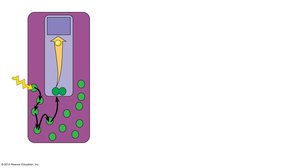
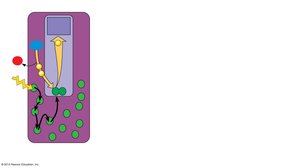
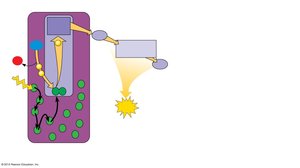
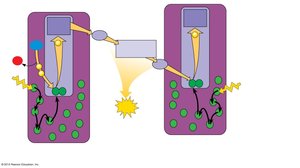
A photon excites pigment molecules, transferring energy to P680 in PS II.
An excited electron from P680 is transferred to the primary electron acceptor.
Water is split, providing electrons to P680+ and releasing O2 as a by-product.
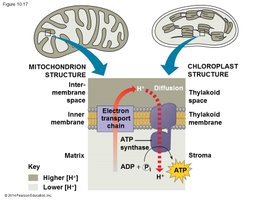
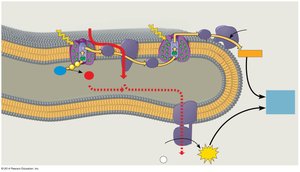
Electrons move down an electron transport chain, creating a proton gradient that drives ATP synthesis.
Electrons reach PS I, are re-excited by light, and transferred to NADP+ to form NADPH.
ATP Synthesis and Chemiosmosis
As electrons move through the electron transport chain, protons are pumped into the thylakoid space, creating a proton gradient. ATP synthase uses this gradient to generate ATP from ADP and inorganic phosphate.
The Calvin Cycle
Carbon Fixation and Sugar Production
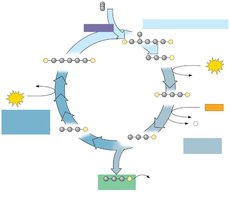
The Calvin cycle occurs in the stroma of the chloroplast and uses ATP and NADPH from the light reactions to convert CO2 into sugar. The main product is glyceraldehyde 3-phosphate (G3P).
For one G3P molecule, the cycle must fix three CO2 molecules.
The cycle has three phases: carbon fixation (catalyzed by rubisco), reduction, and regeneration of the CO2 acceptor (RuBP).
Adaptations to Hot, Arid Climates
Photorespiration and Its Consequences
On hot, dry days, plants close their stomata to conserve water, which limits CO2 uptake and increases O2 concentration. This can lead to photorespiration, where rubisco incorporates O2 instead of CO2, reducing photosynthetic efficiency.
Photorespiration consumes O2 and organic fuel, releasing CO2 without producing ATP or sugar.
C4 and CAM Plant Adaptations
Some plants have evolved mechanisms to minimize photorespiration and maximize carbon fixation under arid conditions.
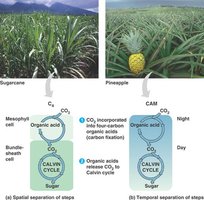
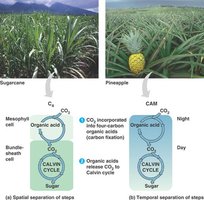
C4 plants (e.g., sugarcane) spatially separate carbon fixation and the Calvin cycle. CO2 is initially fixed into a four-carbon compound in mesophyll cells, then transported to bundle-sheath cells where the Calvin cycle occurs.
CAM plants (e.g., pineapple, succulents) temporally separate these processes. They open stomata at night to fix CO2 into organic acids, which release CO2 for the Calvin cycle during the day when stomata are closed.
Summary Table: Comparison of Photosynthetic Pathways
Pathway | Main Adaptation | CO2 Fixation Site | Example Plants |
|---|---|---|---|
C3 | Standard Calvin cycle | Mesophyll cells | Wheat, rice |
C4 | Spatial separation of steps | Mesophyll → Bundle-sheath cells | Sugarcane, maize |
CAM | Temporal separation of steps | Night: Mesophyll (organic acids) Day: Mesophyll (Calvin cycle) | Pineapple, cacti |
Additional info: C4 and CAM pathways are evolutionary adaptations to reduce water loss and photorespiration in environments with high temperatures and limited water availability.
