 Back
Photosynthesis: Mechanisms, Organisms, and Light Reactions
Study Guide - Smart Notes
 Tailored notes based on your materials, expanded with key definitions, examples, and context.
Photosynthesis: Overview and Energy Conversion
Photosynthesis and Cellular Respiration
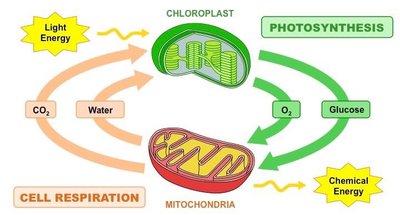
Photosynthesis is the process by which autotrophic organisms convert solar energy into chemical energy, primarily in the form of glucose. This process is essentially the reverse of cellular respiration, which breaks down glucose to release energy. Both processes are fundamental to the energy flow in biological systems.
Photosynthesis: Occurs in chloroplasts, uses light energy, carbon dioxide, and water to produce glucose and oxygen.
Cellular Respiration: Occurs in mitochondria, uses glucose and oxygen to produce carbon dioxide, water, and ATP.
Equation for Photosynthesis:
Equation for Cellular Respiration:
Photosynthesis is endergonic: Requires energy input from sunlight.
Cellular respiration is exergonic: Releases energy stored in glucose.
Organisms Involved in Photosynthesis
Autotrophs and Photoautotrophs
Autotrophs are organisms capable of producing their own food from inorganic substances. Photoautotrophs use sunlight as their energy source, converting carbon dioxide and water into organic molecules.
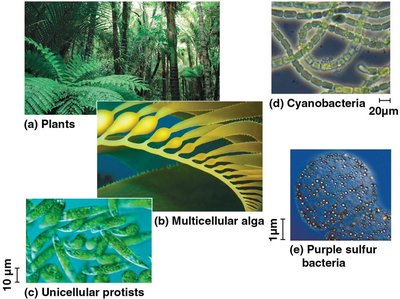
Photoautotrophs: Include plants, algae, cyanobacteria, and some protists.
Examples:
Plants (e.g., ferns, trees)
Multicellular algae
Unicellular protists
Cyanobacteria
Purple sulfur bacteria
Heterotrophs
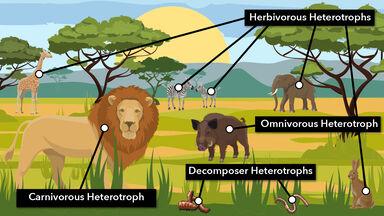
Heterotrophs are organisms that cannot synthesize their own food and must consume organic material. They rely on autotrophs for food and oxygen.
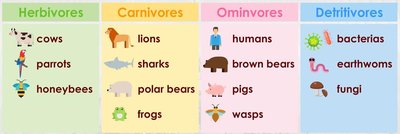
Types of heterotrophs: Herbivores, carnivores, omnivores, decomposers.
Decomposers: Consume dead organic matter, recycling nutrients.
Dependence: Nearly all heterotrophs depend on autotrophs for sustenance.
Structure and Location of Photosynthesis
Chloroplasts and Leaf Anatomy
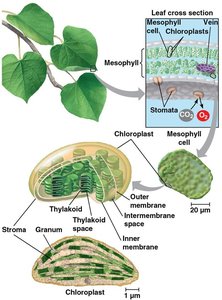
Photosynthesis occurs in chloroplasts, which are specialized organelles found mainly in the mesophyll cells of leaves. The structural organization of chloroplasts facilitates the complex reactions of photosynthesis.
Chloroplast structure: Double membrane, stroma (internal fluid), thylakoid membranes (site of light reactions), granum (stack of thylakoids).
Leaf anatomy: Most photosynthesis occurs in leaves; veins transport water and sugars; stomata allow gas exchange.
Chlorophyll: The pigment responsible for absorbing light, located in thylakoid membranes.
Mechanism and Chemical Reactions of Photosynthesis
Photosynthesis as a Redox Process
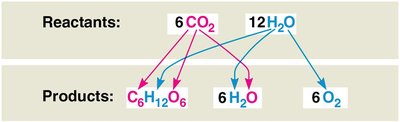
Photosynthesis involves a series of redox reactions, where water is oxidized and carbon dioxide is reduced. The process is driven by light energy and results in the synthesis of carbohydrates.
Redox reactions: Water molecules are oxidized (lose electrons), carbon dioxide is reduced (gain electrons).
Endergonic process: Energy is absorbed from sunlight.
General equation:

Photosynthetic Reactions: Light Reactions and Calvin Cycle
Light Reactions
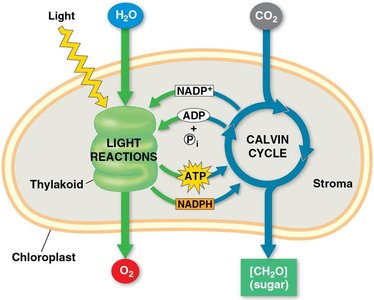
The light reactions occur in the thylakoid membranes and are responsible for converting light energy into chemical energy in the form of ATP and NADPH. Oxygen is released as a byproduct.
Key steps: Water is split, electrons and protons are generated, oxygen is released.
NADP+ is reduced to NADPH: Electron carrier for the Calvin cycle.
ATP synthesis: From ADP and inorganic phosphate.
Calvin Cycle
The Calvin cycle occurs in the stroma of the chloroplast and uses ATP and NADPH from the light reactions to fix carbon dioxide into carbohydrates.
Carbon fixation: Incorporation of CO2 into organic molecules.
Reduction: Fixed carbons are reduced to carbohydrates.
ATP and NADPH: Provide energy and reducing power for synthesis.
Light and Pigments in Photosynthesis
Electromagnetic Spectrum and Visible Light
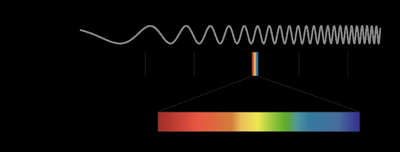
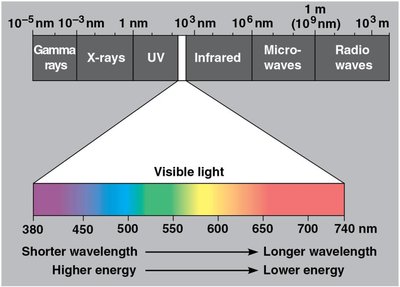
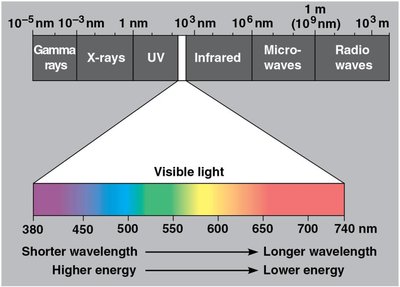
Photosynthesis utilizes visible light, which is a small portion of the electromagnetic spectrum. Light energy is absorbed by pigments in the chloroplasts.
Electromagnetic spectrum: Includes gamma rays, X-rays, UV, visible light, infrared, microwaves, and radio waves.
Visible light: Wavelengths between 380 nm and 740 nm are used in photosynthesis.
Energy and wavelength: Shorter wavelengths have higher energy.
Light as Particles: Photons
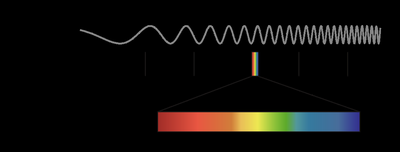
Light can also be described as discrete particles called photons. Photons have energy inversely proportional to their wavelength and are absorbed by pigment proteins.
Photon energy: , where is Planck's constant, is the speed of light, and is wavelength.
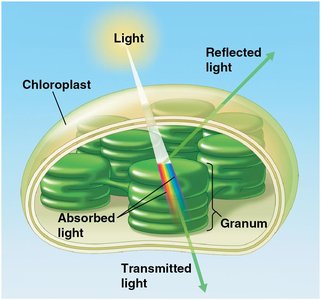
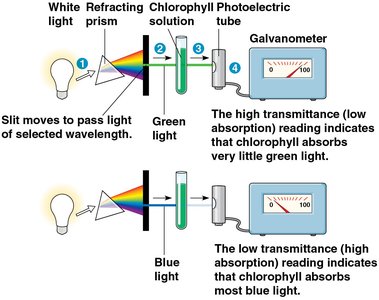
Absorption: Pigments absorb specific wavelengths; unabsorbed light is reflected or transmitted.
Measurement of Light Absorption
Spectrophotometers are used to measure the absorption of light by pigments. The absorption spectrum shows which wavelengths are absorbed by a pigment.
Absorption spectrum: Graphical representation of light absorption at different wavelengths.
Action spectrum: Indicates which wavelengths are most effective for photosynthesis.
Plant Pigments and Their Functions
Types of Pigments in Chloroplasts
Chloroplasts contain several types of pigments, each with a specific role in capturing light energy for photosynthesis.
Chlorophyll a: Main pigment for light reactions.
Chlorophyll b: Accessory pigment, broadens the spectrum of light absorbed.
Carotenoids: Accessory pigments, protect against excess light and broaden absorption.
Absorption and Action Spectra
Different pigments absorb different wavelengths of light. The action spectrum shows which wavelengths are most effective for photosynthesis.
Best wavelengths: Violet-blue and red light are most effective; green is least effective.
Fluorescence: When electrons return to ground state, excess energy is released as heat or light.
Photosystems and Light Harvesting
Photosystems Structure and Function
Photosystems are multi-protein complexes in the thylakoid membrane that organize pigments and facilitate the transfer of excited electrons.
Reaction center complex: Contains chlorophyll a and electron acceptors.
Light-harvesting complex: Contains accessory pigments and specialized proteins.
Photosystem II (PSII): Absorbs light best at 680 nm (P680).
Photosystem I (PSI): Absorbs light best at 700 nm (P700).
Function of Photosystems
Light-harvesting complexes absorb light, exciting electrons that are transferred to the reaction center complex. The reduction of the electron acceptor is the first step in the light reactions.
Electron transfer: Excited electrons are passed to electron acceptors, initiating the light reactions.
Summary
Photosynthesis is a fundamental biological process that converts light energy and carbon dioxide into glucose and oxygen. It involves light reactions and the Calvin cycle, utilizes pigments such as chlorophyll, and relies on multi-protein complexes called photosystems. The process is essential for sustaining life on Earth, providing food and oxygen for heterotrophic organisms.
