 Back
Photosynthesis: Mechanisms, Organisms, and Light Reactions
Study Guide - Smart Notes
 Tailored notes based on your materials, expanded with key definitions, examples, and context.
Photosynthesis: Converting Light Energy to Chemical Energy
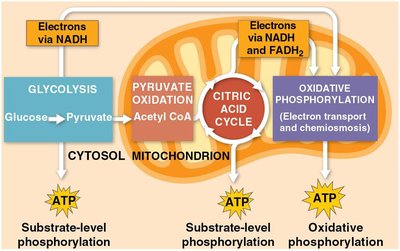
Review of Cellular Respiration
Cellular respiration is the process by which cells convert glucose and oxygen into ATP, the energy currency of the cell, with carbon dioxide and water as byproducts. This process occurs in the mitochondria and involves glycolysis, the citric acid cycle, and oxidative phosphorylation.
Photosynthesis: The Biological Conversion of Solar Energy
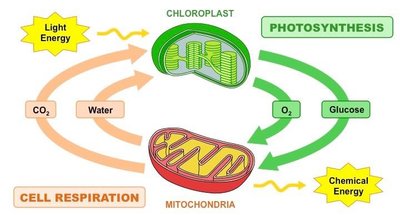
Photosynthesis is the process by which photoautotrophs convert solar energy into chemical energy, producing organic molecules from carbon dioxide and water. This process occurs in chloroplasts and is essential for life on Earth, as it provides both food and oxygen for heterotrophic organisms.
Organisms Capable of Photosynthesis
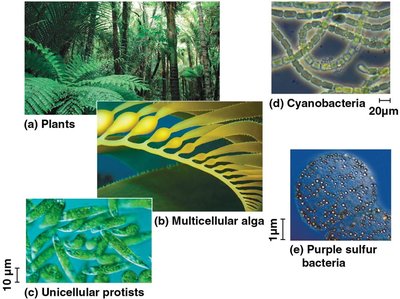
Autotrophs are organisms that can produce their own food from inorganic substances. Photoautotrophs, such as plants, algae, and some bacteria, use sunlight to drive the synthesis of organic molecules. These organisms are the foundation of most ecosystems.
Plants: Multicellular photoautotrophs found in terrestrial and aquatic environments.
Algae: Can be unicellular or multicellular, found in aquatic environments.
Protists: Unicellular eukaryotes capable of photosynthesis.
Cyanobacteria: Photosynthetic prokaryotes.
Purple sulfur bacteria: Use alternative electron donors like hydrogen sulfide.
Heterotrophs: Organisms Dependent on Others for Food
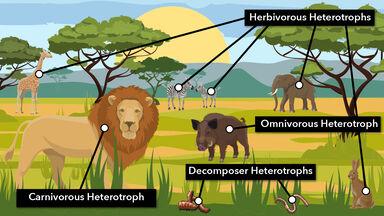
Heterotrophs cannot synthesize their own food and must consume organic material. They include animals, fungi, and many bacteria. Heterotrophs are classified based on their dietary habits:
Herbivores: Eat plants.
Carnivores: Eat other animals.
Omnivores: Eat both plants and animals.
Decomposers/Detritivores: Consume dead organic matter.
Structure and Location of Photosynthesis in Plants
Photosynthesis primarily occurs in the leaves of plants, within specialized organelles called chloroplasts. The structure of the leaf and chloroplast is adapted to maximize light absorption and gas exchange.
Mesophyll cells: Contain the majority of chloroplasts.
Stomata: Pores that allow gas exchange (CO2 in, O2 out).
Veins: Transport water and sugars.
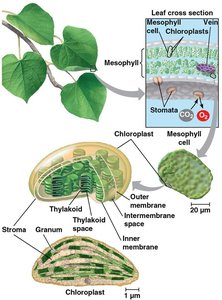
Chloroplast Structure
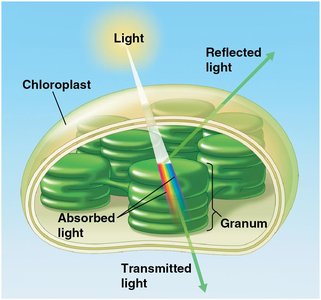
Chloroplasts have a double membrane and contain an internal system of membranes called thylakoids, which are stacked into grana. The fluid surrounding the thylakoids is the stroma. Chlorophyll, the main pigment for light absorption, is embedded in the thylakoid membranes.
The Overall Photosynthesis Equation
Photosynthesis is essentially the reverse of cellular respiration. The general equation is:
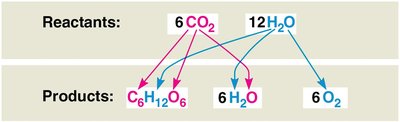
During this process, water is split to provide electrons and protons, and oxygen is released as a byproduct.
Redox Reactions in Photosynthesis
Photosynthesis involves a series of redox reactions. Water is oxidized (loses electrons), and carbon dioxide is reduced (gains electrons) to form glucose. The process is endergonic, requiring energy input from sunlight.

Stages of Photosynthesis: Light Reactions and Calvin Cycle
Photosynthesis occurs in two main stages:
Light Reactions: Occur in the thylakoid membranes. Light energy is used to split water, releasing O2, and to produce ATP and NADPH.
Calvin Cycle: Occurs in the stroma. Uses ATP and NADPH to fix CO2 into carbohydrates (sugars).
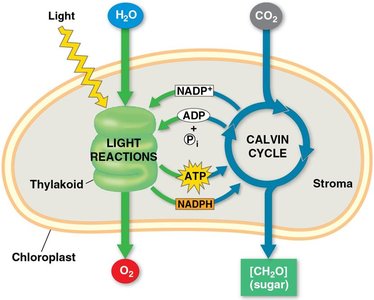
The Light Reactions: Harnessing Solar Energy
Light reactions convert solar energy into chemical energy (ATP and NADPH). Water is split, providing electrons and protons, and oxygen is released as a byproduct. The electron carrier NADP+ is reduced to NADPH, and ATP is synthesized from ADP and inorganic phosphate.
The Calvin Cycle: Carbon Fixation and Sugar Synthesis
The Calvin cycle incorporates CO2 into organic molecules through a process called carbon fixation. The fixed carbon is then reduced to carbohydrates using the energy from ATP and the electrons from NADPH.
The Nature of Light and Its Role in Photosynthesis
Light is a form of electromagnetic energy, traveling in waves. The electromagnetic spectrum includes all wavelengths of electromagnetic radiation, but only a small portion (visible light, 380–740 nm) is used in photosynthesis.
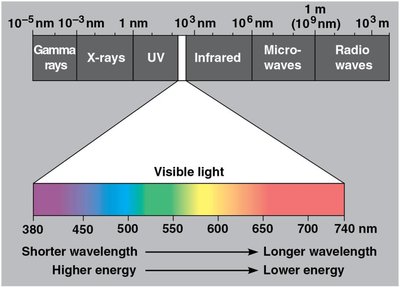
Light as a Particle: Photons
Light also behaves as discrete particles called photons. The energy of a photon is inversely proportional to its wavelength: shorter wavelengths have higher energy. Pigment proteins absorb photons of specific wavelengths, which is essential for photosynthesis.
Measuring Light Absorption: Spectrophotometry
Spectrophotometers are used to measure how much light a pigment absorbs at different wavelengths. The absorption spectrum is a graph showing the absorption of light by a pigment across various wavelengths.
Plant Pigments and Their Functions
Chloroplasts contain several types of pigments:
Chlorophyll a: Main pigment for light reactions.
Chlorophyll b: Accessory pigment, broadens the spectrum of light used.
Carotenoids: Accessory pigments, protect against damage from excess light.
Action Spectrum of Photosynthesis
The action spectrum shows which wavelengths of light are most effective for photosynthesis. Violet-blue and red light are most effective, while green light is least effective because it is reflected rather than absorbed.
Excitation of Pigments and Fluorescence
When pigments absorb light, electrons are excited to a higher energy state. As electrons return to their ground state, energy is released as heat or light (fluorescence).
Photosystems: Organization of Pigments
Photosystems are complexes of proteins and pigments in the thylakoid membrane. Each photosystem has:
Reaction center complex: Contains chlorophyll a and a primary electron acceptor.
Light-harvesting complex: Contains accessory pigments that transfer energy to the reaction center.
Types of Photosystems
There are two types of photosystems in the thylakoid membrane:
Photosystem II (PSII): Absorbs light best at 680 nm (P680).
Photosystem I (PSI): Absorbs light best at 700 nm (P700).
Summary of Photosynthesis
Photosynthesis is the process by which light energy is converted into chemical energy, producing glucose and oxygen from carbon dioxide and water. It involves light reactions (energy capture and O2 release) and the Calvin cycle (carbon fixation and sugar synthesis). Pigments and photosystems play crucial roles in capturing and converting light energy.
