 Back
Photosynthesis: Mechanisms, Pigments, and Adaptations
Study Guide - Smart Notes
 Tailored notes based on your materials, expanded with key definitions, examples, and context.
Photosynthesis in Nature
Autotrophs and Heterotrophs
Photosynthesis is a fundamental biological process that sustains life by converting light energy into chemical energy. Organisms are classified based on how they obtain organic food:
Autotrophs: Organisms that produce their own food from inorganic sources. Includes photoautotrophs (use light energy) and chemoautotrophs (use chemical energy).
Heterotrophs: Organisms that consume other organisms or their by-products for organic food. Includes decomposers.
The Nature of Light
Electromagnetic Spectrum and Visible Light
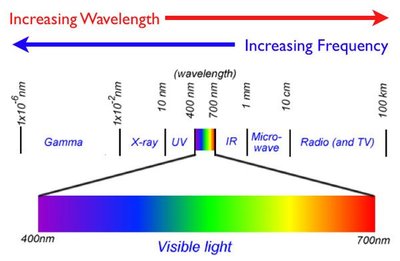
Light is a form of electromagnetic energy, traveling in waves. The wavelength determines the type of electromagnetic energy, and the visible spectrum includes the wavelengths that drive photosynthesis.
Wavelength: Distance between wave crests.
Electromagnetic Spectrum: Range of all electromagnetic radiation.
Visible Light: 400–700 nm; drives photosynthesis.
The Chloroplast
Structure and Function
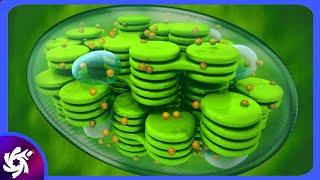
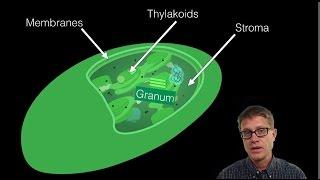
Chloroplasts are the sites of photosynthesis in plant cells. They contain the pigment chlorophyll, are located in the mesophyll tissue, and facilitate gas exchange through stomata. Key structural features include:
Double membrane
Thylakoids: Membranous sacs arranged in stacks called grana
Stroma: Fluid surrounding thylakoids
Lamellae: Connect grana
Pigments and Light Absorption
Types of Pigments and Spectrophotometry
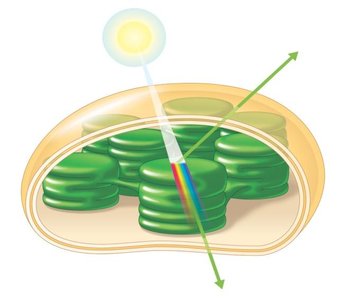
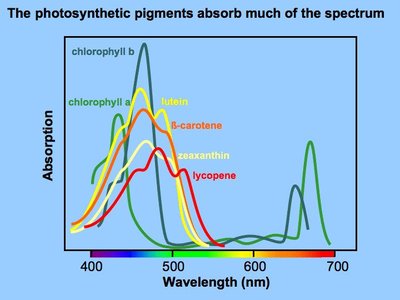
Pigments absorb visible light and reflect the colors we see. The spectrophotometer measures light absorption at different wavelengths, producing an absorption spectrum.
Chlorophyll a: Main photosynthetic pigment
Chlorophyll b: Accessory pigment
Carotenoids: Accessory pigments that absorb different wavelengths
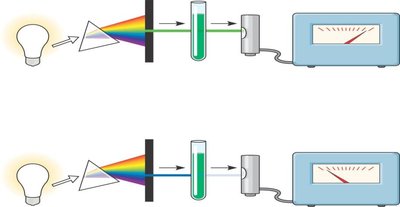
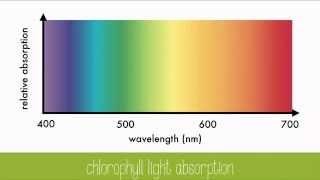
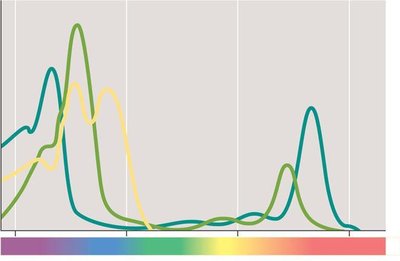
Absorption Spectra of Chloroplast Pigments
Three experiments revealed which wavelengths are most effective for photosynthesis. Light in the violet-blue and red portions of the spectrum are most effective.
Chlorophyll Structure and Function
Chlorophyll a and b
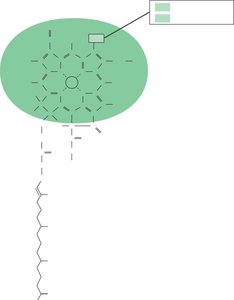
Chlorophyll molecules have a porphyrin ring (light-absorbing head with a central magnesium atom) and a hydrocarbon tail that anchors them in the thylakoid membrane.
Chlorophyll a: Main pigment, absorbs blue-violet and red light
Chlorophyll b: Accessory pigment, absorbs blue and orange light
Excitation of Chlorophyll by Light
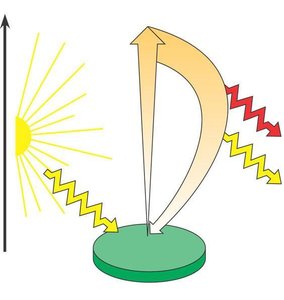
When chlorophyll absorbs light, it transitions from a ground state to an excited state, which is unstable. In isolation, excited chlorophyll fluoresces, emitting light and heat.
Photosynthesis: Overview and Equation
Balanced Chemical Equation
The overall process of photosynthesis can be summarized by the following equation:
6 CO2 + 12 H2O + Light energy → C6H12O6 + 6 O2 + 6 H2O
Chloroplasts split water, releasing oxygen and incorporating hydrogen into sugar molecules. CO2 and hydrogen from water become part of the sugar.
Photosynthesis: Redox Process and Steps
Light Reactions and Calvin Cycle
Photosynthesis is a redox process with two major steps:
Light Reactions ("photo"): Occur in the grana; convert NADP+ to NADPH, ADP to ATP (photophosphorylation)
Calvin Cycle ("synthesis"): Occurs in the stroma; fixes carbon into organic molecules
Photosystems and Electron Flow
Photosystem II and I
Photosystems are light-harvesting units in the thylakoid membrane, composed of protein and pigment antenna complexes. Energy is passed to reaction centers, where excited electrons are trapped by a primary electron acceptor.
Photosystem II (P680): Photons excite electrons, which are replaced by splitting water (releasing O2), and electrons travel down an electron transport chain, producing ATP.
Photosystem I (P700): Electrons are transferred to NADP+ to form NADPH.
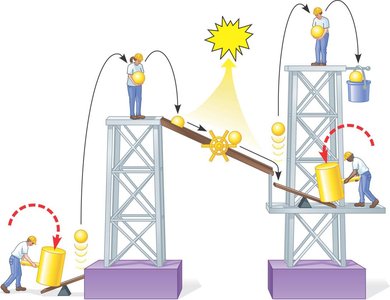
Mechanical Analogy for Light Reactions
Light reactions can be visualized as a mechanical process where energy is transferred and used to produce ATP and NADPH.
The Calvin Cycle
Phases of the Calvin Cycle
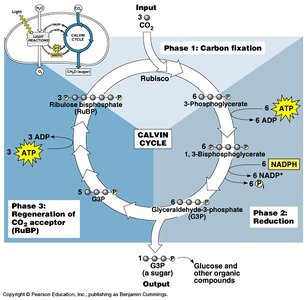
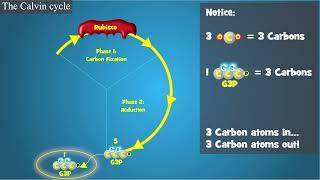
The Calvin cycle is the process by which CO2 is fixed into organic molecules. It consists of three phases:
Carbon Fixation: CO2 is attached to RuBP by the enzyme rubisco, forming 3-PGA.
Reduction: ATP and NADPH are used to convert 3-PGA to G3P.
Regeneration: G3P is rearranged to regenerate RuBP, allowing the cycle to continue.
Rubisco: The Most Abundant Enzyme
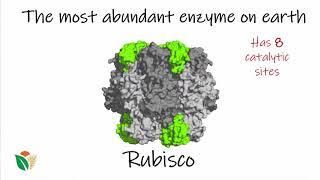
Rubisco is the most abundant enzyme on Earth, catalyzing the fixation of CO2 in the Calvin cycle. It is a complex protein with multiple subunits and is essential for life.
Photorespiration and Adaptations
Photorespiration
Photorespiration occurs on hot, dry days when stomata close, leading to decreased CO2 and increased O2 in leaves. Rubisco adds O2 to RuBP, resulting in energy loss and no food production.
RuBP + O2 → 3PGA + phosphoglycolate
Phosphoglycolate is converted to glycolic acid, then glycine, then serine, costing energy and resulting in net CO2 loss.
Alternative Carbon Fixation Methods
Some plants have evolved mechanisms to minimize photorespiration:
C4 Plants: Use PEP carboxylase to fix CO2 in mesophyll cells, then release CO2 in bundle-sheath cells for the Calvin cycle (e.g., corn, grasses).
CAM Plants: Open stomata at night to fix CO2, close during the day to conserve water (e.g., cacti, pineapples).
C4 plants separate processes by cell type; CAM plants separate by time.
Summary of Photosynthesis
Key Questions and Concepts
CO2 comes from the atmosphere and is fixed into sugars.
H2O is split during light reactions, releasing O2.
Energy comes from sunlight and is used to produce ATP and NADPH.
C6H12O6 (glucose) is used for energy and biosynthesis.
O2 is released as a by-product.
Process | Location |
|---|---|
Oxygen gas produced | Thylakoid space |
Activated chlorophyll donates electron | Thylakoid membranes |
NADPH oxidized to NADP+ | Stroma |
ATP produced | Thylakoid membrane |
Rubisco catalyzes carbon fixation | Stroma |
