Back
Photosynthesis: Mechanisms, Structure, and Comparison with Respiration
Study Guide - Smart Notes
 Tailored notes based on your materials, expanded with key definitions, examples, and context.
Photosynthesis: Making Sugar from CO2 and Light
Overview of Photosynthesis
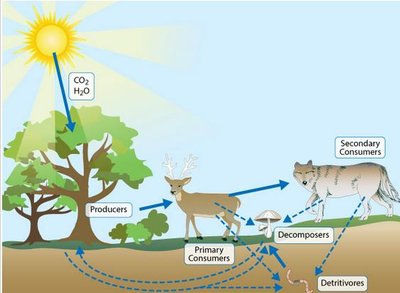
Photosynthesis is the process by which autotrophic organisms, primarily plants, convert carbon dioxide and water into glucose and oxygen using energy from sunlight. This process is the reverse of cellular respiration and is fundamental to life on Earth.
General Equation:
ΔG: kcal/mol (endergonic reaction; energy is required)
Entropy: Results in a reduction in entropy and an increase in free energy (G)
Photosynthesis is anabolism: It builds complex molecules from simpler ones.
Redox Reactions in Photosynthesis
Photosynthesis involves a series of redox reactions:
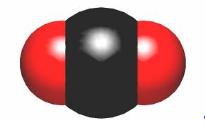
Carbon is reduced: CO2 is reduced to glucose (gain of electrons).
Oxygen is oxidized: H2O is oxidized to O2 (loss of electrons).
Electron flow: Electrons are taken from water, energized by sunlight, and eventually passed to CO2 to form glucose.
Modes of Nutrition
Autotrophs and Heterotrophs
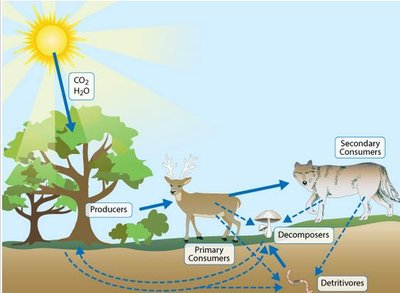
Organisms are classified based on how they obtain organic molecules:
Autotrophs: "Self-feeders" that make their own organic molecules.
Photoautotrophs: Use photosynthesis to convert sunlight into sugars.
Heterotrophs: "Other feeders" that acquire organic molecules from other organisms.
Chloroplast Structure and Function
Chloroplast Anatomy
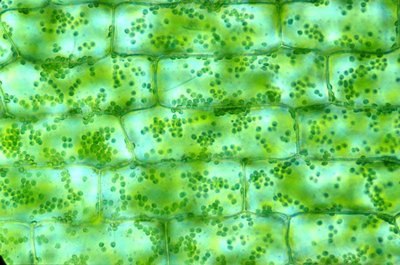
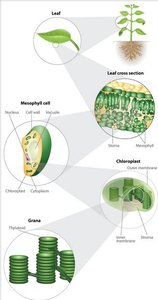
Photosynthesis occurs in chloroplasts, specialized organelles found in plant cells.
Mesophyll: Leaf layer containing chloroplasts.
Stomata: Pores for gas exchange (CO2 in, O2 out).
Xylem: Vessels that bring water from roots to leaves.
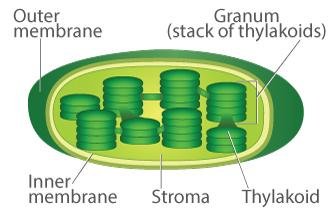
Chloroplast compartments:
Double membrane
Stroma (fluid inside inner membrane)
Thylakoids (membrane-bound sacs)
Grana (stacks of thylakoids)
Light and Pigments
Nature of Light
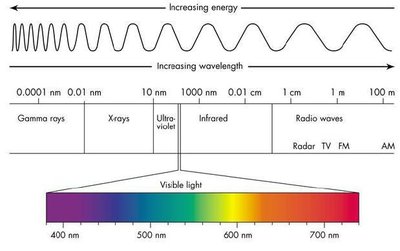
Light is electromagnetic energy, behaving both as a wave and as a particle (photon). The energy of light depends on its wavelength.
Shorter wavelength: Higher energy
Longer wavelength: Lower energy
Pigments and Light Absorption
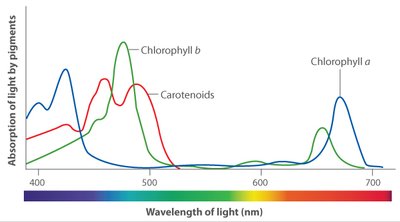
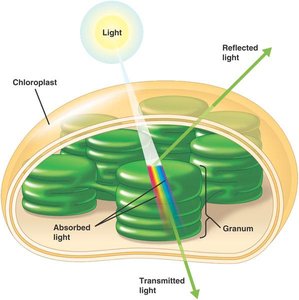
Pigments absorb visible light at specific wavelengths. Plants have several pigments, including chlorophyll a, chlorophyll b, and carotenoids, each absorbing different wavelengths.
Pigments appear as the color they do NOT absorb: Green plants reflect/transmit green light and absorb other wavelengths.
Absorption spectrum: Shows which wavelengths are absorbed by each pigment.
Photoexcitation and Energy Transfer
When pigments absorb light, electrons are excited to higher energy states. Only photons with energy matching the gap between ground and excited states are absorbed.
Energy transfer: Excited electrons return to ground state, releasing energy as heat or light (fluorescence), or transferring energy to other molecules.
Stages of Photosynthesis
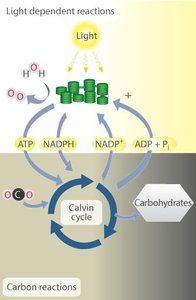
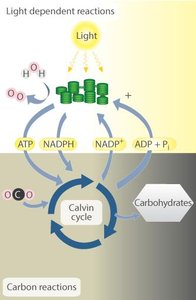
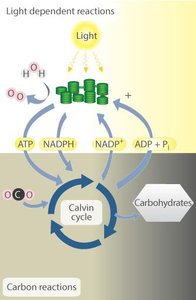
Light-Dependent Reactions
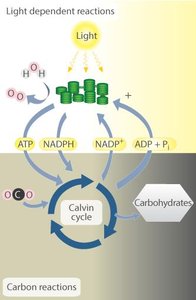
These reactions occur in the thylakoid membranes and require sunlight.
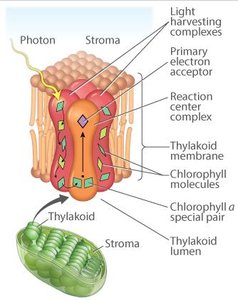
Solar energy is harvested by chlorophyll.
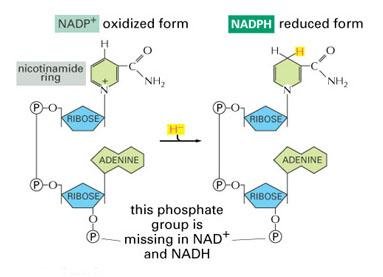
Electrons are activated and passed to NADP+ to form NADPH.
Water is split to replace lost electrons, producing O2.
ATP is formed via photophosphorylation (chemiosmosis).
Light-Independent Reactions (Calvin Cycle)
These reactions occur in the stroma and do not require light directly, but depend on ATP and NADPH from the light reactions.
Carbon fixation: CO2 is added to a 5-carbon molecule (RuBP) via the enzyme Rubisco.
Reduction: Carbon is reduced by NADPH, forming G3P (a 3-carbon sugar).
Regeneration: RuBP is regenerated using ATP.
Photosystems and Electron Flow
Photosystem II and Photosystem I
Light reactions involve two photosystems:
PSII: Absorbs light, excites electrons in P680, splits water to replace electrons, produces O2.
PSI: Receives electrons from PSII, excites electrons in P700, passes electrons to NADP+ to form NADPH.
Electron flow: H2O → P680 → PSII primary acceptor → ETC → P700 → PSI primary acceptor → NADPH
Cyclic Electron Flow
Cyclic electron flow involves only PSI and produces ATP but not NADPH or O2. It supplements ATP production for the Calvin cycle.
Linear flow: Produces equal amounts of ATP and NADPH.
Cyclic flow: Produces extra ATP as needed.
ATP Production in Photosynthesis
Chemiosmosis
ATP is produced by chemiosmosis, similar to cellular respiration:
ETC pumps H+ into thylakoid space, creating a proton gradient.
H+ flows back through ATP synthase, generating ATP.
Calvin Cycle: Details and Phases
Phase 1: Carbon Fixation
CO2 is added to RuBP (a 5-carbon sugar) by Rubisco, forming a 6-carbon intermediate that splits into two 3-carbon molecules (3-phosphoglycerate).
Phase 2: Reduction
ATP and NADPH are used to reduce 3-phosphoglycerate to G3P (glyceraldehyde 3-phosphate), a 3-carbon sugar.
Phase 3: Regeneration
ATP is used to regenerate RuBP from G3P, allowing the cycle to continue.
For every 3 CO2 molecules: 6 G3P are formed, but only 1 is a net gain; the rest regenerate RuBP.
Two G3P molecules: Combine to form one glucose (C6H12O6).
Comparison: Photosynthesis vs. Respiration
Key Differences and Similarities
Photosynthesis: Anabolic, consumes ATP, reduces carbon, produces NADPH.
Respiration: Catabolic, generates ATP, oxidizes carbon, produces NADH/FADH2.
Electron carriers:
NADPH in photosynthesis (electrons from ETC after PSI, used in Calvin cycle)
NADH/FADH2 in respiration (electrons from glucose catabolism, used in oxidative phosphorylation)
Summary Table: Photosynthesis vs. Respiration
Process | Type | Carbon | Electron Carrier | ATP |
|---|---|---|---|---|
Photosynthesis | Anabolic | Reduced | NADPH | Consumed |
Respiration | Catabolic | Oxidized | NADH/FADH2 | Generated |
Practice Questions
What is the main purpose of the light reactions in photosynthesis?
How does the Calvin cycle differ from the Krebs cycle?
Why do plants appear green?