 Back
BackPhotosynthesis: Mechanisms, Structure, and Importance
Study Guide - Smart Notes
 Tailored notes based on your materials, expanded with key definitions, examples, and context.
Photosynthesis
Overview and Importance
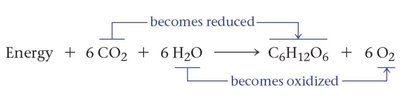
Photosynthesis is a fundamental biological process that converts light energy into chemical energy, sustaining almost all life on Earth. It is performed by autotrophic organisms, which produce organic compounds from inorganic sources, and is essential for the biosphere's energy flow. - Autotrophs: Organisms that synthesize their own food from CO2 and H2O using light energy. - Heterotrophs: Organisms that rely on consuming other organisms for energy and organic molecules. - Photosynthesis equation: 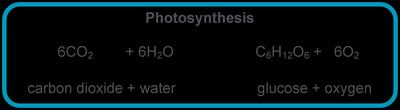
Autotrophy vs. Heterotrophy
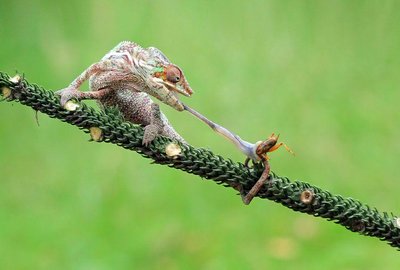
Organisms are classified based on their nutritional strategies: - Autotrophs (producers): Plants, some protists, and bacteria; use photosynthesis to produce organic compounds. - Heterotrophs (consumers and decomposers): Animals, fungi, some protists; depend on autotrophs for organic molecules and oxygen. 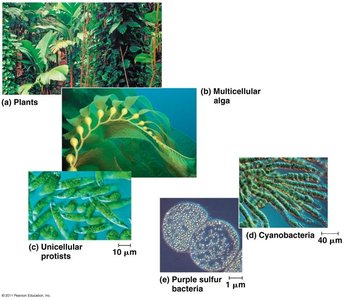
Site and Structure of Photosynthesis
Leaf Anatomy and Chloroplast Structure
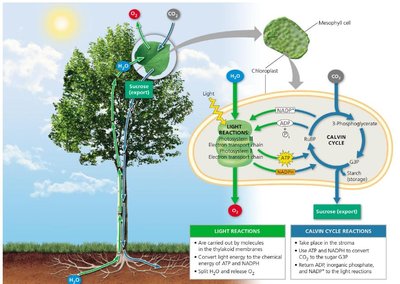
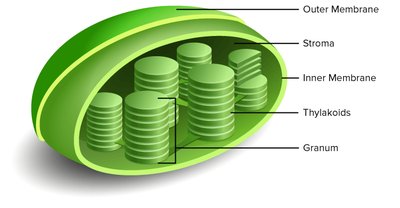
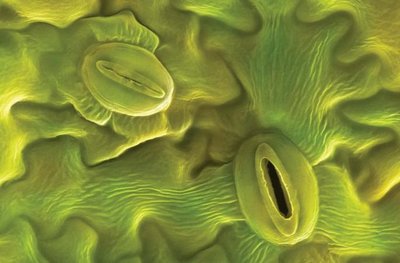
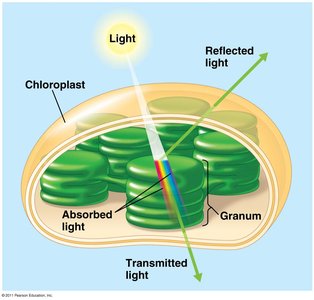
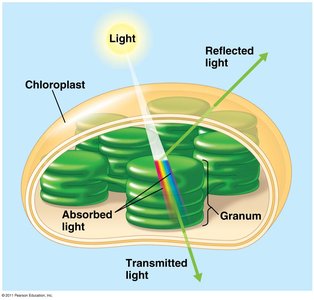
Photosynthesis occurs primarily in the leaves, specifically in mesophyll cells containing chloroplasts. - Stomata: Pore-like structures for gas exchange (CO2 uptake). - Mesophyll: Specialized leaf cells for photosynthesis. - Chloroplast: Organelle with double membrane, stroma (fluid interior), and thylakoids (membranous stacks containing chlorophyll). 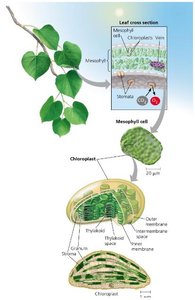
Photosynthesis as a Metabolic Pathway
Endergonic Reaction
Photosynthesis is an endergonic (energy-requiring) process, where the products have higher free energy than the reactants. - Reactants: CO2, H2O, light energy - Products: Glucose (C6H12O6), O2 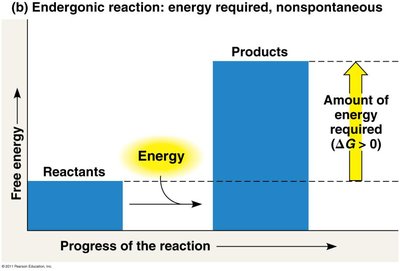
Redox Reactions in Photosynthesis
Photosynthesis involves oxidation-reduction (redox) reactions: - Oxidation: Loss of electrons (water is oxidized to O2) - Reduction: Gain of electrons (CO2 is reduced to glucose) - Reducing agent: Electron donor (becomes oxidized) - Oxidizing agent: Electron acceptor (becomes reduced) 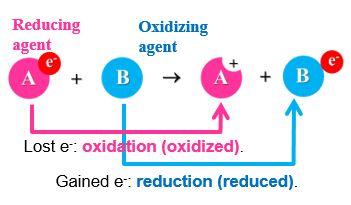
Light and Pigments
Electromagnetic Spectrum and Light Absorption
Photosynthetic organisms use visible light, a narrow band of the electromagnetic spectrum. - Pigments: Substances that absorb visible light; chlorophyll is the main pigment. - Chlorophyll absorbs violet-blue and red light, reflects green light (perceived color). 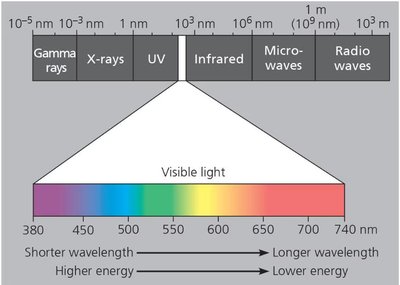
Types of Photosynthetic Pigments
- Chlorophyll a: Main pigment - Chlorophyll b: Accessory pigment - Carotenoids: Protective pigments, absorb excess light, appear yellow/orange, broaden absorption spectrum 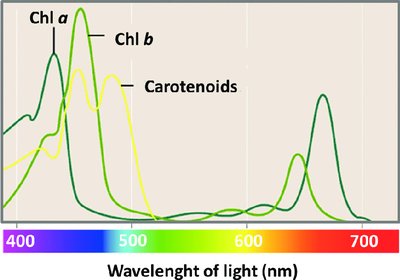
Mechanisms of Photosynthesis
Light Reactions
Light reactions occur in the thylakoid membranes and require sunlight. - Reactants: Solar energy, H2O - Products: ATP, NADPH, O2 (as a byproduct) - Photosystems: Protein complexes (PS II and PS I) that capture light and transfer electrons. - Electron Transport Chain (ETC): Shuttles electrons, creates H+ gradient for ATP synthesis. 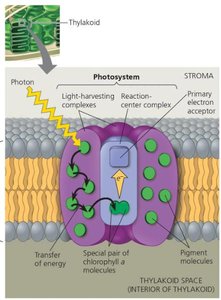
Light Reactions: Non-Cyclic and Cyclic Pathways
- Non-cyclic pathway: Involves both PS II and PS I, produces ATP, NADPH, and O2. - Cyclic pathway: Involves only PS I, produces extra ATP, no NADPH or O2. 
ATP Synthase
ATP synthase uses the H+ gradient to convert ADP and inorganic phosphate (Pi) into ATP.
The Calvin Cycle
Overview and Stages
The Calvin cycle occurs in the stroma and does not require light. It uses ATP and NADPH to fix CO2 into sugars. - Stage 1: Carbon Fixation - CO2 combines with RuBP (ribulose biphosphate) via Rubisco enzyme, forming 3-PGA. - Stage 2: Reduction - ATP and NADPH reduce 3-PGA to G3P (glyceraldehyde-3-phosphate). - Stage 3: Regeneration - G3P molecules are used to regenerate RuBP, allowing the cycle to continue.
Calvin Cycle Stoichiometry
- Three cycles produce 1/2 glucose; six cycles produce one glucose and regenerate six RuBP. -
Summary
Photosynthesis is a two-stage process: light reactions capture solar energy and produce ATP/NADPH, while the Calvin cycle uses these molecules to fix carbon and synthesize sugars. This process is essential for life, providing energy and organic molecules for all organisms. Key Terms: Autotroph, heterotroph, chloroplast, thylakoid, stroma, photosystem, ATP synthase, Calvin cycle, Rubisco, carbon fixation, reduction, regeneration. Example: Plants, algae, and cyanobacteria perform photosynthesis, supporting food webs and oxygen production. Additional info: The Calvin cycle is sometimes called the "dark reactions" but can occur in the presence of light as long as ATP and NADPH are available. ----------------------------------------
