 Back
Photosynthesis: Mechanisms, Structures, and Adaptations
Study Guide - Smart Notes
 Tailored notes based on your materials, expanded with key definitions, examples, and context.
Photosynthesis: Introduction and Importance
Overview of Photosynthesis
Photosynthesis is the fundamental biological process by which light energy is converted into chemical energy, fueling life on Earth. It occurs primarily in plants, algae, and some bacteria, enabling them to synthesize organic molecules from carbon dioxide and water, releasing oxygen as a byproduct.
Energy Flow: Photosynthesis is the first step in the flow of energy through most living systems.
Gas Exchange: Plants take in CO2 from the air, incorporate it into organic molecules, and release O2 and H2O.
Ecological Role: Provides the organic molecules and oxygen necessary for life.
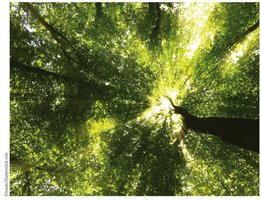
The Nature of Light and the Electromagnetic Spectrum
Visible Light and Its Properties
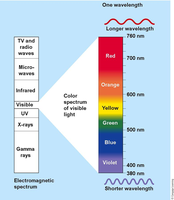
Visible light is a small segment of the electromagnetic (EM) spectrum, which includes a range of radiation types. Photosynthesis utilizes visible light, which has wavelengths between 380 and 760 nm, encompassing all colors of the rainbow.
Wavelength: Violet has the shortest wavelength; red has the longest.
Photon: A photon is a quantum of light energy, essential for driving photosynthetic reactions.
Photosynthetic Structures in Plants
Chloroplasts: The Site of Photosynthesis
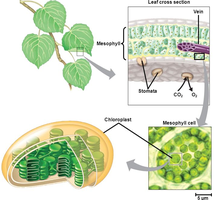
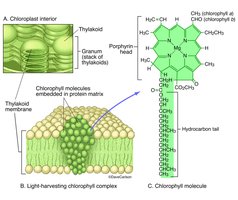
Chloroplasts are specialized organelles found in the mesophyll cells of plant leaves. They contain the pigment chlorophyll, which captures light energy for photosynthesis.
Mesophyll Cells: Each contains 20–100 chloroplasts.
Stomata: Microscopic pores for gas exchange (CO2 in, O2 out).
Chloroplast Structure
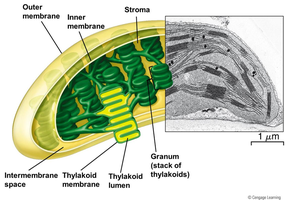
The chloroplast is enclosed by double membranes and contains an internal system of thylakoid membranes, where the light-dependent reactions occur.
Stroma: Fluid-filled space containing enzymes for carbohydrate synthesis.
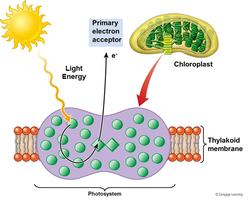
Thylakoids: Flattened sacs arranged in stacks called grana; site of light-dependent reactions.
Thylakoid Lumen: Internal space of thylakoids.
Photosynthetic Pigments
Types and Functions of Pigments
Thylakoid membranes contain several pigments that absorb light of different wavelengths. The main pigment is chlorophyll, supported by accessory pigments.
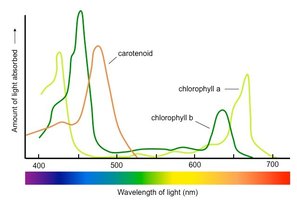
Chlorophyll a: Initiates light-dependent reactions; absorbs blue and red light, reflects green.
Chlorophyll b: Accessory pigment; broadens the spectrum of light absorbed.
Carotenoids: Yellow and orange pigments; absorb light in different regions, protect chlorophyll from damage.
Absorption Spectra of Photosynthetic Pigments
Different pigments absorb light at specific wavelengths, maximizing the efficiency of photosynthesis.
Chlorophyll a: Peaks in blue (~430 nm) and red (~662 nm) regions.
Chlorophyll b: Peaks in blue (~453 nm) and orange-red (~642 nm) regions.
Carotenoids: Absorb mainly in the blue and green regions.
Experimental Evidence: Engelmann’s Experiment
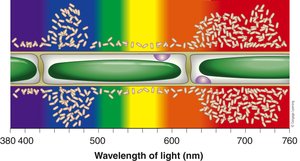
T. W. Engelmann’s experiment demonstrated that the rate of photosynthesis is highest at wavelengths where chlorophyll absorbs most light, as shown by the distribution of oxygen-seeking bacteria.
Phases of Photosynthesis
Overview of the Two Main Phases
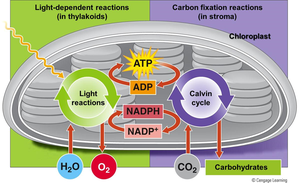
Photosynthesis consists of two interconnected phases: the light-dependent reactions and the carbon fixation (light-independent) reactions.
Light-dependent reactions: Convert light energy into chemical energy (ATP and NADPH); occur in thylakoids.
Carbon fixation reactions (Calvin Cycle): Use ATP and NADPH to synthesize carbohydrates from CO2; occur in the stroma.
Light-Dependent Reactions
These reactions begin when chlorophyll absorbs light, exciting electrons that are transferred through an electron transport chain (ETC), generating ATP and NADPH. Water is split, releasing O2 as a byproduct.
Electron Transport Chain: Series of proteins in the thylakoid membrane that transfer electrons and pump protons to generate ATP.
NADP+ Reduction: Electrons reduce NADP+ to NADPH, an energy carrier.
Photolysis: Splitting of water molecules to provide electrons and release O2.
Light-Independent Reactions (Calvin Cycle and Alternatives)
The Calvin Cycle uses ATP and NADPH to fix CO2 into carbohydrates. Alternative pathways (C4 and CAM) exist in some plants to adapt to hot, dry environments.
Calvin Cycle (C3 Pathway): Occurs in the stroma; produces a 3-carbon compound (3-phosphoglycerate) as the first stable product.
C4 Pathway: CO2 is initially fixed into a 4-carbon compound (oxaloacetate) in mesophyll cells, then transported to bundle sheath cells for the Calvin Cycle. Reduces photorespiration.
CAM Pathway: Stomata open at night to fix CO2 into organic acids; during the day, CO2 is released for the Calvin Cycle. Adaptation to arid conditions.
Photosynthesis: Chemical Equation
Overall Reaction
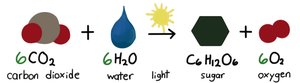
The overall chemical equation for photosynthesis is:
Reactants: 6 CO2 + 6 H2O + light energy
Products: C6H12O6 (glucose) + 6 O2
Adaptations to Environmental Conditions
Gas Exchange and Water Loss
Plants must balance the need for CO2 uptake with the risk of water loss through stomata. On hot, dry days, stomata close to conserve water, limiting CO2 intake and potentially leading to photorespiration, which reduces photosynthetic efficiency.
C4 and CAM Pathways
Some plants have evolved alternative pathways to minimize photorespiration and maximize carbon fixation under stress conditions.
C4 Plants: Efficiently fix CO2 at low concentrations; spatial separation of initial CO2 fixation and the Calvin Cycle.
CAM Plants: Temporal separation of CO2 uptake (night) and fixation (day); adaptation to arid environments.
Summary Table: C3, C4, and CAM Pathways
Pathway | First Product | Adaptation | Example Plants |
|---|---|---|---|
C3 (Calvin Cycle) | 3-phosphoglycerate (3C) | Most efficient under cool, moist conditions | Wheat, rice, most temperate plants |
C4 | Oxaloacetate (4C) | Reduces photorespiration; spatial separation | Corn, sugarcane |
CAM | Organic acids (4C) | Minimizes water loss; temporal separation | Cacti, succulents |
Key Terms and Definitions
Chlorophyll: Green pigment in chloroplasts responsible for light absorption.
Stomata: Pores on leaf surfaces for gas exchange.
Thylakoid: Membranous sac within chloroplasts; site of light-dependent reactions.
Stroma: Fluid matrix of the chloroplast; site of the Calvin Cycle.
Photorespiration: Process that consumes O2 and releases CO2, reducing photosynthetic efficiency.
