 Back
Photosynthesis: Mechanisms, Structures, and Importance
Study Guide - Smart Notes
 Tailored notes based on your materials, expanded with key definitions, examples, and context.
Photosynthesis: Mechanisms, Structures, and Importance
Introduction to Photosynthesis
Photosynthesis is the process by which photoautotrophic organisms, such as plants, algae, and some bacteria, convert light energy into chemical energy stored in organic molecules. This process is fundamental to life on Earth, providing the oxygen we breathe and the carbohydrates that fuel most ecosystems.
Photosynthetic Organisms and Their Roles
Autotrophs and Heterotrophs
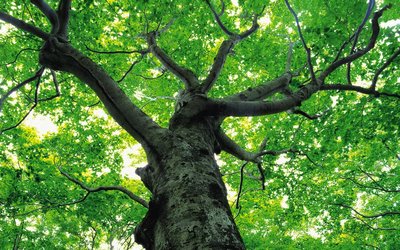
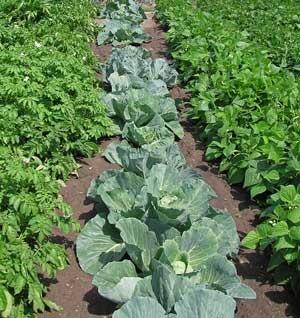
Autotrophs: Organisms that produce their own food from inorganic substances. - Photoautotrophs use light as an energy source to synthesize organic compounds from CO2 and H2O. - Examples: Land plants, multicellular algae, unicellular protists, cyanobacteria.
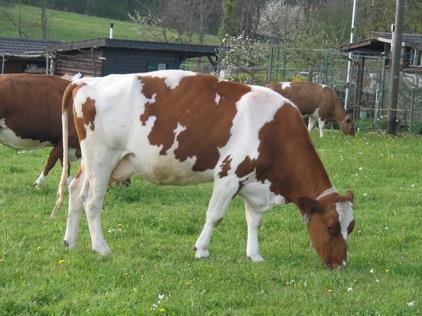
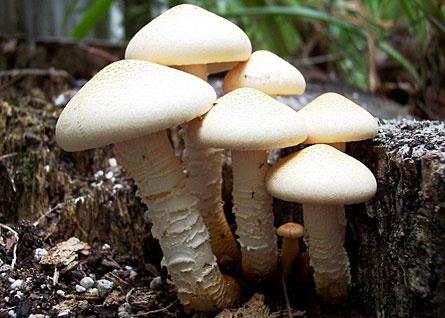
Heterotrophs: Organisms that obtain organic food molecules by consuming other organisms or their by-products. - Examples: Animals, fungi, and many bacteria.

Chloroplast Structure and Function
Chloroplast Anatomy
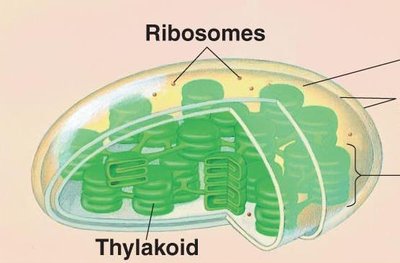
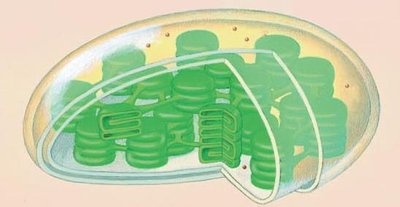
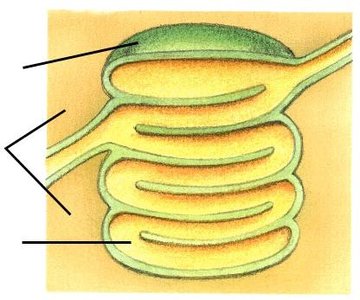
Chloroplasts are the organelles where photosynthesis occurs in plants and algae. They contain several key structures:
Thylakoids: Flattened sacs where the light reactions take place.
Granum: Stack of thylakoids.
Stroma: Dense fluid surrounding the thylakoids, site of the Calvin cycle.
Inner and Outer Membranes: Enclose the chloroplast.
Leaf Structure and Photosynthesis
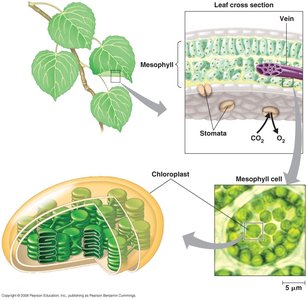
Leaves are the primary site of photosynthesis in most plants. Key anatomical features include:
Mesophyll: Tissue containing most of the chloroplasts.
Stomata: Pores for gas exchange (CO2 in, O2 out).
Veins: Transport water, minerals, and sugars.
The Photosynthesis Equation and Its Relationship to Respiration
Summary Equation
The overall chemical equation for photosynthesis is:
This can be simplified as:
Photosynthesis is the reverse of cellular respiration.
Both processes occur in plant cells, but in opposite directions.
Stages of Photosynthesis
Light Reactions and the Calvin Cycle
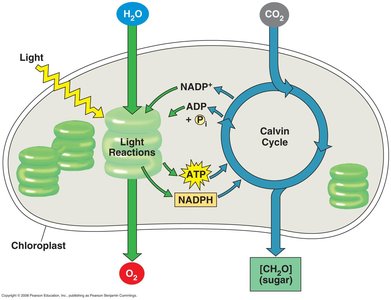
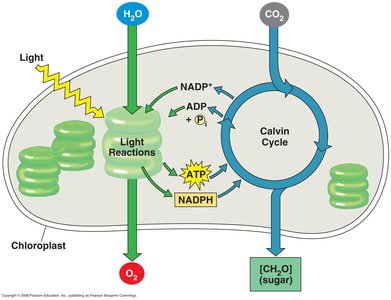
Light Reactions: Convert solar energy to chemical energy (ATP and NADPH), split water, and release O2.
Calvin Cycle: Uses ATP and NADPH to convert CO2 into sugars (G3P).
The Nature of Sunlight and Photosynthetic Pigments
Electromagnetic Spectrum and Visible Light
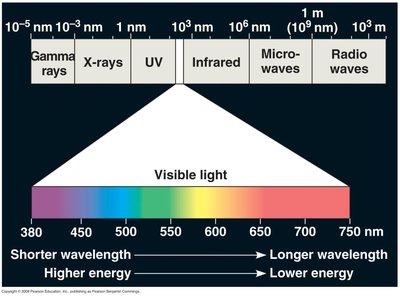
Light is a form of electromagnetic energy. The visible spectrum (about 380–750 nm) is most important for photosynthesis.
Shorter wavelengths have higher energy; longer wavelengths have lower energy.
Photons are discrete packets of light energy.
Photosynthetic Pigments
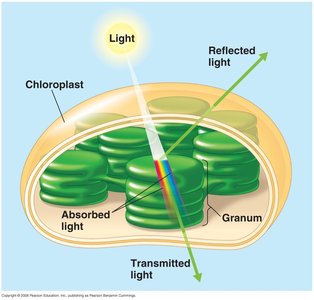
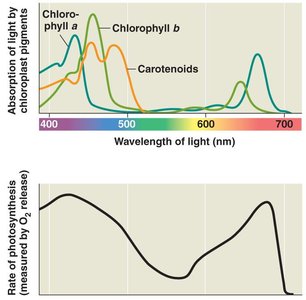
Chlorophyll a: Main pigment, absorbs violet-blue and red light, reflects green.
Chlorophyll b and carotenoids: Accessory pigments, broaden the spectrum of light used for photosynthesis.
Pigments absorb specific wavelengths; reflected/transmitted wavelengths determine color.
Absorption and Action Spectra
Absorption spectra show which wavelengths are absorbed by each pigment. Action spectra show the effectiveness of different wavelengths in driving photosynthesis.
Excitation of Chlorophyll and Energy Transfer
Excitation and Fluorescence
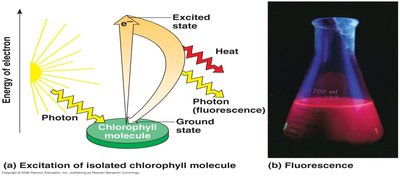
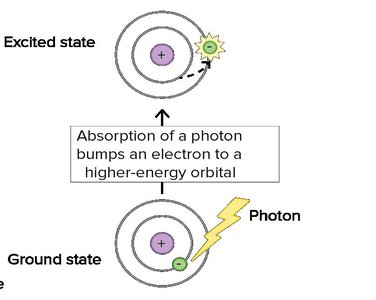
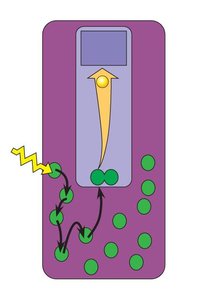
When a pigment absorbs a photon, an electron is elevated to a higher energy orbital (excited state).
In a closed system, the excited electron returns to the ground state, releasing energy as fluorescence and heat.
In an open system (in vivo), the energy is used to drive photosynthetic reactions.
Photosystems and the Light Reactions
Structure and Function of Photosystems
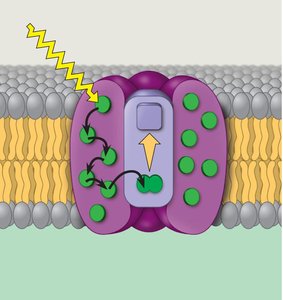
Photosystem: Complex of proteins and pigments in the thylakoid membrane.
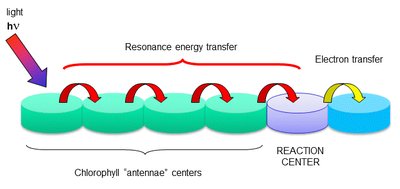
Contains a reaction center (special pair of chlorophyll a molecules, P680 or P700) and light-harvesting complexes (accessory pigments).
Two types: Photosystem II (PSII) absorbs at 680 nm; Photosystem I (PSI) absorbs at 700 nm.
Linear Electron Flow in the Light Reactions
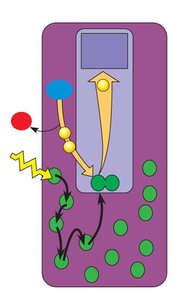
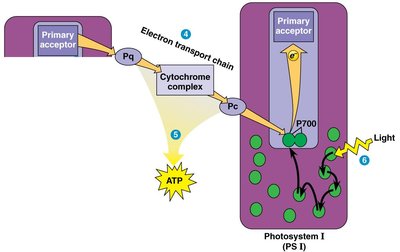
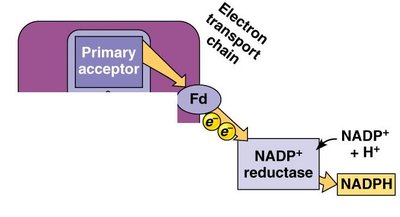
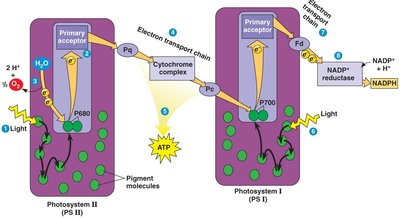
Light energy excites electrons in PSII, which are transferred through an electron transport chain to PSI, generating ATP and NADPH.
P680+ in PSII is the strongest biological oxidizing agent, enabling it to split water and accept electrons.
Oxygen is produced as a byproduct of water splitting.
Electrons from PSII replenish PSI after being excited by light.
Summary of Light Reactions
Light reactions use solar energy to generate ATP and NADPH.
ATP and NADPH provide energy and reducing power for the Calvin cycle.
O2 is released as a byproduct.
Comparison of Chemiosmosis in Chloroplasts and Mitochondria
Both use electron transport chains and proton gradients to generate ATP.
Chloroplasts: Use light energy, water as electron source, and produce ATP in the stroma.
Mitochondria: Use chemical energy from food, organic molecules as electron source, and produce ATP in the matrix.
The Calvin Cycle
Overview and Phases
The Calvin cycle is an anabolic pathway that builds carbohydrates from CO2 using ATP and NADPH. It occurs in the stroma of the chloroplast and must turn three times to produce one G3P molecule.
Phase 1: Carbon Fixation - CO2 is attached to RuBP by the enzyme rubisco, forming 3-phosphoglycerate.
Phase 2: Reduction - ATP and NADPH are used to convert 3-phosphoglycerate into G3P.
Phase 3: Regeneration of RuBP - Some G3P is used to regenerate RuBP, enabling the cycle to continue.
Importance of Photosynthesis
Photosynthesis is responsible for the oxygen in Earth's atmosphere.
It produces approximately 160 billion metric tons of carbohydrates annually.
It is the foundation of most food webs and essential for life on Earth.
