 Back
BackPhotosynthesis: Structure, Function, and Limiting Factors
Study Guide - Smart Notes
 Tailored notes based on your materials, expanded with key definitions, examples, and context.
Photosynthesis: Collecting Energy from the Nonliving Environment
Topic A: Structure – Autotrophy and Photosynthesis
Photosynthesis is the process by which plants, algae, and some bacteria convert light energy into chemical energy. Understanding the structure of leaves and chloroplasts is essential to grasp how this process occurs.
Autotrophs are organisms that produce their own food from inorganic substances. Photoautotrophs use light as an energy source, while heterotrophs obtain energy by consuming other organisms. Producers are autotrophs that form the base of food chains.
The structure of a plant leaf is adapted for efficient photosynthesis. Key layers include:
Cuticle: Waxy layer that prevents water loss.
Epidermis: Protective outer layer.
Mesophyll: Main site of photosynthesis, divided into palisade (densely packed, high chloroplast content) and spongy (loosely packed, facilitates gas exchange) layers.
Stomata: Pores for gas exchange.
Chloroplasts are the organelles where photosynthesis occurs, mainly in the mesophyll cells. The thylakoid membranes inside chloroplasts are the site of light energy conversion to chemical energy.
Photosynthetic pigments (e.g., chlorophyll a, chlorophyll b, carotenoids) absorb specific wavelengths of light. Chlorophyll absorbs red and blue light, reflecting green, which is why plants appear green.
The visible light spectrum ranges from violet (shortest wavelength, highest energy) to red (longest wavelength, lowest energy). Green plants absorb most wavelengths except green, which is reflected.
Example: The palisade mesophyll contains the most chloroplasts, maximizing light absorption for photosynthesis.
Topic B: Function – Autotrophy and Photosynthesis
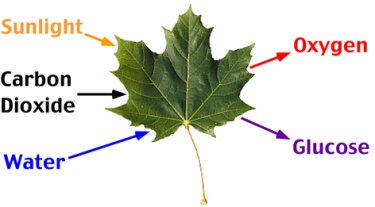
The function of photosynthesis is to convert solar energy into chemical energy, producing oxygen and organic molecules. This process involves complex biochemical reactions.
Oxygen production occurs when water molecules are split during the light reactions, releasing O2 as a byproduct.
Most of a plant’s mass comes from carbon dioxide absorbed from the atmosphere, not from soil.
Redox reactions (oxidation-reduction) are central to photosynthesis, involving the transfer of electrons from water to NADP+, forming NADPH.
The process is divided into two main stages:
Light reactions (in the thylakoid membranes): Convert light energy to chemical energy (ATP and NADPH), releasing O2.
Calvin cycle (in the stroma): Uses ATP and NADPH to fix CO2 into glucose.
Photosystems (I and II) capture solar energy, exciting electrons that travel through the electron transport chain, powering chemiosmosis and ATP synthesis.
Photophosphorylation is the process of generating ATP using the energy of light.
The Calvin cycle depends on products of the light reactions (ATP, NADPH) and regenerates ADP, Pi, and NADP+ for reuse.
The overall balanced equation for photosynthesis is:
Example: During the light reactions, water is split, providing electrons for the electron transport chain and releasing oxygen.
Topic C: Limiting Factors to Photosynthesis
The rate of photosynthesis is influenced by several environmental factors. Understanding these limiting factors is crucial for predicting plant productivity and ecosystem responses.
Limiting factors include light intensity, carbon dioxide concentration, temperature, and water availability. The rate of photosynthesis increases with these factors up to a certain point, after which it plateaus.
Photorespiration is a process where oxygen is fixed instead of carbon dioxide, reducing photosynthetic efficiency, especially under high oxygen and low carbon dioxide conditions.
Deforestation reduces the global capacity for photosynthesis, contributing to increased atmospheric CO2 and climate change (global warming).
Example: In a drought, water becomes the limiting factor, causing the rate of photosynthesis to decrease.
Key Vocabulary
ATP synthase: Enzyme that synthesizes ATP using the proton gradient across the thylakoid membrane.
ADP & ATP: Adenosine diphosphate and adenosine triphosphate, energy carriers in the cell.
Autotroph: Organism that produces its own food.
Calvin cycle: Series of biochemical reactions that fix carbon dioxide into glucose.
Chlorophyll: Main pigment involved in photosynthesis.
Electron carrier: Molecule that transports electrons (e.g., NADP+/NADPH).
Light reactions: Stage of photosynthesis that captures light energy.
Mesophyll: Leaf tissue where most photosynthesis occurs.
NADP+/NADPH: Electron carrier involved in photosynthesis.
Photoautotroph: Organism that uses light to synthesize organic compounds.
Photophosphorylation: ATP formation using light energy.
Photosystem I and II: Protein complexes that capture light energy.
REDOX reactions: Chemical reactions involving electron transfer.
Rubisco: Enzyme that catalyzes carbon fixation in the Calvin cycle.
Stoma (stomata): Pores for gas exchange in leaves.
Thylakoid: Membranous sacs in chloroplasts where light reactions occur.
Root Words
auto-: self
chloro-: green
-phyll: leaf
meso-: middle
photo-: light
-synthesis: put together or combine
thylaco-: sac or pouch
-troph: food
