 Back
BackPhotosynthesis: The Light Reactions and Chemiosmosis
Study Guide - Smart Notes
 Tailored notes based on your materials, expanded with key definitions, examples, and context.
Photosynthesis: The Light Reactions and Chemiosmosis
Overview of Photosynthesis
Photosynthesis is the process by which photoautotrophic organisms convert light energy into chemical energy, producing organic molecules and oxygen from carbon dioxide and water. This process is fundamental to life on Earth, providing the energy and organic matter required by most living organisms.
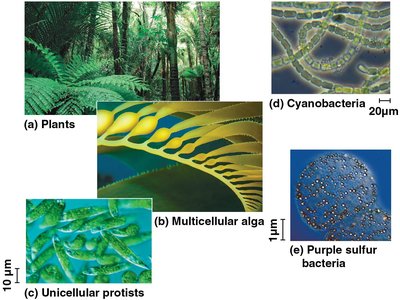
Photosynthetic organisms include plants, multicellular algae, unicellular protists, cyanobacteria, and purple sulfur bacteria.
Photosynthesis occurs primarily in the chloroplasts of plant cells and algae, and in the plasma membrane or cytoplasm of photosynthetic bacteria.
Photosynthesis and Cellular Respiration: The Energy Cycle
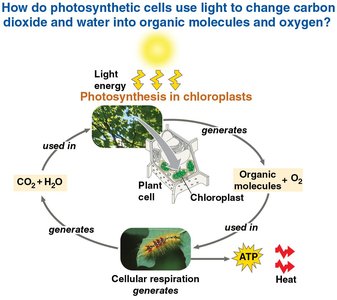
Photosynthesis and cellular respiration are interconnected processes that cycle energy and matter through ecosystems. Photosynthesis stores energy in organic molecules, while cellular respiration releases that energy for cellular work.
Photosynthesis uses light energy to convert CO2 and H2O into organic molecules and O2.
Cellular respiration breaks down organic molecules, releasing energy (ATP), CO2, and H2O.
Chloroplast Structure and Function
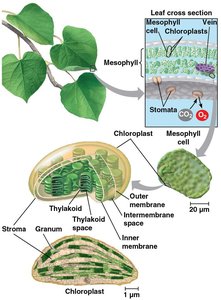
Chloroplasts are the organelles where photosynthesis occurs in plants and algae. Their structure is specialized to capture light energy and convert it into chemical energy.
Mesophyll cells in leaves contain many chloroplasts.
Chloroplasts have an outer membrane, inner membrane, and an internal system of thylakoid membranes arranged in stacks called grana.
The stroma is the fluid-filled space surrounding the thylakoids, where the Calvin cycle occurs.
Stomata are pores that allow gas exchange (CO2 in, O2 out).
The Light Reactions of Photosynthesis
Overview of Light Reactions
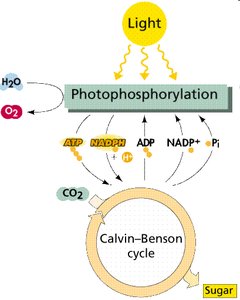
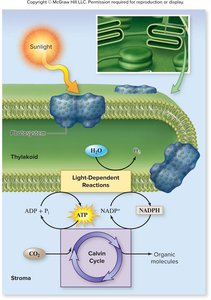
The light reactions occur in the thylakoid membranes and convert solar energy into chemical energy in the form of ATP and NADPH. Oxygen is produced as a byproduct from the splitting of water.
Photophosphorylation is the process of using light energy to generate ATP from ADP and inorganic phosphate (Pi).
NADPH is produced by the reduction of NADP+ using electrons from water.
O2 is released as a waste product.
Light-Dependent Reactions: Detailed Steps
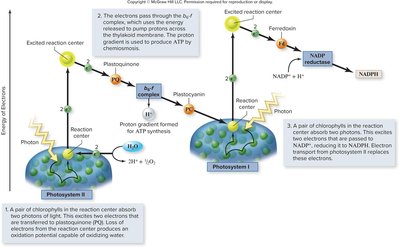
Light-dependent reactions involve two photosystems (PSII and PSI) that work together to transfer electrons from water to NADP+, generating ATP and NADPH.
Photosystem II (PSII) absorbs light, exciting electrons that are transferred to the electron transport chain. Water is split to replace these electrons, releasing O2.
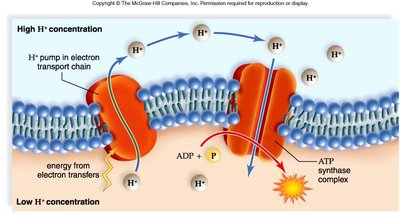
Electron transport chain transfers electrons from PSII to PSI, pumping protons into the thylakoid space to create a proton gradient.
Photosystem I (PSI) absorbs light, re-exciting electrons, which are then used to reduce NADP+ to NADPH.
ATP synthase uses the proton gradient to synthesize ATP (chemiosmosis).
The Overall Equation for Photosynthesis
The overall chemical equation for photosynthesis summarizes the transformation of light energy into chemical energy stored in glucose.
Carbon dioxide is reduced to glucose.
Water is oxidized to oxygen.

Light and Pigments
The Electromagnetic Spectrum and Visible Light
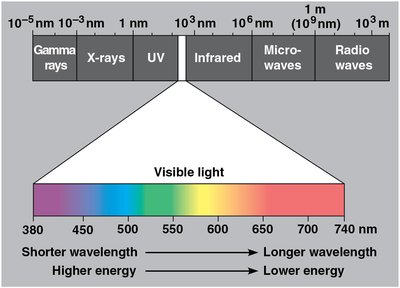
Photosynthetic organisms use visible light, a small portion of the electromagnetic spectrum, for photosynthesis. Different pigments absorb different wavelengths of light.
Shorter wavelengths have higher energy; longer wavelengths have lower energy.
Visible light ranges from about 380 nm (violet) to 740 nm (red).
Pigments and Light Absorption
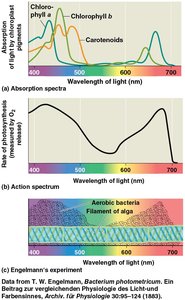
Chlorophyll a, chlorophyll b, and carotenoids are the main pigments in chloroplasts. Each pigment absorbs light at specific wavelengths, contributing to the overall absorption spectrum.
Absorption spectrum: Shows the wavelengths of light absorbed by each pigment.
Action spectrum: Shows the effectiveness of different wavelengths in driving photosynthesis.
Engelmann's experiment demonstrated that oxygen production (and thus photosynthesis) is highest at wavelengths absorbed by chlorophylls.
Excitation of Chlorophyll and Fluorescence
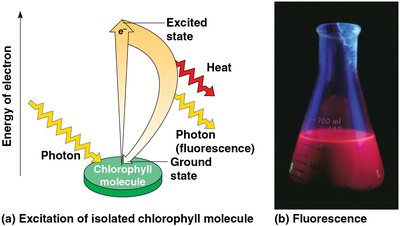
When chlorophyll absorbs light, its electrons are excited to a higher energy state. In isolated chlorophyll, this energy is released as fluorescence and heat.
In vivo, excited electrons are transferred to an electron acceptor, initiating the light reactions.
Photosystems and Light Harvesting
Structure and Function of Photosystems
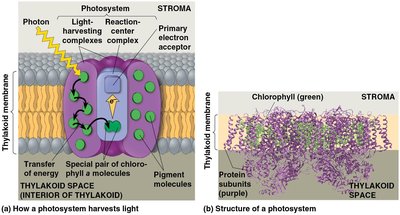
Photosystems are complexes of proteins and pigments that capture light energy and transfer it to a reaction center, where electron transfer begins.
Light-harvesting complexes funnel energy to the reaction center.
Reaction center contains a special pair of chlorophyll a molecules and a primary electron acceptor.
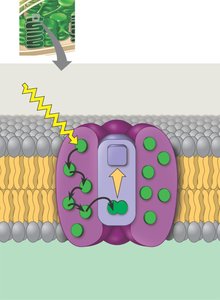
How a Photosystem Harvests Light
When a photon strikes a pigment molecule, energy is transferred from one pigment to another until it reaches the reaction center, where an electron is transferred to the primary electron acceptor.
This initiates the electron transport chain of the light reactions.
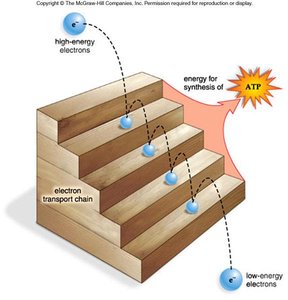
Electron Transport and Chemiosmosis
The Electron Transport Chain and ATP Synthesis
High-energy electrons from the reaction center are passed through an electron transport chain, releasing energy used to pump protons and generate ATP.
As electrons move down the chain, their energy is used to create a proton gradient across the thylakoid membrane.
ATP synthase uses this gradient to produce ATP from ADP and Pi.
Linear (Noncyclic) Electron Flow
Linear electron flow involves both photosystems and produces ATP, NADPH, and O2. Electrons move from water to NADP+ via the two photosystems and the electron transport chain.
Water is split at PSII, providing electrons and releasing O2.
Electrons are transferred through the cytochrome complex, generating ATP, and finally to NADP+ to form NADPH.
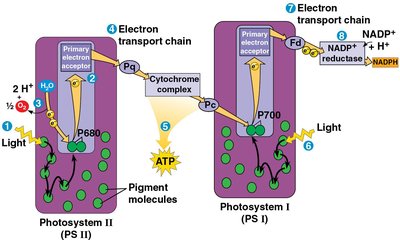
The Z Scheme of Photosynthesis
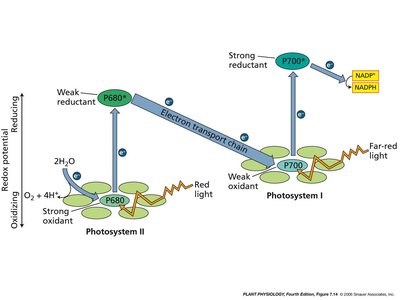
The Z scheme describes the energy changes of electrons as they move through the photosystems and electron transport chain. PSII acts first, followed by PSI, resulting in the reduction of NADP+.
Red light excites PSII; far-red light excites PSI.
Electrons move from a strong oxidant (water) to a strong reductant (NADPH).
Proton Gradient and Chemiosmosis
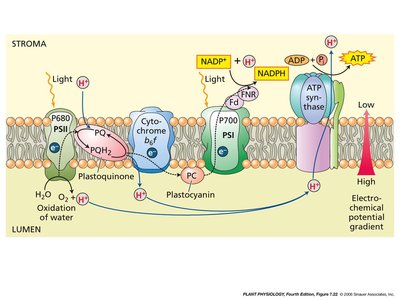
The electron transport chain pumps protons into the thylakoid lumen, creating a proton-motive force. Protons flow back into the stroma through ATP synthase, driving ATP synthesis.
This process is called chemiosmosis.
Cyclic Electron Flow
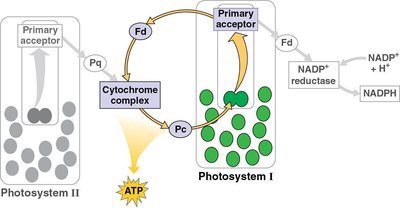
In cyclic electron flow, electrons from PSI are cycled back to the cytochrome complex instead of reducing NADP+. This process produces ATP but not NADPH or O2.
Cyclic electron flow is important for balancing the ATP/NADPH ratio and may provide photoprotection under intense light.
Some photosynthetic bacteria use only cyclic electron flow.
Comparison of Chemiosmosis in Chloroplasts and Mitochondria
Both chloroplasts and mitochondria generate ATP by chemiosmosis, but the energy sources differ: light in chloroplasts and organic molecules in mitochondria.
Both use an electron transport chain to create a proton gradient across a membrane.
ATP synthase uses the proton-motive force to synthesize ATP in both organelles.
Summary Table: Linear vs. Cyclic Electron Flow
Feature | Linear Electron Flow | Cyclic Electron Flow |
|---|---|---|
Photosystems Involved | PSII and PSI | PSI only |
Products | ATP, NADPH, O2 | ATP only |
Electron Source | Water | Fd (ferredoxin) |
Oxygen Production | Yes | No |
Conclusion
The light reactions of photosynthesis capture solar energy and convert it into chemical energy in the form of ATP and NADPH, with oxygen as a byproduct. These products are then used in the Calvin cycle to synthesize sugars, fueling life on Earth.
