 Back
BackPhotosynthesis: The Process That Feeds the Biosphere
Study Guide - Smart Notes
 Tailored notes based on your materials, expanded with key definitions, examples, and context.
Photosynthesis: The Process That Feeds the Biosphere
Overview of Photosynthesis
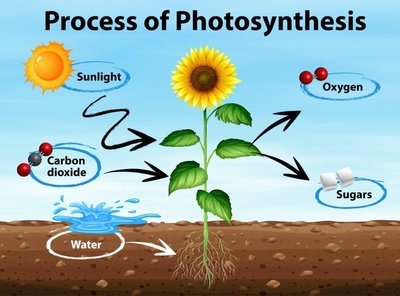
Photosynthesis is the process by which plants, algae, and some bacteria convert solar energy into chemical energy, producing organic molecules and oxygen from carbon dioxide and water. This process sustains almost all life on Earth by providing food and oxygen.
Definition: Photosynthesis is the conversion of light energy into chemical energy stored in glucose and other organic molecules.
General Equation:
Importance: Photosynthesis nourishes almost the entire living world, either directly (autotrophs) or indirectly (heterotrophs).
Chloroplasts: The Sites of Photosynthesis
Leaf Structure and Gas Exchange
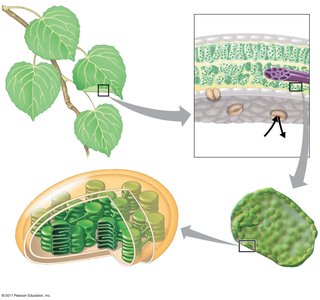
Photosynthesis primarily occurs in the leaves of plants, within specialized organelles called chloroplasts. The green color of leaves is due to the pigment chlorophyll, which is essential for capturing light energy.
Stomata: Microscopic pores on the leaf surface that allow for gas exchange (CO2 in, O2 out).
Mesophyll Cells: Cells in the leaf interior where most chloroplasts are found.
Chloroplast Structure
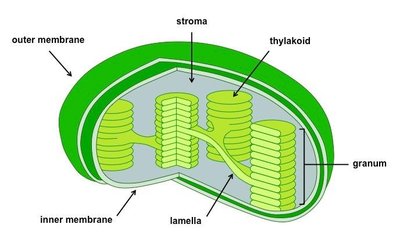
Chloroplasts are double-membraned organelles containing internal membranes called thylakoids, which are stacked into grana. The fluid surrounding the thylakoids is the stroma.
Thylakoid: Flattened sac where the light-dependent reactions occur.
Granum (pl. grana): Stack of thylakoids.
Stroma: Fluid-filled space where the Calvin cycle (light-independent reactions) takes place.
The Photosynthesis Equation: Redox and Energy
Redox Reactions in Photosynthesis
Photosynthesis involves the reduction of carbon dioxide to glucose and the oxidation of water to oxygen. The process is endergonic, requiring an input of energy from sunlight.
CO2 is reduced to form glucose.
H2O is oxidized to form O2.
Endergonic Reaction: Energy is absorbed from sunlight to drive the process.
The Nature of Sunlight
Electromagnetic Spectrum and Visible Light
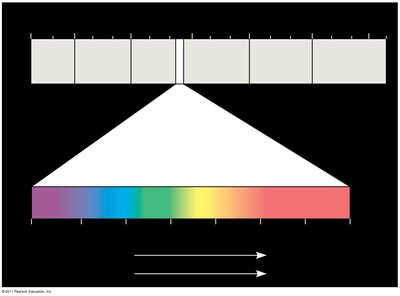
Light is a form of electromagnetic energy. The electromagnetic spectrum encompasses all wavelengths of electromagnetic radiation, but only a small portion (visible light) is used in photosynthesis.
Wavelength: Determines the energy and type of electromagnetic radiation.
Visible Light: Ranges from about 380 nm to 750 nm; drives photosynthesis.
Photons: Discrete particles of light energy.
Photosynthetic Pigments: Light Receptors
Types of Pigments
Pigments are molecules that absorb specific wavelengths of light. The main photosynthetic pigment is chlorophyll a, but accessory pigments such as chlorophyll b and carotenoids expand the range of light absorption and protect the plant from excess light.
Chlorophyll a: Main pigment involved in light reactions.
Chlorophyll b: Accessory pigment that broadens the absorption spectrum.
Carotenoids: Accessory pigments that absorb excessive light and protect chlorophyll from damage.
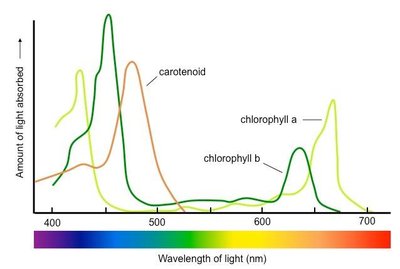
Absorption and Action Spectra
An absorption spectrum plots a pigment’s light absorption versus wavelength, while an action spectrum shows the effectiveness of different wavelengths in driving photosynthesis. Chlorophyll a absorbs violet-blue and red light most efficiently.
Absorption Spectrum: Indicates which wavelengths are absorbed by each pigment.
Action Spectrum: Profiles the relative effectiveness of different wavelengths in driving photosynthesis.
Fate of Light in Chloroplasts
Reflection, Absorption, and Transmission
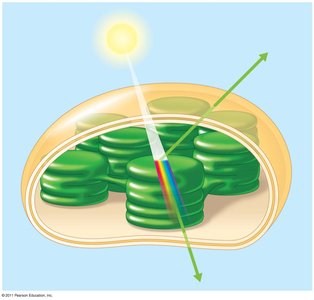
When light strikes a chloroplast, some wavelengths are absorbed by pigments, while others are reflected or transmitted. Leaves appear green because chlorophyll reflects and transmits green light.
Absorbed Light: Used to drive photosynthesis.
Reflected/Transmitted Light: Not used in photosynthesis; gives leaves their color.
Photosystems and the Light Reactions
Photosystem Structure and Function
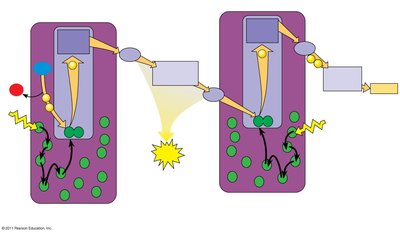
Photosystems are complexes of proteins and pigments in the thylakoid membrane that capture light energy and convert it into chemical energy. There are two types: Photosystem II (PS II) and Photosystem I (PS I).
Photosystem II (PS II): Absorbs light, splits water, and generates ATP.
Photosystem I (PS I): Absorbs light and generates NADPH.
Electron Transport Chain: Transfers electrons from water to NADP+, forming NADPH and generating a proton gradient for ATP synthesis.
Summary Table: Key Components of Photosynthesis
Component | Function | Location |
|---|---|---|
Chlorophyll a | Main pigment for light absorption | Thylakoid membrane |
Chlorophyll b | Accessory pigment, broadens absorption | Thylakoid membrane |
Carotenoids | Protects chlorophyll, absorbs excess light | Thylakoid membrane |
Photosystem II | Splits water, generates ATP | Thylakoid membrane |
Photosystem I | Generates NADPH | Thylakoid membrane |
Stroma | Site of Calvin cycle | Chloroplast |
