 Back
BackPhotosynthesis: Using Light to Make Food
Study Guide - Smart Notes
 Tailored notes based on your materials, expanded with key definitions, examples, and context.
Photosynthesis: Using Light to Make Food
Biology and Society: Green Energy
Photosynthesis is a fundamental biological process that converts solar energy into chemical energy, sustaining most life on Earth. Historically, wood was the primary energy source for cooking, heating, and lighting, but industrialization shifted reliance to fossil fuels. To mitigate environmental impacts, researchers are exploring biomass as a renewable energy source. Fast-growing trees, such as willows, are notable for their renewability, ability to reduce erosion, and provision of wildlife habitats.
Photosynthesis uses light energy to power the synthesis of organic molecules from carbon dioxide and water.
Plants produce not only glucose but also starch (energy storage) and cellulose (structural component of cell walls).
The Basics of Photosynthesis
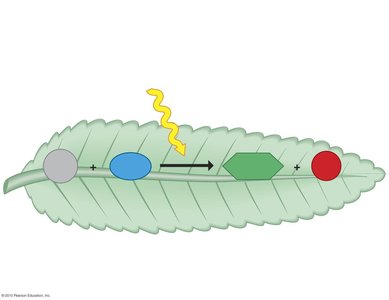
Photosynthesis is performed by plants, some protists, and some bacteria. It transforms light energy into chemical energy, using carbon dioxide and water as starting materials. The chemical energy is stored in the bonds of sugar molecules.
Photosynthetic autotrophs are organisms that use light energy to synthesize organic compounds and serve as producers in ecosystems.
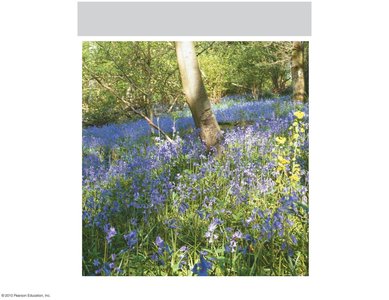
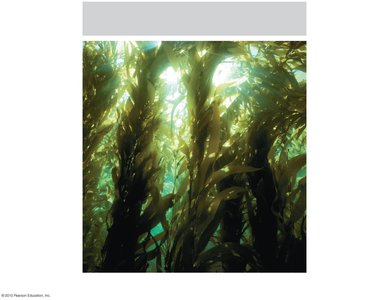
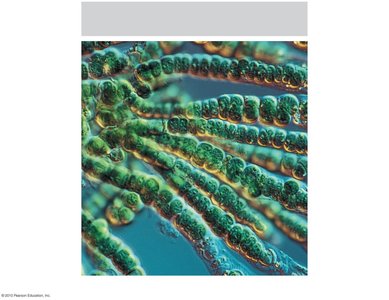
Chloroplasts: Sites of Photosynthesis
Chloroplasts are specialized organelles found mainly in the interior cells of leaves. They contain membranous sacs called thylakoids, which are stacked into grana and suspended in a fluid called stroma. The green pigment chlorophyll absorbs light energy. Gas exchange occurs through stomata, tiny pores in leaves.
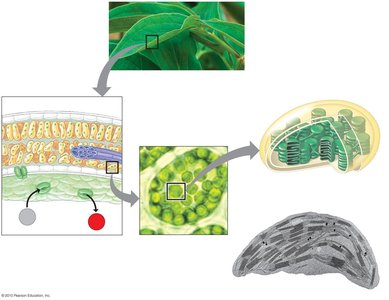
The Overall Equation for Photosynthesis
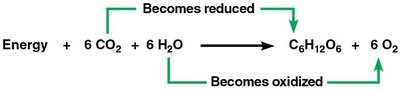
The overall chemical equation for photosynthesis is the reverse of cellular respiration:
Sunlight provides the energy to drive the reaction.
Electrons are transferred from water to carbon dioxide, forming sugar and releasing oxygen.
Oxidation and Reduction in Photosynthesis
Photosynthesis involves redox reactions:
Carbon dioxide is reduced (gains electrons and hydrogens) to form glucose.
Water is oxidized (loses electrons and hydrogens) to form oxygen.
Stages of Photosynthesis
Photosynthesis Road Map
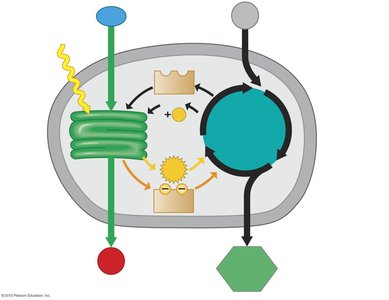
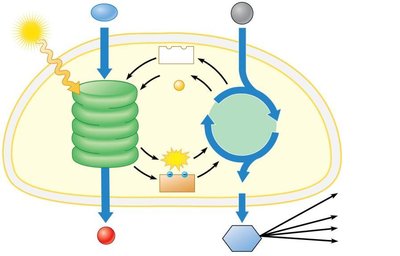
Photosynthesis occurs in two main stages:
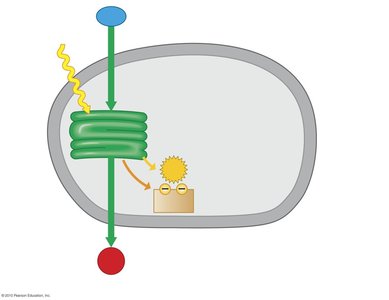
Light Reactions: Convert solar energy to chemical energy (ATP and NADPH).
Calvin Cycle: Uses ATP and NADPH to synthesize sugar from carbon dioxide.
The Light Reactions: Converting Solar Energy to Chemical Energy
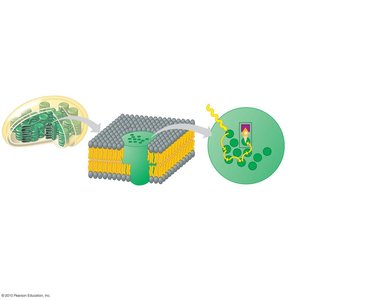
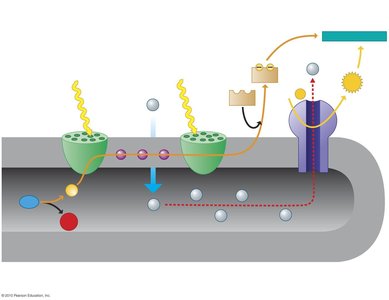
Light reactions occur in the thylakoid membranes of chloroplasts. Sunlight (electromagnetic energy) is absorbed by chlorophyll, exciting electrons that are transferred through an electron transport chain, generating ATP and NADPH.
The electromagnetic spectrum includes all wavelengths of light; visible light is used in photosynthesis.
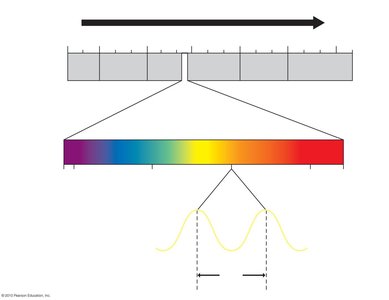
What Colors of Light Drive Photosynthesis?
Experiments show that chloroplasts absorb light mainly in the blue-violet and red-orange regions of the spectrum, which are most effective for photosynthesis.
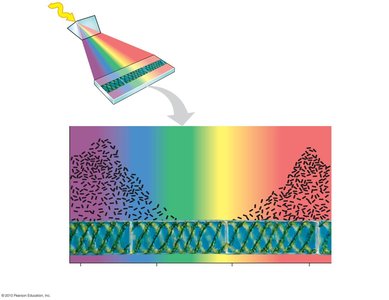
Chloroplast Pigments
Chlorophyll a: Absorbs blue-violet and red light; directly participates in light reactions.
Chlorophyll b: Absorbs blue and orange light; assists in light capture.
Carotenoids: Absorb blue-green light; protect chlorophyll from excess light energy.
How Photosystems Harvest Light Energy
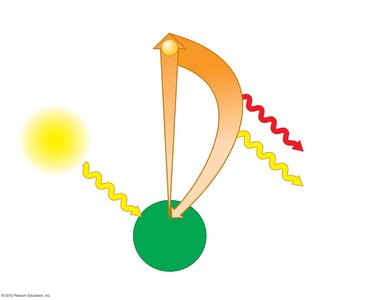
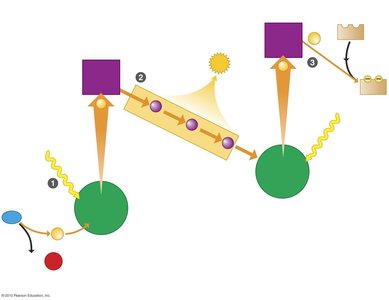
Photosystems are complexes of chlorophyll and proteins that capture light energy. When chlorophyll absorbs photons, electrons are excited and transferred to a primary electron acceptor, initiating the electron transport chain.
ATP and NADPH Generation
Two types of photosystems (water-splitting and NADPH-producing) cooperate in the light reactions. The electron transport chain connects them, releasing energy to produce ATP and NADPH.
The Calvin Cycle: Making Sugar from Carbon Dioxide
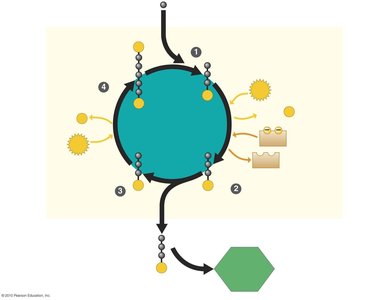
The Calvin cycle occurs in the stroma of the chloroplast and synthesizes sugar from CO2 using ATP and NADPH from the light reactions. The enzyme rubisco catalyzes the fixation of CO2 to RuBP, producing G3P, which is used to form glucose and other organic molecules.
Photorespiration and Plant Adaptations
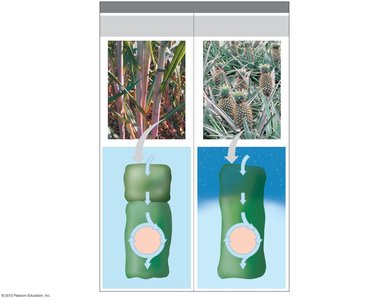
Photorespiration occurs when rubisco adds O2 instead of CO2 to RuBP, consuming energy and releasing CO2 without producing sugar. Plants have evolved adaptations to minimize photorespiration:
C3 plants: Use CO2 directly from the air; common in temperate climates.
C4 plants: Close stomata during hot, dry weather but continue photosynthesis (e.g., grasses, grains).
CAM plants: Open stomata at night to conserve water; adapted to arid environments (e.g., cacti).

Major Themes in Photosynthesis
Pathways that transform energy and matter: Photosynthesis converts solar energy into chemical energy, fueling ecosystems.
Interactions within biological systems: Processes like deforestation can impact global climate.
Structure and function: The folded thylakoid membranes increase surface area for enzyme-driven reactions.
Summary Table: Key Steps of Photosynthesis
Stage | Location | Inputs | Outputs |
|---|---|---|---|
Light Reactions | Thylakoid membrane | Light, H2O, NADP+, ADP + Pi | O2, ATP, NADPH |
Calvin Cycle | Stroma | CO2, ATP, NADPH | G3P (sugar), NADP+, ADP + Pi |
What You Need to Know
The order of the stages of photosynthesis
The inputs and outputs of each stage
The cellular locations where these processes occur
