 Back
BackPhylogeny and Cladistics: Lecture 1
Study Guide - Smart Notes
 Tailored notes based on your materials, expanded with key definitions, examples, and context.
Course Introduction and Structure
Course Overview
This course, "Biology 2: Biological Diversity, Function, and Interaction," is divided into two parts, each with its own instructor and term test. The course covers a wide range of topics in biological diversity and evolutionary relationships, with a focus on plants and animals. Students are expected to engage with lectures, group discussions, and iClicker questions, and are responsible for both assigned readings and lecture material.
Required Textbook: Campbell Biology (4th Canadian Edition) by Reese et al. (2020)
Communication: Slack for content questions and announcements; email for official matters only
Lab Information: Lab-related questions should be directed to lab instructors or TAs
Topic 1: Phylogeny & Cladistics
Introduction to Phylogeny and Systematics
Phylogeny is the study of the evolutionary history and relationships among species. Systematics is the broader discipline that includes phylogenetics (the study of evolutionary relationships), cladistics (the method of identifying clades or monophyletic groups), and taxonomy (the naming and organizing of species).
Systematics: The scientific study of the diversity and relationships among organisms
Phylogenetics: The study of evolutionary relationships and the construction of phylogenies
Cladistics: A method for classifying organisms based on common ancestry
Taxonomy: The discipline of naming and classifying organisms
What is a Phylogeny?
A phylogeny is a hypothesis about the evolutionary history of species or lineages. These hypotheses are constructed using multiple lines of evidence:
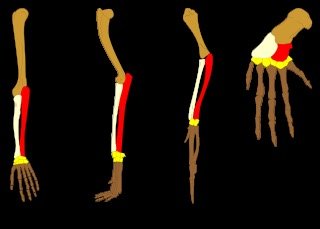
Homologous morphology: Similar structures due to shared ancestry
The fossil record: Provides chronological evidence of evolutionary changes
Behaviour and habitat: Ecological and behavioral traits
Molecular sequences: DNA and protein sequence comparisons
Phylogenetic Trees
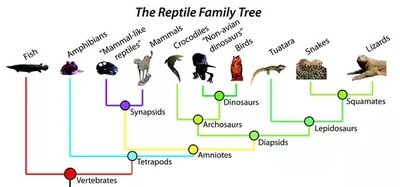
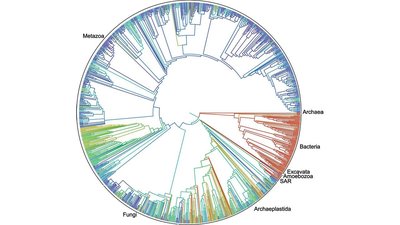
Phylogenetic trees are diagrams that represent evolutionary relationships among species. They can be constructed for closely related species or for all known life forms. The orientation and branch lengths of these trees can vary:
Cladograms: Show relationships; branch lengths are arbitrary
Phylograms: Branch lengths often represent time or genetic change

Linnaean Classification and Binomial Nomenclature
The Linnaean system classifies organisms into hierarchical groups (Domain, Kingdom, Phylum, Class, Order, Family, Genus, Species). Binomial nomenclature uses two names (genus and species) to uniquely identify organisms, reducing ambiguity.
Example: Brassica rapa (turnip)
Note: There is a movement to include Indigenous names in scientific nomenclature
Monophyletic, Paraphyletic, and Polyphyletic Groups
Phylogenetic trees help classify organisms into groups based on common ancestry:
Monophyletic group (Clade): Includes an ancestor and all its descendants
Paraphyletic group: Includes an ancestor and some, but not all, descendants
Polyphyletic group: Does not include the most recent common ancestor of all members
Building Phylogenetic Trees
Constructing phylogenetic trees involves identifying differences among species, sorting these differences to find the simplest explanation (Occam's razor), and drawing the tree that best represents these relationships. Molecular data, such as DNA sequences, are often used to infer relationships.
Occam's razor: The simplest explanation is preferred
Gene sequence comparison: Used to determine relatedness among species
Example Table: Types of Phylogenetic Groups
Group Type | Definition | Example |
|---|---|---|
Monophyletic | Ancestor and all descendants | Mammals |
Paraphyletic | Ancestor and some descendants | Reptiles (excluding birds) |
Polyphyletic | Unrelated organisms from different ancestors | Marine mammals |
Applications and Importance
Understanding phylogeny is essential for classifying organisms, studying evolutionary processes, and tracing the history of life on Earth. It also informs fields such as conservation biology, ecology, and genomics.
Additional Resources and Announcements
EDIA Resources: Equity, Diversity, Inclusion, and Accessibility contacts and support
Volunteer Notetaking: Opportunities to support peers and contribute to an inclusive learning environment
Emergency Procedures: Fire and power outage protocols
Additional info: Students are encouraged to review the "Research Method" in Figure 26.12 of the textbook before starting lab work. The course emphasizes the importance of both lecture and textbook material for exam preparation.
