 Back
Phylogeny & The Tree of Life: Organizing Biological Diversity
Study Guide - Smart Notes
 Tailored notes based on your materials, expanded with key definitions, examples, and context.
Phylogeny & The Tree of Life
Introduction to Phylogeny
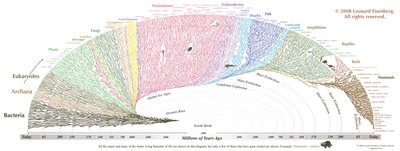
Phylogeny is the study of the evolutionary relationships among organisms. It provides a framework for understanding the diversity of life and the connections between different groups. The tree of life illustrates these relationships, showing how all living organisms share common ancestry.
Taxonomy and Systematics
Taxonomy is the science of naming, describing, and classifying organisms, while systematics is the broader field that includes taxonomy and the study of evolutionary relationships. Modern taxonomy is governed by international codes (ICZN, ICBN, ICNB, Virus Nomenclature).
Taxon: Any named group of organisms.
Binomial Nomenclature: The two-part scientific naming system for species, consisting of the genus (capitalized) and species epithet (not capitalized).

Linnaean Taxonomy
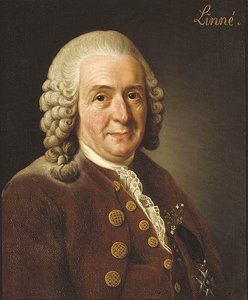
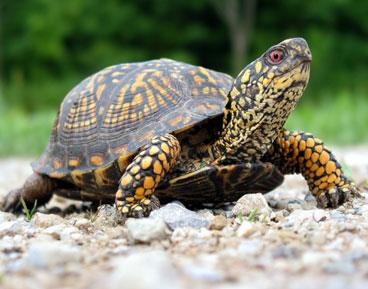
Carl Linnaeus developed a system for classifying organisms based on physical characteristics. However, this system did not account for evolutionary relationships, leading to inconsistencies and arbitrary ranks.
Physical Similarity: Linnaeus grouped organisms by overall similarity.
Problems: Organisms may be grouped together despite not sharing exclusive common ancestry; ranks (class, order, family) are arbitrary.


Phylogenetic Systematics (Cladistics)
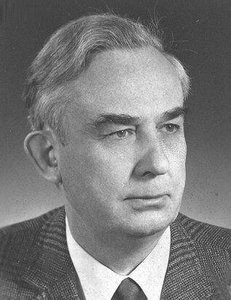
Phylogenetic systematics, or cladistics, classifies organisms based on common ancestry. This approach groups organisms into clades, which are natural taxa defined by shared ancestry.
Clade: A group consisting of an ancestor and all its descendants.
Cladogram: A branching diagram showing ancestor-descendant relationships.

Evidence for Common Ancestry
Comparative Anatomy & Genetics
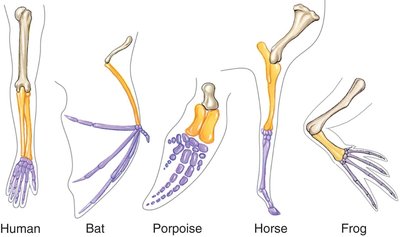
Homology refers to similarity in parts or organs due to shared ancestry, while homoplasy refers to similarity due to convergent evolution (not common ancestry).
Homology: Similarity due to common ancestry.
Homoplasy: Similarity due to convergence.
Fossil Record
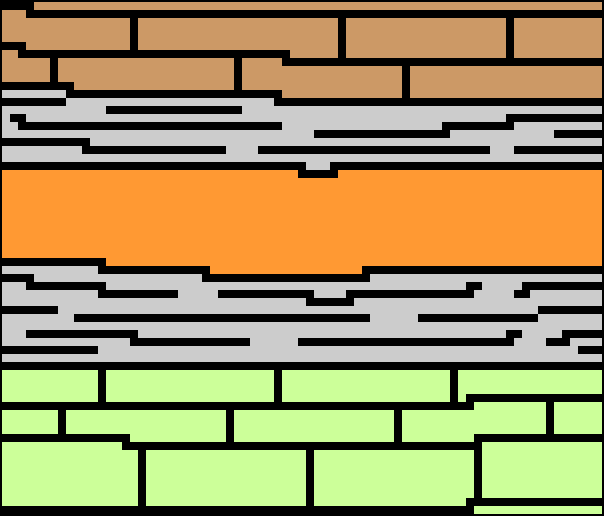
The fossil record provides evidence of past life and reveals evolutionary change through transitional forms. Fossils are preserved in sedimentary rocks and can be dated using relative and absolute methods.
Relative Age: Determined by the position of fossils in rock strata; older strata are below younger strata.
Absolute Age: Determined by radiometric dating using radioactive isotopes (e.g., C14, U238).
Transitional Forms: Fossils that show intermediate states between ancestral and descendant groups.
Constructing Phylogenetic Trees
Phylogenetic trees are constructed using heritable characters. The ingroup consists of the study group, while the outgroup is a closely related lineage not part of the ingroup. Derived characters (apomorphies) and shared derived characters (synapomorphies) are used to infer relationships.
Apomorphy: A derived character unique to a taxon.
Synapomorphy: A derived character shared by two or more taxa.
Maximum Parsimony: The simplest explanation with the fewest evolutionary events is preferred.
Anatomy of a Cladogram
Cladograms illustrate evolutionary relationships, showing terminal taxa (current groups), internal taxa (ancestors), and sister taxa (descendants of a common ancestor).
Terminal Taxa: The groups at the ends of branches.
Internal Taxa: Represent ancestors and clades.
Sister Taxa: Descendants of a common ancestor.
Types of Groups in Phylogenetics
Groups are classified based on their relationship to common ancestry:
Monophyletic Group: Includes an ancestor and all its descendants (clade).
Paraphyletic Group: Includes an ancestor and some, but not all, descendants.
Polyphyletic Group: Includes distantly related organisms but not their most recent common ancestor.
Branch Length and Tree Interpretation
Branch length in phylogenetic trees can represent the degree of evolutionary change or the timing of events. All living organisms today have evolved for the same amount of time since their last common ancestor.
Maximum Parsimony: The tree with the fewest evolutionary changes is preferred.
Maximum Likelihood: The tree most likely to have produced the observed data.
Summary Table: Types of Phylogenetic Groups
Group Type | Definition | Example |
|---|---|---|
Monophyletic | Ancestor and all descendants | Reptiles including birds |
Paraphyletic | Ancestor and some descendants | Reptiles without birds |
Polyphyletic | Distantly related organisms, no common ancestor | Marine mammals and fish |
Key Terms and Concepts
Taxon: Named group of organisms.
Clade: Natural group based on common ancestry.
Homology: Similarity due to shared ancestry.
Homoplasy: Similarity due to convergent evolution.
Synapomorphy: Shared derived character.
Maximum Parsimony: Simplest evolutionary explanation.
Important Equations
Radiometric dating equation for determining absolute age:
Where is the number of parent isotopes remaining, is the original number, is the decay constant, and is time.
Half-life equation:
Example: Using C14 dating, fossils up to 75,000 years old can be dated by measuring the ratio of C14 to C12.
Additional info: The notes expand on the importance of evolutionary relationships in organizing biological diversity, emphasizing the transition from Linnaean taxonomy to phylogenetic systematics.
