 Back
BackPhylum Arthropoda: Subphyla Myriapoda and Hexapoda (Insects, Centipedes, and Millipedes)
Study Guide - Smart Notes
 Tailored notes based on your materials, expanded with key definitions, examples, and context.
Phylum Arthropoda: Subphyla Myriapoda and Hexapoda
Introduction to Arthropoda, Myriapoda, and Hexapoda
The Phylum Arthropoda is the largest and most diverse animal phylum, characterized by jointed appendages, segmented bodies, and an exoskeleton made of chitin. Two important subphyla are Myriapoda (centipedes and millipedes) and Hexapoda (insects). Both groups possess unbranched appendages and a unique tracheal system for respiration, but differ in body segmentation and appendage structure.
Myriapoda: Includes centipedes (Class Chilopoda) and millipedes (Class Diplopoda).
Hexapoda: Includes insects (Class Insecta), the most diverse group of animals.
Subphylum Myriapoda
Class Chilopoda – Centipedes
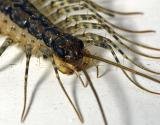
Centipedes are elongated, dorsoventrally flattened arthropods with one pair of legs per body segment. They are active predators, using modified front appendages (maxillipeds) as venomous fangs to subdue prey.
Body Plan: Two tagmata (head and trunk), 15 or more pairs of legs, simple eyes (ocelli), and long antennae.
Respiration: Tracheal system with spiracles located dorsally to the leg bases.
Feeding: Carnivorous, using poison claws to capture and immobilize prey.
Reproduction: Terminal segments bear reproductive structures; gonopores are present.
Example: Scutigera (house centipede) is harmless and commonly found in moist indoor environments.
Class Diplopoda – Millipedes
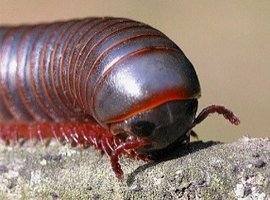
Millipedes are cylindrical, slow-moving arthropods with two pairs of legs per body segment (diplosomites). They are primarily detritivores or herbivores and possess defensive glands that secrete chemicals to deter predators.
Body Plan: Cylindrical body, double trunk segments (diplosomites), short antennae, and simple eyes (ocelli).
Defense: Repugnatorial glands secrete noxious or psychotropic chemicals.
Reproduction: Females often lay eggs in nests and may guard them; gonopores are located on the third trunk segment.
Development: Larvae initially have one pair of legs per segment; diplopody arises through segment fusion during molts.
Locomotion: Legs move in metachronal waves, with left and right sides out of phase.
Subphylum Hexapoda
Class Insecta – The Insects
Insects are the most diverse group of arthropods, occupying nearly every terrestrial and freshwater habitat. Their success is attributed to their segmented body plan, specialized appendages, and the evolution of flight.
Body Plan: Three tagmata (head, thorax, abdomen), three pairs of legs on the thorax, and usually two pairs of wings.
Respiration: Tracheal system with spiracles on thoracic and abdominal segments.
Reproduction: Terminal abdominal segments are modified for reproduction (e.g., ovipositors in females).
Diversity: Estimated 20 million species worldwide; found in nearly all environments except deep oceans.
Order Orthoptera – Grasshoppers (Romalea)
Grasshoppers are model organisms for studying insect anatomy. They possess large hind legs for jumping, leathery forewings, and membranous hindwings. The thorax is divided into three segments, each bearing a pair of legs.
External Anatomy: Head with compound and simple eyes, antennae, mandibles, maxillae, labrum, and labium. Thorax with prothorax, mesothorax, and metathorax. Abdomen with 11 segments, tympanum (hearing organ), and spiracles.
Sexual Dimorphism: Females have prominent ovipositors for egg-laying.
Internal Anatomy of Grasshoppers
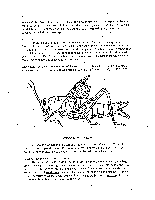
The internal anatomy of insects is specialized for efficient digestion, excretion, and nervous control.
Digestive System: Divided into foregut (crop), midgut (proventriculus), and hindgut (colon). Gastric ceca increase digestive surface area. Malpighian tubules function in excretion and osmoregulation.
Nervous System: Consists of a ventral nerve cord with fused ganglia, a supraesophageal ganglion (brain), and subesophageal ganglion.
Principal Features of Insects
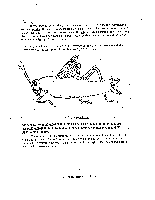
Insects exhibit a variety of specialized anatomical features, including:
Malpighian Tubules: Excretory organs that remove nitrogenous wastes and conserve water.
Tracheal System: Highly branched tubes (tracheae and tracheoles) deliver oxygen directly to tissues.
Compound Eyes: Composed of numerous ommatidia, providing a wide field of vision.
Specialized Appendages: Examples include the honeybee sting, mosquito antennae, and ovipositors.
Major Orders of Insects
Insects are classified into several major orders, each with distinctive characteristics:
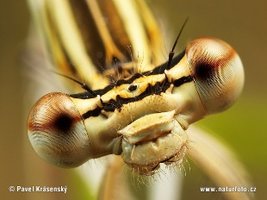
Order Odonata: Dragonflies and damselflies; large compound eyes, two pairs of membranous wings.
Order Orthoptera: Grasshoppers and crickets; jumping hind legs, stridulation for sound production.
Order Isoptera: Termites; social insects with caste systems.
Order Hemiptera: True bugs; piercing-sucking mouthparts.
Order Homoptera: Aphids, cicadas; similar to Hemiptera but with uniform wings.
Order Coleoptera: Beetles; hardened forewings (elytra).
Order Lepidoptera: Butterflies and moths; scaled wings.
Order Diptera: Flies; one pair of wings, halteres for balance.
Order Siphonaptera: Fleas; wingless, laterally compressed bodies.
Order Hymenoptera: Bees, wasps, ants; social behavior, stingers in some species.
Discussion Questions and Problems
Parental Investment in Millipedes
Question: Why do females of most animal species provide the highest parental investment (PI)?
Explanation: Females typically invest more in offspring due to the higher energetic cost of egg production and, in many species, gestation or brooding. This investment increases the likelihood of offspring survival. Males may increase reproductive success by seeking additional mates, while females maximize fitness by ensuring the survival of their limited offspring.
Defensive Secretions in Millipedes
Question: Why do female millipedes secrete psychotropic agents when attacked, even if they are likely to die?
Explanation: The secretion may protect the eggs or nest by incapacitating the predator, or it may provide a selective advantage to kin or conspecifics by deterring future predation. Additionally, the secretion could be a byproduct of selection for defense in less lethal encounters.
Interspecific Communication in Fireflies
Question: What is the purpose of deceptive signaling by female fireflies?
Explanation: Deceptive signaling allows predatory females to attract and prey upon males of other species, increasing their own fitness by obtaining nutrients for egg production.
Evolution of Sterile Castes in Social Insects
Question: Why do sterile worker bees sacrifice themselves for the hive?
Explanation: Worker bees increase their inclusive fitness by helping close relatives (the queen and her offspring) survive and reproduce. This is explained by kin selection, where genes promoting altruistic behavior toward relatives are favored if they increase the overall genetic representation in the next generation.
Additional info: The study of arthropod diversity, anatomy, and behavior provides key insights into evolutionary adaptation, ecological roles, and the mechanisms underlying animal physiology and sociality.
