 Back
Phylum Chordata: Structure, Diversity, and Evolution
Study Guide - Smart Notes
 Tailored notes based on your materials, expanded with key definitions, examples, and context.
Phylum Chordata
Chordate Characteristics
Chordates are a diverse phylum of animals distinguished by several key anatomical features present at some stage in their life cycle. These features are fundamental to understanding the evolutionary relationships and biological functions of chordates.
Notochord: A flexible, rod-shaped structure that provides support. It is present in all chordate embryos and persists in some adult forms.
Dorsal, hollow nerve cord: Located above the notochord, this structure develops into the central nervous system (brain and spinal cord) in vertebrates.
Pharyngeal slits or clefts: Openings in the pharynx that function in filter-feeding, respiration, or develop into other structures in vertebrates.
Segmented body muscles: Chordates exhibit segmentation in their musculature, aiding in movement and structural organization.
Post-anal tail: An extension of the body past the anal opening, used for locomotion in many chordates.
Subphylum Urochordata (Tunicates/Sea Squirts)
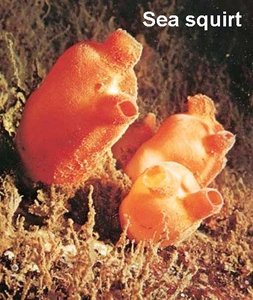
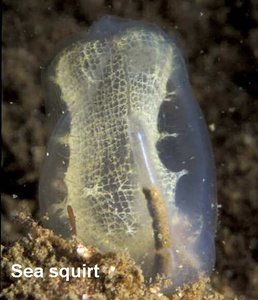
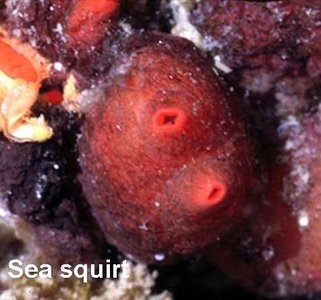
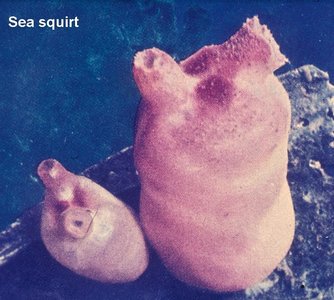
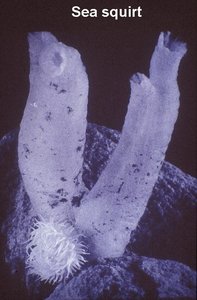
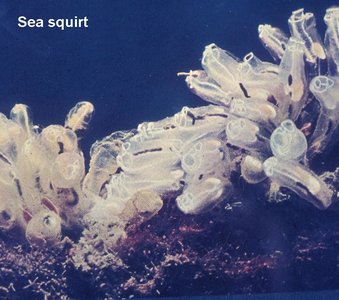
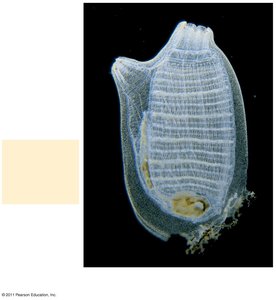
Urochordates, commonly known as sea squirts, are marine animals that exhibit chordate features primarily during their larval stage. Adults are sessile and filter-feed by drawing water through their siphons.
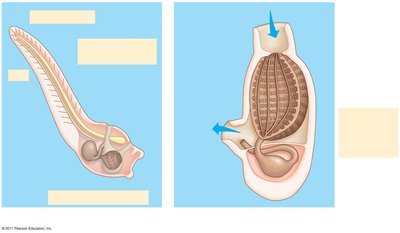
Larval tunicates: Possess all chordate characteristics, including a notochord and dorsal nerve cord.
Adult tunicates: Lose the notochord and nerve cord, retaining pharyngeal slits for filter feeding.
Feeding mechanism: Water enters through the incurrent siphon, passes through pharyngeal slits, and exits via the excurrent siphon.
Tunic: A protective covering composed of a cellulose-like substance.
Example: Sea squirts are important for studying chordate evolution due to their transitional features.
Subphylum Cephalochordata (Lancelets/Amphioxus)
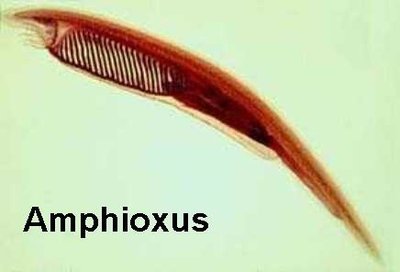
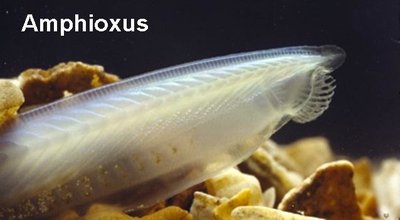
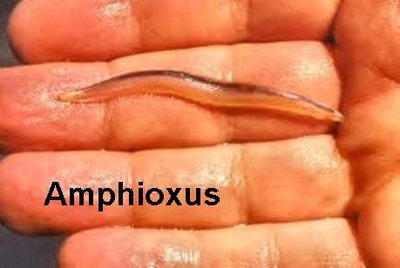
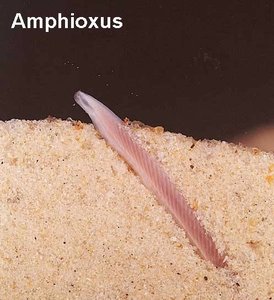
Cephalochordates, such as amphioxus (lancelets), retain all chordate features throughout their life. They are small, fish-like marine animals that burrow in sand and filter-feed.
Persistent notochord: Extends the length of the body and provides structural support.
Dorsal nerve cord: Runs above the notochord.
Pharyngeal slits: Used for filter feeding.
Segmented muscles: Aid in swimming and burrowing.
Post-anal tail: Used for locomotion.
Example: Amphioxus is a model organism for studying vertebrate origins.
Subphylum Vertebrata
Vertebrates are chordates with a backbone or vertebral column. They exhibit advanced organ systems and greater complexity compared to other chordates.
Diagnostic characters: Vertebral column, cranium, and highly developed nervous system.
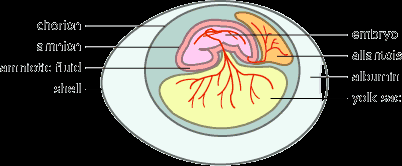
Amniotic egg: Adaptation for terrestrial reproduction, containing membranes that protect and nourish the embryo.
Pentadactyl limb: Limbs with five digits, characteristic of many vertebrates.
Class Pisces (Fish)
Fish are aquatic vertebrates divided into jawless and jawed groups.
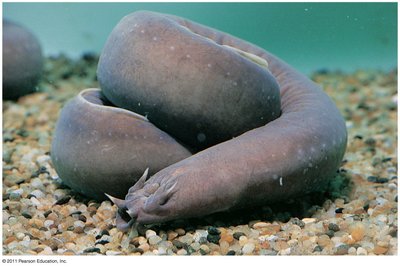
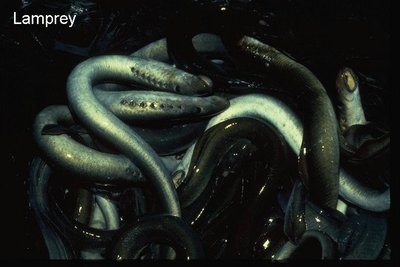
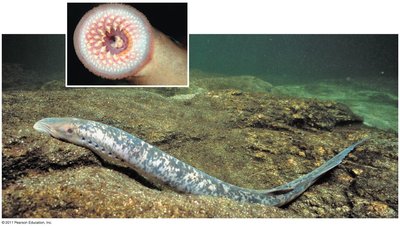
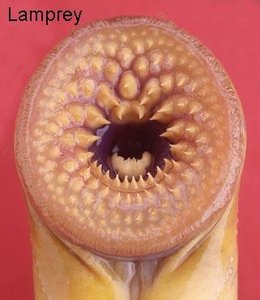
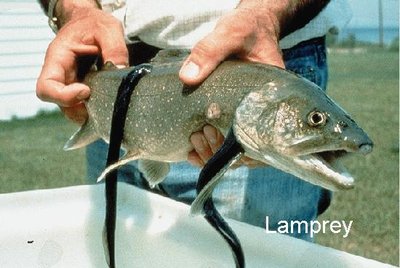
Jawless fish: Includes hagfish and lampreys, which lack jaws and paired fins.
Jawed fish: Includes cartilaginous fish (sharks, rays) and bony fish (ray-finned and lobe-finned).
Cartilaginous Fish
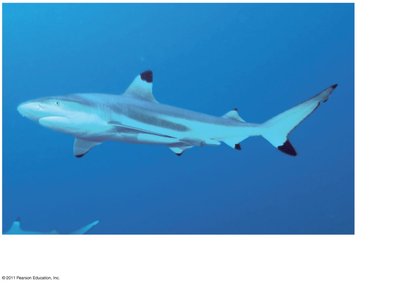
Cartilaginous fish have skeletons made of cartilage rather than bone. Examples include sharks and rays.
Adaptations: Streamlined bodies, powerful jaws, and specialized fins.

Bony Fish
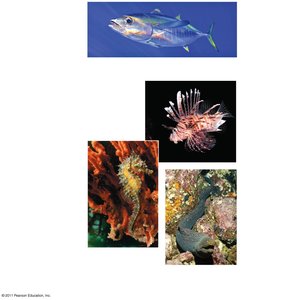
Bony fish possess a skeleton made of bone and are divided into ray-finned and lobe-finned groups.
Ray-finned fish: Most common fish, with fins supported by bony rays.
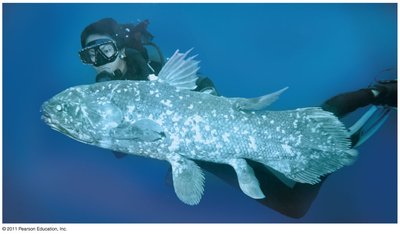
Lobe-finned fish: Fins supported by bones and muscles, including coelacanths.
Class Amphibia
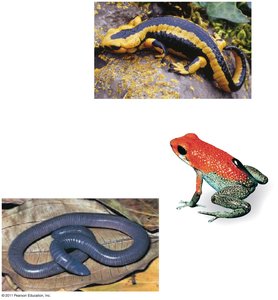
Amphibians are vertebrates that typically have a dual life, beginning in water and often moving to land as adults. They include salamanders, frogs, and caecilians.
Life cycle: Aquatic larvae and terrestrial adults.
Respiration: Through skin, lungs, and gills.
Class Reptilia
Reptiles are vertebrates adapted for life on land, with scaly skin and amniotic eggs. Groups include crocodiles, turtles, tortoises, lizards, and snakes.
Adaptations: Waterproof skin, internal fertilization, and amniotic eggs.
Class Aves (Birds)
Birds are vertebrates characterized by feathers, beaks, and adaptations for flight. They are descended from reptiles and possess amniotic eggs.
Adaptations: Lightweight bones, high metabolic rate, and efficient respiratory system.
Summary Table: Chordate Subphyla and Classes
Subphylum/Class | Key Features | Example Organisms |
|---|---|---|
Urochordata | Larval chordate features, adult filter-feeding | Sea squirts (tunicates) |
Cephalochordata | Persistent chordate features | Amphioxus (lancelet) |
Vertebrata | Vertebral column, advanced organ systems | Fish, amphibians, reptiles, birds |
Jawless Fish | No jaws, no paired fins | Hagfish, lamprey |
Cartilaginous Fish | Cartilage skeleton | Sharks, rays |
Bony Fish | Bony skeleton | Tuna, seahorse, coelacanth |
Amphibia | Dual life cycle, moist skin | Frog, salamander, caecilian |
Reptilia | Scaly skin, amniotic egg | Lizard, turtle, crocodile |
Aves | Feathers, flight adaptations | Birds |
Additional info: The notes above expand on brief points from the original materials, providing academic context and examples for each chordate group. Images included are directly relevant to the anatomical and taxonomic explanations.
