 Back
BackPhysical and Chemical Methods of Microbial Control
Study Guide - Smart Notes
 Tailored notes based on your materials, expanded with key definitions, examples, and context.
Overview of Microbial Growth Control
Microbial growth control is essential in healthcare, laboratory, and food industry settings to prevent infection, spoilage, and disease transmission. Various physical and chemical methods are employed to reduce or eliminate microbial populations, each with specific applications and limitations.
General Considerations in Microbial Control
Site to be Treated: The nature of the site (e.g., living tissue, inanimate object) determines the appropriate control method.
Environmental Conditions: Factors such as temperature, pH, and presence of organic matter influence the efficacy of antimicrobial agents.
Susceptibility of Microorganisms: Different microbes exhibit varying resistance to control methods.
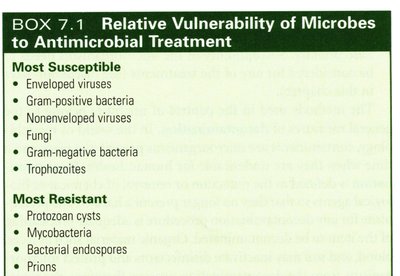
Relative Vulnerability of Microbes to Antimicrobial Treatment
Microorganisms differ in their susceptibility to antimicrobial agents. Understanding these differences is crucial for selecting effective control strategies.
Key Terminology in Microbial Control
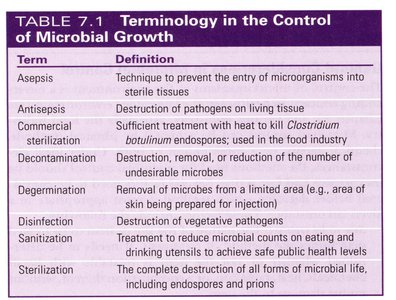
Precise terminology is essential for describing microbial control methods. The following table summarizes important terms:
Term | Definition |
|---|---|
Asepsis | Technique to prevent the entry of microorganisms into sterile tissues |
Antisepsis | Destruction of pathogens on living tissue |
Commercial sterilization | Sufficient treatment with heat to kill Clostridium botulinum endospores; used in the food industry |
Decontamination | Destruction, removal, or reduction of the number of undesirable microbes |
Degermination | Removal of microbes from a limited area (e.g., area of skin being prepared for injection) |
Disinfection | Destruction of vegetative pathogens |
Sanitization | Treatment to reduce microbial counts on eating and drinking utensils to achieve safe public health levels |
Sterilization | The complete destruction of all forms of microbial life, including endospores and prions |
Microbial Death and Exponential Decline
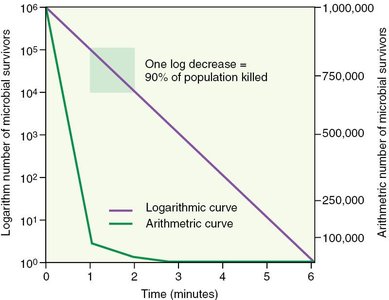
Microbial death is defined as the permanent loss of reproductive ability. The rate of microbial death often follows an exponential decline, meaning a constant proportion of cells die per unit time.
Factors Influencing Death Rate: Number of microorganisms, nature of the organism, temperature, pH, concentration of agent, and presence of organic matter.
Decimal Reduction Time (DRT): The time required to kill 90% of a microbial population at a given temperature.
Physical Methods of Microbial Control
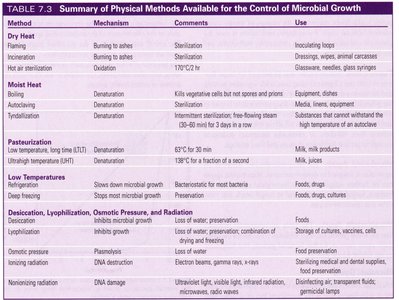
Physical methods are widely used to control microbial growth, especially when chemical methods are unsuitable. The following table summarizes these methods:
Temperature and Microbial Growth
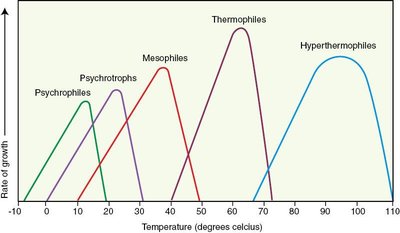
Temperature is a critical factor in microbial growth and control. Microbes are classified based on their optimal growth temperatures:
Psychrophiles: Grow best at low temperatures (0–20°C)
Mesophiles: Grow best at moderate temperatures (20–45°C)
Thermophiles: Grow best at high temperatures (45–80°C)
Hyperthermophiles: Grow best at extremely high temperatures (>80°C)
pH and Microbial Growth
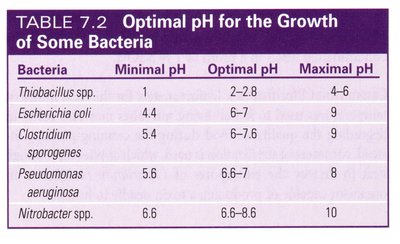
Microorganisms have specific pH ranges for optimal growth. The following table lists the minimal, optimal, and maximal pH for selected bacteria:
Bacteria | Minimal pH | Optimal pH | Maximal pH |
|---|---|---|---|
Thiobacillus spp. | 1 | 2–2.8 | 4–6 |
Escherichia coli | 4.4 | 6–7 | 9 |
Clostridium sporogenes | 5.4 | 6–7.6 | 9 |
Pseudomonas aeruginosa | 5.6 | 6.6–7 | 8 |
Nitrobacter spp. | 6.6 | 6.6–8.6 | 10 |
Dry Heat Sterilization
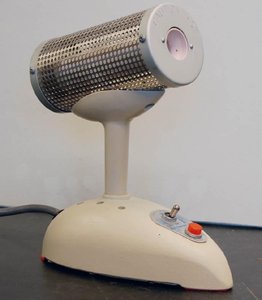
Dry heat sterilization involves the use of high temperatures to destroy microorganisms. Methods include incineration and hot air sterilization.
Incineration: Complete oxidation of materials, used for inoculating loops and contaminated waste.
Hot Air Sterilization: Typically performed at 160–170°C for 2–4 hours.
Moist Heat Sterilization
Moist heat is more effective than dry heat and includes methods such as boiling, autoclaving, and pasteurization.
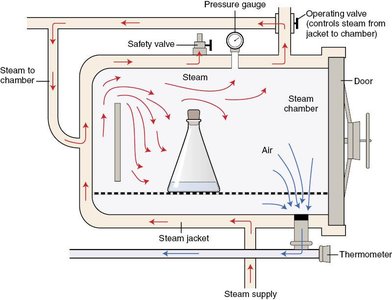
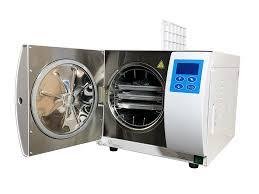
Autoclave: Uses steam under pressure (121°C, 15 psi, 20 min) to sterilize heat-resistant materials.
Filtration
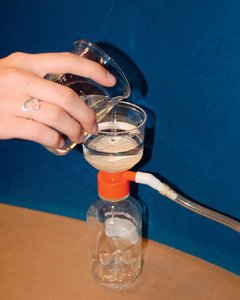
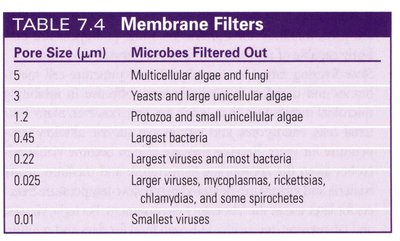
Filtration is used to sterilize heat-sensitive liquids and air by physically removing microbes using membrane filters of defined pore sizes.
Pore Size (µm) | Microbes Filtered Out |
|---|---|
5 | Multicellular algae and fungi |
3 | Yeasts and large unicellular algae |
1.2 | Protozoa and small unicellular algae |
0.45 | Largest bacteria |
0.22 | Largest viruses and most bacteria |
0.025 | Larger viruses, mycoplasmas, rickettsias, chlamydias, and some spirochetes |
0.01 | Smallest viruses |
Chemical Methods of Microbial Control
Chemical agents are used to disinfect surfaces, sterilize equipment, and treat living tissues. Their effectiveness depends on concentration, contact time, and the presence of organic matter.
Evaluating Disinfectants
Use-Dilution Test: Determines the effectiveness of a disinfectant against selected microbes.
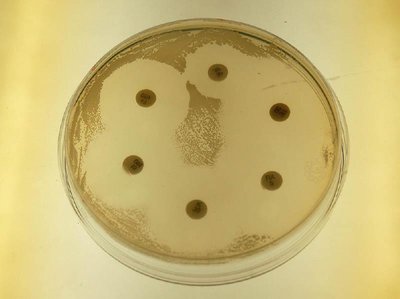
Disk-Diffusion Test: Measures the zone of inhibition around a chemical-impregnated disk on an agar plate.
Types of Chemical Agents
The following table summarizes the effectiveness, advantages, disadvantages, and preferred uses of major chemical agents:
Food Preservation Methods
Food preservation involves various techniques to slow spoilage, prevent foodborne illness, and maintain food quality. Methods include pasteurization, canning, irradiation, drying, and the use of chemical additives.
Pasteurization
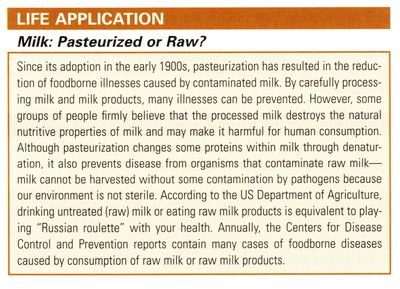
Pasteurization uses controlled heat to reduce microbial load in food and beverages, preventing spoilage and disease without significantly altering taste or nutritional value.
High Temperature Short Time (HTST): 63°C for 30 min (batch) or 72°C for 15 sec (continuous flow).
Ultra-High Temperature (UHT): 138°C for a fraction of a second, allowing storage at room temperature.
Other Methods
Pressure Canning: Uses high pressure and temperature to sterilize canned foods.
Food Irradiation: Uses ionizing radiation to kill microbes and extend shelf life.
Drying and Freeze-Drying: Remove water to inhibit microbial growth.
Pickling, Curing, Fermentation: Use chemical or biological processes to preserve food.
Applications and Implications
Healthcare Application
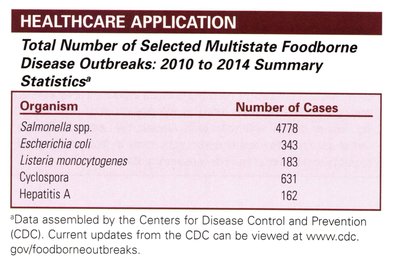
Controlling microbial growth is critical in preventing foodborne disease outbreaks. For example, Salmonella spp. and Escherichia coli are major causes of outbreaks in the United States.
Life Application: Can You Be "Too Clean"?
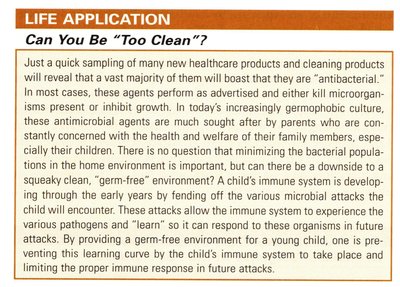
While minimizing microbial populations is important, excessive cleanliness may limit immune system development in children by reducing exposure to common microbes.
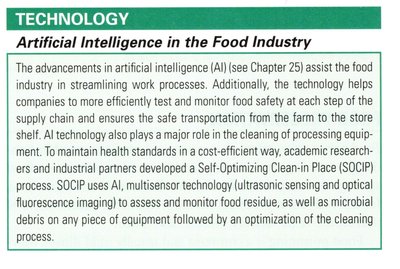
Technology: Artificial Intelligence in the Food Industry
AI technologies are increasingly used to monitor and optimize food safety and cleaning processes in the food industry, ensuring high standards and efficiency.
