 Back
Physiology and Homeostasis: Resource Acquisition, Transport, and Regulation in Plants and Animals
Study Guide - Smart Notes
 Tailored notes based on your materials, expanded with key definitions, examples, and context.
Form and Function in Biology
Levels of Biological Organization
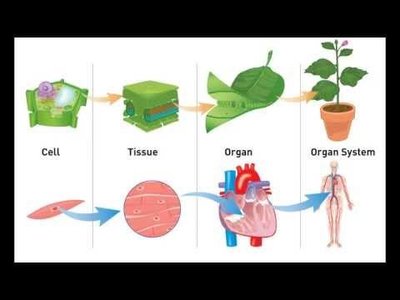
Biological systems are organized hierarchically, with each level building upon the previous. This structure allows for specialized functions and adaptive responses in multicellular organisms.
Cell: The basic unit of life, capable of performing essential metabolic processes.
Tissue: Groups of similar cells working together to perform a specific function.
Organ: Structures composed of multiple tissues that carry out particular tasks (e.g., leaves in plants, heart in animals).
Organ System: Multiple organs working together to maintain homeostasis and support life (e.g., circulatory system in animals, shoot system in plants).
Physiological Adaptation and Acclimation
Responses to Environmental Changes
Plants and animals must respond to changes in their external environment to survive. These responses occur at different timescales and levels:
Physiological adaptation: Evolutionary changes in physiological traits within a population over generations, driven by natural selection.
Physiological acclimation: Reversible adjustments made by an individual organism in response to environmental changes (e.g., seasonal fur thickness in mammals).
Homeostasis
Maintaining Internal Stability
Homeostasis is the process by which organisms maintain a stable internal environment while dynamically adjusting to external conditions. This is essential for proper cellular function and overall health.
Regulators: Organisms that use physiological mechanisms to maintain internal consistency despite environmental changes (e.g., mammals regulate body temperature).
Conformers: Organisms whose internal conditions change with the external environment (e.g., most fish conform to water temperature).
Resource Acquisition and Transport in Vascular Plants
Photosynthesis, Respiration, and Transpiration
Vascular plants acquire resources and transport them internally to support metabolism and growth. Three key processes are involved:
Photosynthesis: Occurs in leaves; uses light energy to convert CO2 and H2O into glucose and O2. Equation:
Cellular Respiration: Occurs in all cells; breaks down glucose to release energy for ATP production. Equation:
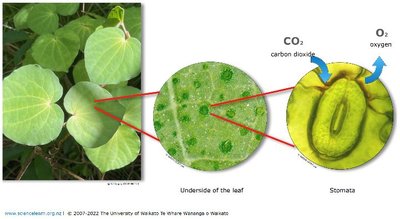
Transpiration: Loss of water from leaves (mainly through stomata) creates a force that pulls water up from roots.
Xylem and Phloem: Long-Distance Transport
Vascular plants use specialized tissues for internal transport:
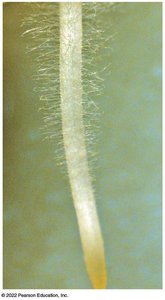
Xylem: Transports water and minerals upward from roots to leaves, driven by negative pressure from transpiration.
Phloem: Transports sugars (e.g., glucose) from sources (leaves, storage organs) to sinks (growing tissues, roots), driven by positive pressure.
Membrane Transport Mechanisms
Short-Distance Transport
Substances move across cell membranes via several mechanisms:
Simple diffusion: Movement of small, nonpolar molecules directly through the membrane (e.g., O2, CO2).
Facilitated diffusion: Movement of larger or charged molecules through membrane-bound channels or carrier proteins.
Osmosis: Passive movement of water down its potential gradient, often facilitated by aquaporin proteins.
Active transport: Movement of molecules against their concentration gradient, requiring energy (ATP) and specialized proteins (e.g., proton pumps).
Cotransport: Coupling the movement of one solute down its gradient to power the movement of another solute against its gradient.
Water Potential and Tonicity
Predicting Water Movement
Water potential () determines the direction of water flow in plant cells:
Water Potential Equation: Where is solute potential (more solutes = lower ), and is pressure potential (positive = pushes water, negative = pulls water).
Tonicity: Describes the relative solute concentration inside vs outside the cell (isotonic, hypotonic, hypertonic).
Net water flow: Always from areas of higher water potential to lower water potential.
Stomatal Regulation in Plants
Mechanisms and Adaptive Responses
Stomata are pores on leaf surfaces that regulate gas exchange and water loss. Their opening and closing is controlled by guard cells:
To open stomata: K+ ions are transported into guard cells, decreasing water potential and causing water to flow in, making cells turgid.
To close stomata: K+ ions are transported out, increasing water potential and causing water to flow out, making cells flaccid.
Regulation: Controlled by environmental cues (light, CO2 levels, drought) and hormones (e.g., abscisic acid).
Osmoregulation and Excretion in Animals
Maintaining Water and Solute Balance
Animals regulate osmolarity to maintain proper cell function:
Osmoregulators: Maintain internal osmolarity independent of environment (e.g., mammals, freshwater fish).
Osmoconformers: Internal osmolarity matches environment (e.g., marine invertebrates).
Excretion: Removal of nitrogenous wastes (e.g., urea) via kidneys, which filter blood and regulate water/solute reabsorption.
Kidney Structure and Function
Nephron Processes
The nephron is the functional unit of the kidney, facilitating:
Filtration: Blood pressure pushes water and solutes into the nephron tubule.
Reabsorption: Valuable substances are returned to the blood.
Secretion: Toxins and excess ions are added to the tubule.
Excretion: Waste leaves the body as urine.
Circulatory and Respiratory Systems in Animals
Bulk Flow and Gas Exchange
Animals use circulatory systems for long-distance transport of nutrients, gases, and wastes:
Open circulatory system: Fluid is pumped through open spaces; lower pressure, less energy required.
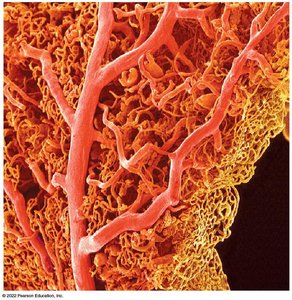
Closed circulatory system: Blood is pumped through vessels; higher pressure, supports higher metabolic rates.
Gas exchange: Occurs at respiratory structures (gills, lungs) via passive diffusion down concentration gradients.
Countercurrent Exchange
Maximizing Transfer Efficiency
Countercurrent exchange is a mechanism where fluids flow in opposite directions, maintaining gradients for efficient transfer of heat, solutes, or gases (e.g., in fish gills, kidney nephrons, and limbs of endotherms).
Integration of Homeostatic Systems
Feedback Mechanisms
Homeostasis is maintained through feedback loops:
Negative feedback: Response counteracts the original stimulus (e.g., regulation of body temperature, blood glucose, blood osmolarity).
Positive feedback: Response enhances the original stimulus, driving the process to completion (e.g., hormone cascades).
Summary Table: Long-Distance vs Short-Distance Transport
Type | Mechanism | Examples | Energy Requirement |
|---|---|---|---|
Long-Distance (Bulk Flow) | Pressure gradients (positive or negative) | Xylem & phloem in plants, circulatory system in animals | Plants: passive (xylem), active (phloem loading); Animals: active (heart) |
Short-Distance (Membrane Transport) | Diffusion, osmosis, active transport, cotransport | Root uptake, stomatal regulation, kidney reabsorption | Passive (diffusion/osmosis), active (pumps/cotransport) |
Key Concepts for Exam Preparation
Describe resource acquisition and transport in vascular plants and animals.
Explain the roles of xylem and phloem and their adaptive benefits.
Contrast long-distance vs short-distance transport mechanisms.
Apply concepts of water potential, tonicity, and osmoregulation to predict water movement.
Analyze feedback mechanisms in homeostasis.
Integrate understanding of physiological systems and their responses to environmental changes.
