 Back
BackPlant Biology Exam Study Guide: Fruits, Tissues, and Plant Structure
Study Guide - Smart Notes
 Tailored notes based on your materials, expanded with key definitions, examples, and context.
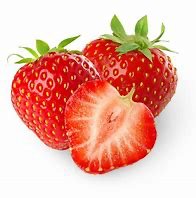
Q1. Wat voor type vrucht is de aardbei?
Background
Topic: Plant Reproductive Structures – Fruit Types
This question tests your understanding of the classification of fruits in angiosperms, specifically the difference between true fruits and accessory (false) fruits.
Key Terms:
Steenvrucht (Drupe): A fleshy fruit with a single seed enclosed in a hard endocarp (e.g., cherry, peach).
Pitvrucht (Pome): A fruit with a core containing seeds, surrounded by fleshy tissue (e.g., apple, pear).
Vlezige echte vrucht (Fleshy true fruit): A fruit derived entirely from the ovary wall.
Schijnvrucht (Accessory/false fruit): A fruit where parts other than the ovary contribute to the fleshy part (e.g., strawberry, apple).
Step-by-Step Guidance
Recall the definition of a true fruit versus a false (accessory) fruit. Consider which plant tissues contribute to the edible part of a strawberry.
Think about where the seeds are located in a strawberry and what the fleshy part actually is (ovary or other tissue?).
Compare the strawberry to examples of drupes, pomes, and true fleshy fruits. Which category fits best based on structure?
Review the definition of a "schijnvrucht" and see if it matches the strawberry's structure.
Try solving on your own before revealing the answer!
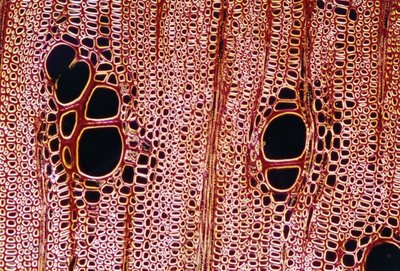
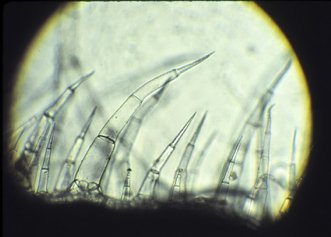
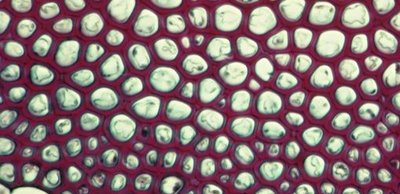
Q2. Geef bij elke foto aan om welk celtype of weefsel het gaat.
Background
Topic: Plant Anatomy – Tissue Types
This question tests your ability to recognize different plant cell types and tissues under the microscope.
Key Terms:
Xyleem (Xylem): Vascular tissue for water transport.
Phloeem (Phloem): Vascular tissue for sugar transport.
Epidermis: Outermost cell layer of plant organs.
Parenchym: General plant tissue, often for storage or photosynthesis.
Collenchym/Sclerenchym: Supportive tissues with thickened cell walls.
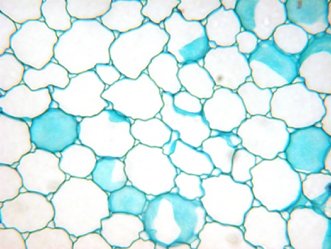
Step-by-Step Guidance
For each image, observe the cell shapes, arrangement, and any unique features (e.g., thick walls, large vacuoles, presence of vessels or fibers).
Match these features to the definitions of the main plant tissues: xylem, phloem, epidermis, parenchyma, collenchyma, sclerenchyma.
Consider the function of each tissue (e.g., transport, support, storage, protection) and how that relates to the observed structure.
Assign the most likely tissue type to each image based on your observations and knowledge.
Try solving on your own before revealing the answer!
Final Answer Q1: d. Schijnvrucht
The edible part of the strawberry is derived from the receptacle, not the ovary, making it an accessory (false) fruit.
Final Answer Q2:
Image 2: Xyleem (vascular tissue)
Image 3: Epidermis with root hairs
Image 4: Collenchym (support tissue)
Image 5: Parenchym (storage tissue)
Each tissue is identified based on cell structure and function.
