 Back
Plant Cellular Respiration: Mechanisms, Pathways, and Energy Yield
Study Guide - Smart Notes
 Tailored notes based on your materials, expanded with key definitions, examples, and context.
Cellular Respiration in Plants
Learning Outcomes
By the end of this section, students should be able to:
Define cellular respiration and its role in cellular metabolism, including the chemical processes of glycolysis, the Krebs cycle, and the electron transport chain.
Describe the sequence of events in each stage of cellular respiration and identify the cellular locations where these stages occur.
Calculate ATP yield from each step and analyze the efficiency of cellular respiration in extracting energy from glucose.
Predict consequences of disruptions in cellular respiration, such as oxygen deprivation or poisoning.
Evaluate the interplay between cellular respiration and other cellular processes, such as photosynthesis, in the context of energy flow in ecosystems.
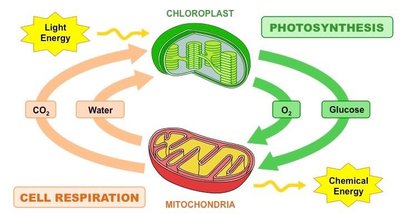
Overview: Photosynthesis vs. Cellular Respiration
Energy Flow in Plant Cells
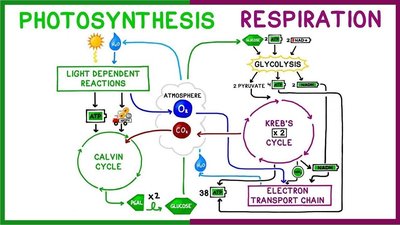
Photosynthesis and cellular respiration are complementary processes in plant metabolism. Photosynthesis converts light energy into chemical energy (glucose), while cellular respiration breaks down glucose to release energy for cellular activities.
Photosynthesis: Occurs in chloroplasts, produces glucose and oxygen from carbon dioxide and water using light energy.
Cellular Respiration: Occurs in mitochondria, breaks down glucose in the presence of oxygen to produce carbon dioxide, water, and ATP.
Both processes are essential for energy flow and ecosystem function.
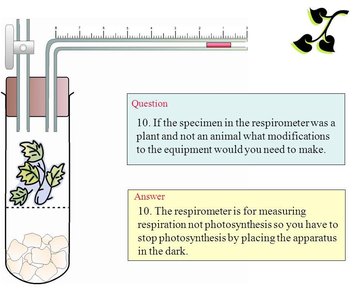
Measuring Plant Respiration
Experimental Approaches
Respiration rate in plants can be measured using a respirometer. To ensure accurate measurement, photosynthesis must be inhibited, typically by placing the apparatus in the dark.
Respirometer: Device used to measure gas exchange (CO2 production or O2 consumption).
For plants, photosynthesis must be stopped to isolate respiration.
Byproducts of respiration include CO2 and water.
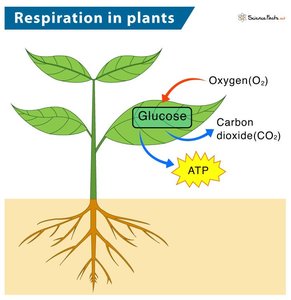
Plant Metabolism: Respiration
Role and Importance
Plant metabolism includes both photosynthesis and respiration. Respiration releases stored energy from glucose, fueling cellular activities and supporting growth and development.
Respiration Equation:
Occurs in all living plant cells, including roots, stems, and leaves.
Essential for energy release and ecosystem interactions.
Stages of Cellular Respiration
Pathways and Locations
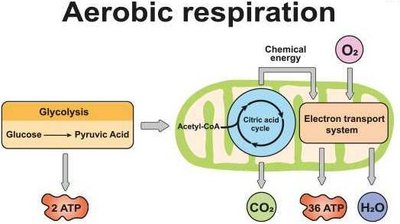
Cellular respiration is a multi-stage process, each occurring in specific cellular compartments:
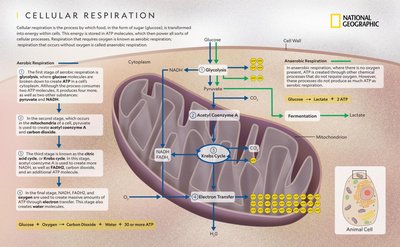
Glycolysis: Cytoplasm
Acetyl CoA Formation: Mitochondrial matrix
Krebs Cycle (Citric Acid Cycle): Mitochondrial matrix
Electron Transport Chain (ETC): Inner mitochondrial membrane
Mitochondria: Structure and Function
Site of Respiration
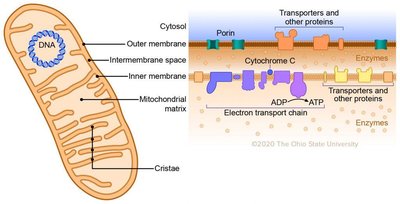
Mitochondria are specialized organelles where most stages of cellular respiration occur. Their structure includes:
Outer membrane
Inner membrane (site of ETC)
Cristae: Folds of the inner membrane, increasing surface area
Matrix: Fluid interior where Krebs cycle occurs
Intermembrane space: Area between membranes, important for proton gradient
Glycolysis
Breaking Down Glucose
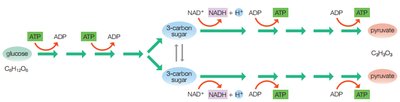
Glycolysis is the first step in cellular respiration, occurring in the cytoplasm. It splits glucose into two pyruvate molecules, producing ATP and NADH.
Reactant: Glucose (C6H12O6)
Products: 2 Pyruvate, 2 ATP (net), 2 NADH
Does not require oxygen (anaerobic)
Fermentation
Anaerobic Respiration
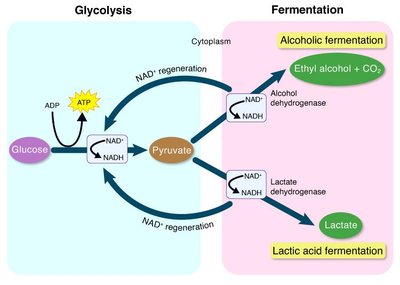
When oxygen is absent, plants and other organisms can perform fermentation. Pyruvate is converted to ethyl alcohol and CO2 (alcoholic fermentation) or lactate (lactic acid fermentation), allowing NAD+ regeneration for glycolysis.
Alcoholic fermentation: Produces ethanol and CO2
Lactic acid fermentation: Produces lactate
Yields less ATP than aerobic respiration
Krebs Cycle (Citric Acid Cycle)
Energy Production and Carbon Dioxide Release
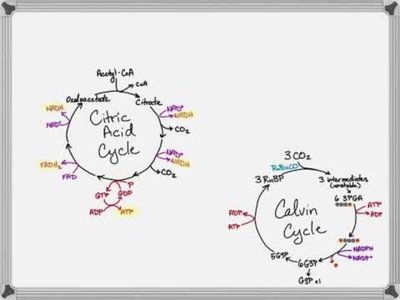
The Krebs cycle occurs in the mitochondrial matrix, oxidizing acetyl CoA to produce ATP, NADH, FADH2, and CO2. It is a cyclic pathway with several key steps:
Acetyl-CoA combines with oxaloacetate to form citrate
Series of enzymatic reactions regenerate oxaloacetate
Produces 2 ATP, 6 NADH, 2 FADH2 per glucose
CO2 is released as a waste product
Calvin Cycle vs. Krebs Cycle
Comparison of Carbon Cycles
The Calvin cycle (photosynthesis) and Krebs cycle (respiration) both involve carbon compound conversion but occur in different compartments and serve distinct purposes.
Calvin cycle: Occurs in chloroplasts, fixes CO2 into glucose
Krebs cycle: Occurs in mitochondria, oxidizes glucose derivatives to release energy
Electron Transport Chain (ETC)
ATP Production via Oxidative Phosphorylation
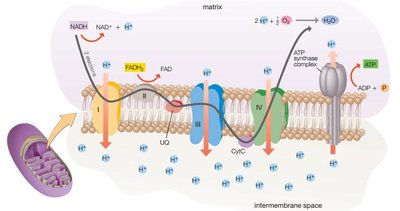
The ETC is a series of protein complexes in the inner mitochondrial membrane. Electrons from NADH and FADH2 are transferred through these complexes, releasing energy to pump protons and create a gradient.
Electron donors: NADH and FADH2
Complexes: I, II, III, IV
Proton pumping: Creates a gradient across the membrane
Oxygen: Final electron acceptor, forms water
Chemiosmosis and ATP Synthesis
Mechanism of ATP Production
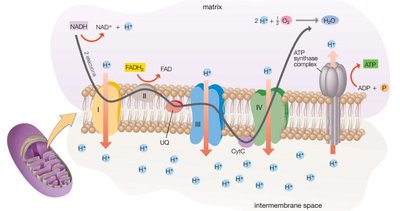
Chemiosmosis utilizes the proton gradient generated by the ETC. Protons flow back into the matrix through ATP synthase, driving the phosphorylation of ADP to ATP.
ATP synthase: Enzyme complex that synthesizes ATP
Oxidative phosphorylation: Final step in ATP production
Produces the majority of ATP in cellular respiration
Summary of ATP Yield
Efficiency of Cellular Respiration
Cellular respiration yields a net total of 38 ATP molecules per glucose:
Glycolysis: 2 ATP
Krebs cycle: 2 ATP
ETC: 34 ATP
Total: 38 ATP per glucose
Interplay Between Respiration and Photosynthesis
Energy Flow in Ecosystems
Photosynthesis and respiration are interconnected, ensuring energy flow and balance in ecosystems. Photosynthesis stores energy, while respiration releases it for cellular functions.
Plants perform both processes, maintaining energy equilibrium
Disruptions in respiration (e.g., oxygen deprivation) affect energy availability and plant health
Additional info:
Disruptions in cellular respiration can lead to reduced ATP production, affecting growth and survival.
Comparing aerobic and anaerobic pathways highlights the efficiency of oxygen-dependent energy extraction.
