 Back
BackPlant Cellular Respiration: Pathways, Mechanisms, and Energy Yield
Study Guide - Smart Notes
 Tailored notes based on your materials, expanded with key definitions, examples, and context.
Learning Outcomes
By the end of this lesson, students should be able to:
Define cellular respiration and its role in cellular metabolism, including the chemical processes of glycolysis, the Krebs cycle, and the electron transport chain.
Describe the sequence of events and cellular locations for each stage of cellular respiration.
Calculate ATP yield from each step and analyze the efficiency of cellular respiration in extracting energy from glucose.
Predict consequences of disruptions in cellular respiration, such as oxygen deprivation or poisoning.
Evaluate the interplay between cellular respiration and other cellular processes, such as photosynthesis, in the context of energy flow in ecosystems.
Overview of Plant Metabolism
Photosynthesis and Respiration: The Energy Cycle
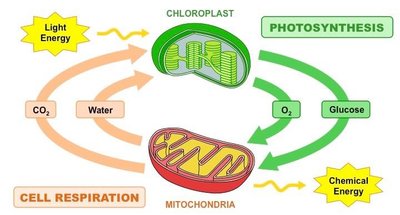
Plant metabolism includes all biochemical processes essential for plant growth, development, and survival. Two central processes are photosynthesis and cellular respiration:
Photosynthesis captures light energy to synthesize glucose from carbon dioxide and water.
Cellular respiration breaks down glucose to release stored energy for cellular activities.
These processes are interconnected, supporting life and ecosystem energy flow.
Cellular Respiration in Plants
Definition and Importance
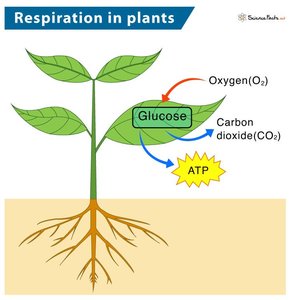
Cellular respiration is a series of metabolic pathways that convert biochemical energy from nutrients into adenosine triphosphate (ATP), releasing waste products. In plants, this process is vital for energy production, growth, and maintenance.
General equation:
Occurs in all living plant cells, both day and night.
Stages and Locations of Cellular Respiration
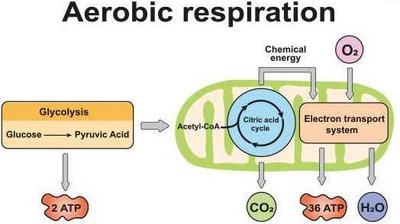
Cellular respiration occurs in several stages, each in specific cellular compartments:
Glycolysis: Cytoplasm
Acetyl CoA Formation: Mitochondrial matrix
Krebs Cycle (Citric Acid Cycle): Mitochondrial matrix
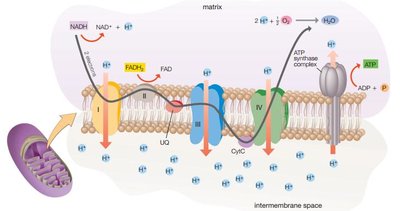
Electron Transport Chain (ETC) & Oxidative Phosphorylation: Inner mitochondrial membrane
Mitochondrial Structure
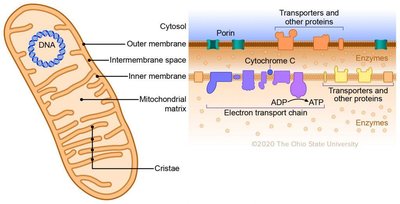
The mitochondrion is the organelle where most respiration steps occur. Key features include:
Outer membrane
Inner membrane (site of ETC)
Cristae (folds increasing surface area)
Matrix (site of Krebs cycle)
Glycolysis
Process and Products
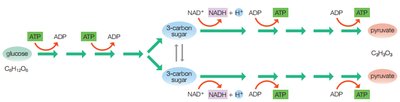
Glycolysis is the first step in cellular respiration, occurring in the cytoplasm. It breaks one glucose molecule into two pyruvate molecules, producing a small amount of ATP and NADH.
Net products: 2 ATP, 2 NADH, 2 pyruvate per glucose
Does not require oxygen (anaerobic)
Fermentation
Anaerobic Respiration
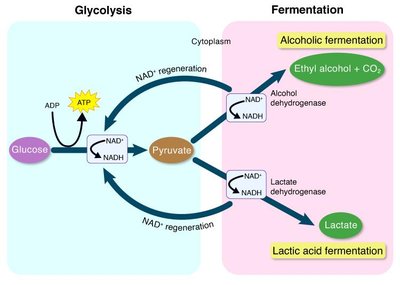
When oxygen is absent, plants (and other organisms) can perform fermentation to regenerate NAD+ and allow glycolysis to continue:
Alcoholic fermentation: Pyruvate is converted to ethanol and CO2 (common in yeast and some plants).
Lactic acid fermentation: Pyruvate is converted to lactate (common in some bacteria and animal cells).
Krebs Cycle (Citric Acid Cycle)
Energy Production and Carbon Dioxide Release
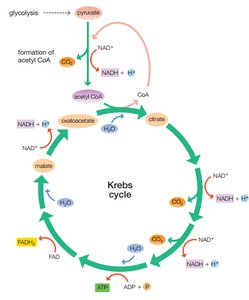
The Krebs cycle occurs in the mitochondrial matrix. Acetyl CoA is oxidized, producing ATP, NADH, FADH2, and releasing CO2:
Each turn yields: 1 ATP, 3 NADH, 1 FADH2, 2 CO2 (per acetyl CoA)
Cycle regenerates oxaloacetate to continue the process
Comparison: Calvin Cycle vs. Krebs Cycle
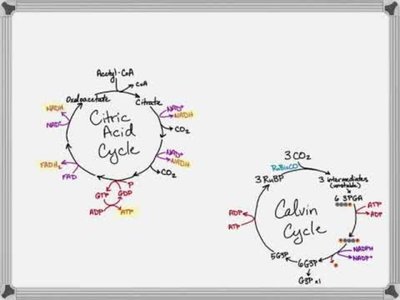
The Calvin cycle (photosynthesis) and Krebs cycle (respiration) both involve carbon compound conversions but occur in different compartments and serve different functions:
Calvin cycle: Occurs in chloroplasts, fixes CO2 to produce glucose
Krebs cycle: Occurs in mitochondria, oxidizes acetyl CoA to release energy
Electron Transport Chain (ETC) and Oxidative Phosphorylation
Mechanism and ATP Production
The electron transport chain is a series of protein complexes in the inner mitochondrial membrane. Electrons from NADH and FADH2 are transferred through these complexes, releasing energy to pump protons and create a proton gradient.
Oxygen is the final electron acceptor, forming water
Proton gradient drives ATP synthesis via ATP synthase (chemiosmosis)
Most ATP is produced in this stage
Summary Table: ATP Yield from Cellular Respiration
Stage | ATP Yield (per glucose) |
|---|---|
Glycolysis | 2 |
Krebs Cycle | 2 |
Electron Transport Chain | 34 |
Total | 38 |
Experimental Measurement of Respiration
Respirometer Use in Plants
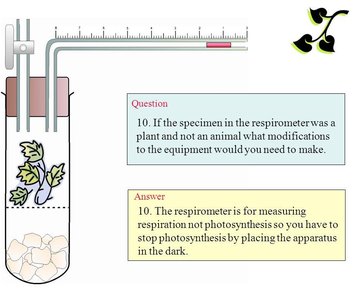
A respirometer measures the rate of respiration by detecting changes in gas volume. For plants, it is essential to prevent photosynthesis during measurement (e.g., by keeping the apparatus in the dark).
Interplay Between Photosynthesis and Respiration
Energy Flow in Ecosystems
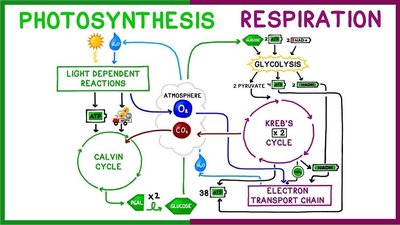
Photosynthesis and respiration are complementary processes:
Photosynthesis stores energy in glucose; respiration releases it for cellular work.
Oxygen produced by photosynthesis is used in respiration; CO2 produced by respiration is used in photosynthesis.
Conclusion
Cellular respiration in plants is a multi-step process that efficiently extracts energy from glucose, supporting all cellular activities. Understanding these pathways is crucial for appreciating plant physiology and the broader context of energy flow in ecosystems.
