Back
Plant Cellular Respiration: Pathways, Mechanisms, and Integration with Photosynthesis
Study Guide - Smart Notes
 Tailored notes based on your materials, expanded with key definitions, examples, and context.
Cellular Respiration in Plants
Overview and Learning Outcomes
Cellular respiration is a fundamental metabolic process in plants, enabling the extraction of energy from glucose to fuel cellular activities. This process involves a series of chemical reactions that occur in specific cellular compartments and is tightly integrated with photosynthesis. By the end of this section, students should be able to:
Define cellular respiration and its role in plant metabolism.
Describe the sequence and location of events in each stage of cellular respiration.
Calculate ATP yield and compare aerobic and anaerobic pathways.
Predict the effects of disruptions in respiration.
Evaluate the interplay between respiration and photosynthesis in energy flow.
Energy Flow in Plants: Photosynthesis and Respiration
Interdependence of Photosynthesis and Respiration
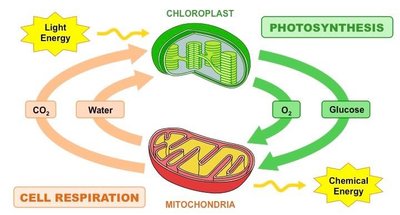
Photosynthesis and cellular respiration are complementary processes in plant metabolism. Photosynthesis captures light energy to synthesize glucose, while respiration breaks down glucose to release energy for cellular work. The products of one process serve as the reactants for the other, creating a cycle of energy transformation essential for life.
Photosynthesis: Occurs in chloroplasts, converting CO₂ and water into glucose and O₂ using light energy.
Cellular Respiration: Occurs in mitochondria, converting glucose and O₂ into CO₂, water, and chemical energy (ATP).
Measuring Plant Respiration
Experimental Approaches
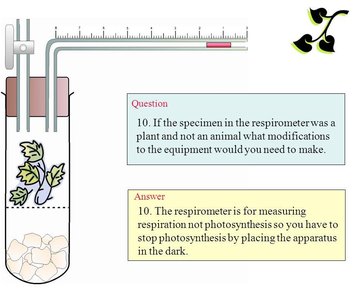
To measure the rate of respiration in plants, it is essential to isolate respiration from photosynthesis. This is typically achieved by placing the plant specimen in the dark, ensuring that only respiration occurs. A respirometer can be used to measure oxygen consumption or carbon dioxide production as indicators of respiration rate.
Key Consideration: Prevent photosynthesis by excluding light during the experiment.
Byproducts: Monitor O₂ uptake or CO₂ release.
Stages of Cellular Respiration
Summary of Pathways
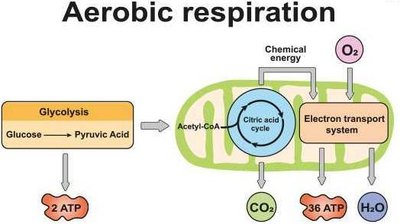
Cellular respiration in plants consists of several sequential stages, each occurring in specific cellular locations and contributing to the overall production of ATP.
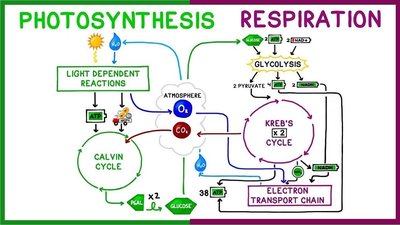
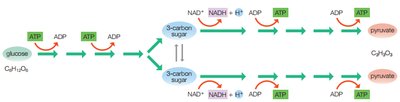
Glycolysis: Occurs in the cytoplasm; glucose is split into two pyruvate molecules, yielding ATP and NADH.
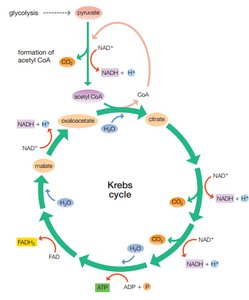
Acetyl CoA Formation: Pyruvate is transported into the mitochondria and converted to acetyl CoA, releasing CO₂ and producing NADH.
Krebs Cycle (Citric Acid Cycle): Takes place in the mitochondrial matrix; acetyl CoA is oxidized, generating ATP, NADH, FADH₂, and CO₂..
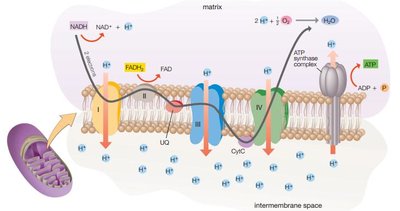
Electron Transport Chain (ETC): Located in the inner mitochondrial membrane, electrons from NADH and FADH₂ are transferred through protein complexes, driving ATP synthesis via chemiosmosis.
Overall Equation for Aerobic Respiration
The complete oxidation of glucose in the presence of oxygen can be summarized as:
Glycolysis
Process and Products
Glycolysis is the first step in cellular respiration, occurring in the cytoplasm. It involves the breakdown of one glucose molecule (6 carbons) into two molecules of pyruvate (3 carbons each). This process yields a net gain of 2 ATP molecules and 2 NADH molecules per glucose.
Location: Cytoplasm
ATP Yield: 2 ATP (net)
NADH Produced: 2 NADH
Fermentation (Anaerobic Respiration)
Alternative Pathway in Absence of Oxygen
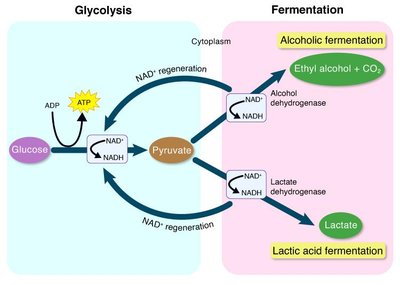
When oxygen is unavailable, plants and other organisms can undergo fermentation. In plants and yeast, pyruvate is converted to ethanol and CO₂; in animals, it is converted to lactate. Fermentation regenerates NAD+ to allow glycolysis to continue but produces much less ATP than aerobic respiration.
Alcoholic Fermentation: Pyruvate → Ethanol + CO₂
Lactic Acid Fermentation: Pyruvate → Lactate
ATP Yield: 2 ATP per glucose (from glycolysis only)
Krebs Cycle (Citric Acid Cycle)
Energy Extraction and Carbon Dioxide Release
The Krebs cycle occurs in the mitochondrial matrix and completes the oxidation of glucose derivatives. Each turn of the cycle processes one acetyl CoA, producing 3 NADH, 1 FADH₂, and 1 ATP (or GTP), and releasing 2 CO₂ molecules. The cycle is central to energy production and provides intermediates for other metabolic pathways.
Location: Mitochondrial matrix
Key Products (per glucose): 6 NADH, 2 FADH₂, 2 ATP, 4 CO₂
Electron Transport Chain (ETC) and Oxidative Phosphorylation
ATP Synthesis via Chemiosmosis
The ETC is a series of protein complexes embedded in the inner mitochondrial membrane. Electrons from NADH and FADH₂ are transferred through these complexes, releasing energy used to pump protons into the intermembrane space. The resulting proton gradient drives protons back into the matrix through ATP synthase, synthesizing ATP in a process called chemiosmosis. Oxygen serves as the final electron acceptor, forming water.
Location: Inner mitochondrial membrane
ATP Yield: Up to 34 ATP per glucose (from ETC and chemiosmosis)
Final Electron Acceptor: O₂
ATP Yield from Cellular Respiration
Summary Table
The total ATP yield from the complete aerobic respiration of one glucose molecule is typically 36–38 ATP, depending on the cell type and shuttle systems used.
Stage | ATP Produced (per glucose) |
|---|---|
Glycolysis | 2 |
Krebs Cycle | 2 |
Electron Transport Chain & Chemiosmosis | 32–34 |
Total | 36–38 |
Comparison: Calvin Cycle vs. Krebs Cycle
Key Differences and Similarities
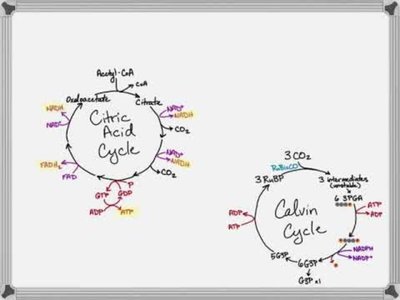
Both the Calvin cycle and Krebs cycle are cyclic metabolic pathways involving carbon compounds, but they serve different functions and occur in different organelles.
Calvin Cycle: Occurs in chloroplasts; uses ATP and NADPH to fix CO₂ into glucose (photosynthesis).
Krebs Cycle: Occurs in mitochondria; oxidizes acetyl CoA to CO₂, generating ATP, NADH, and FADH₂ (respiration).
Integration of Respiration and Photosynthesis in Plants
Energy Flow and Ecosystem Roles
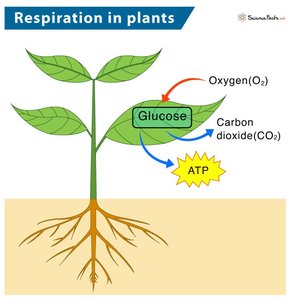
Respiration and photosynthesis are interconnected, with the outputs of one process serving as the inputs for the other. This integration is crucial for the energy balance of plants and the flow of energy through ecosystems. Disruptions in either process can affect plant growth, survival, and ecological interactions.
Photosynthesis: Provides glucose and oxygen for respiration.
Respiration: Provides ATP for cellular work and recycles CO₂ for photosynthesis.
Conclusion
Cellular respiration is essential for plant metabolism, enabling the conversion of stored chemical energy in glucose into usable ATP. The process involves glycolysis, the Krebs cycle, and the electron transport chain, each contributing to the overall ATP yield. Understanding these pathways provides insight into plant physiology and the broader context of energy flow in ecosystems.