 Back
BackPlant Development and Hormonal Control: Environmental and Internal Regulation
Study Guide - Smart Notes
 Tailored notes based on your materials, expanded with key definitions, examples, and context.
Plant Development and Their Controls
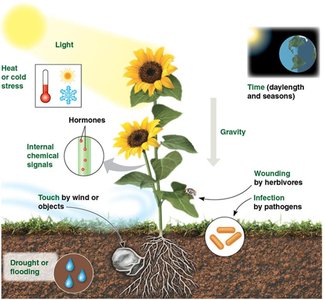
Factors Affecting Plant Growth and Development
Plants are highly responsive organisms that sense and react to a variety of environmental and internal cues. These factors influence their growth, development, and survival strategies.
External Factors: Light, gravity, temperature, drought, flooding, touch, wounding, and infection by pathogens.
Internal Factors: Plant hormones and internal chemical signals.
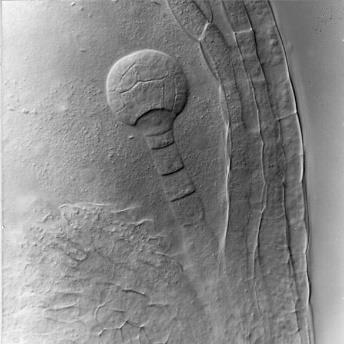
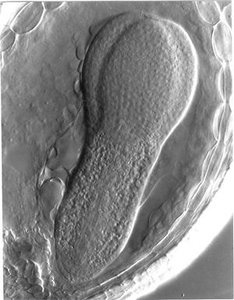
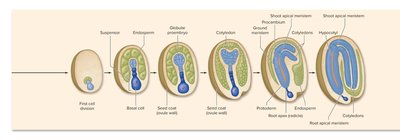
Developmental Processes: Growth (cell division and elongation), differentiation, and morphogenesis.
Plant Growth: Cell Division and Elongation
Growth in plants involves both cell division and cell elongation. These processes are tightly regulated and contribute to the overall size and shape of the plant.
Cell Division: The process by which new cells are produced, primarily in meristematic tissues.
Cell Elongation: Cells increase in size, often regulated by hormones such as auxin.

Plant Responses to Light
Pigments and Light Sensing
Pigments are molecules capable of absorbing light energy. Some pigments are used in photosynthesis, while others detect light and mediate plant responses.
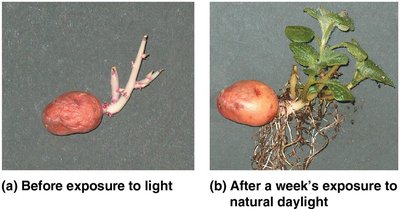
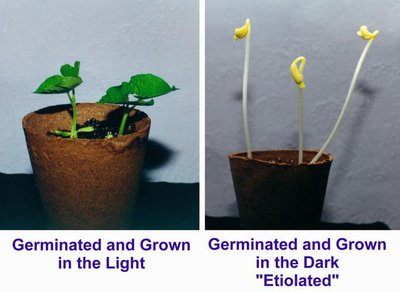
Photomorphogenesis: Nondirectional, light-triggered development.
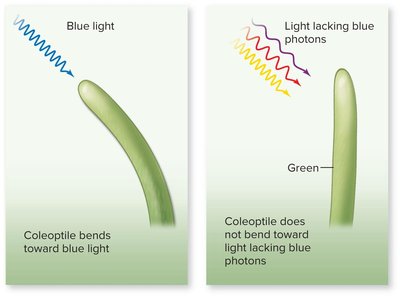
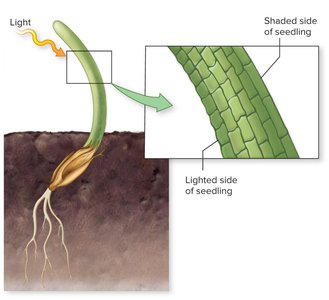
Phototropism: Directional growth response to light, allowing plants to bend toward light sources.
Signal Transduction Pathways
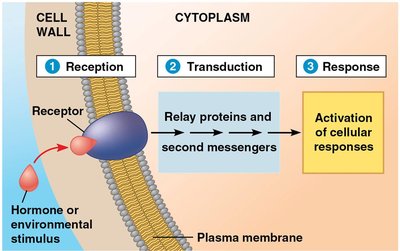
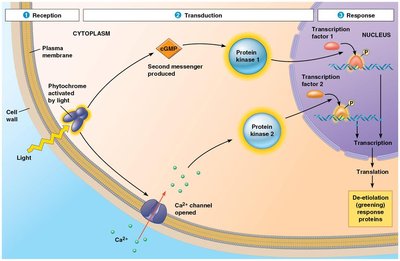
Signal transduction is the process by which a cell converts an external signal into a functional response. In plants, this often involves hormone or environmental stimulus reception, transduction via relay proteins, and activation of cellular responses.
Reception: Detection of signal by receptor proteins.
Transduction: Relay of signal via second messengers.
Response: Activation of cellular processes such as gene expression.
Phytochrome: Red and Far-Red Light Responses
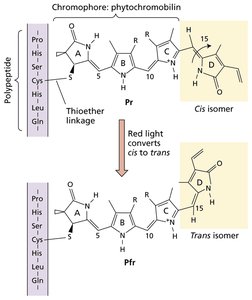
Phytochrome is a pigment-containing protein present in all plants, existing in two interconvertible forms:
Pr: Absorbs red light (660 nm), biologically inactive.
Pfr: Absorbs far-red light (730 nm), biologically active.
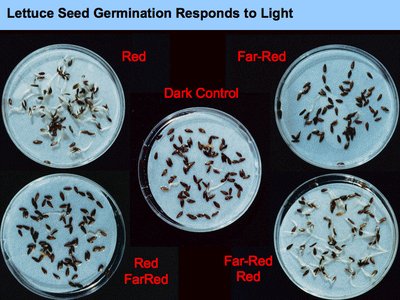
Red light converts Pr to Pfr (active), while far-red light converts Pfr back to Pr (inactive).
Phytochrome in Deetiolation and Flowering
Phytochrome plays a crucial role in seed germination, shoot elongation, and control of flowering. Its activation triggers a cascade of events leading to gene expression changes.
Seed Germination: Stimulated by red light, inhibited by far-red light.
Shoot Elongation: Etiolation occurs in darkness; normal morphology resumes when Pfr increases.
Flowering: Conformational change in phytochrome triggers flowering.
Blue Light Responses
Blue-Light Receptors and Phototropism
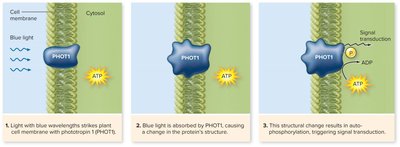
Blue-light receptors, such as phototropin 1 (PHOT1), regulate plant responses to blue light, including phototropism and stomatal opening.
Phototropin: Has two light-sensing regions; changes conformation in response to blue light, stimulating kinase activity and autophosphorylation.
Auxin Regulation: Adjusts hormone distribution, causing shoot bending toward light.

Gravitropism
Plant Response to Gravity
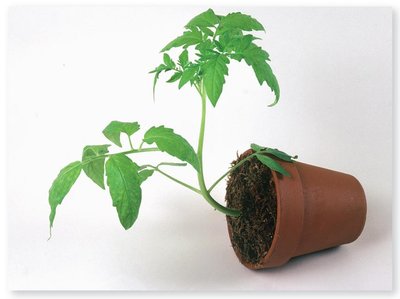
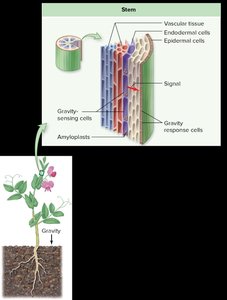
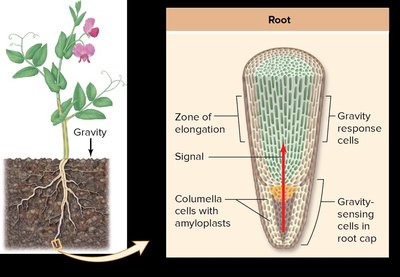
Gravitropism is the response of plants to Earth's gravitational field. Shoots exhibit negative gravitropism (grow away from gravity), while roots show positive gravitropism (grow toward gravity).
Gravity Sensing: Specialized cells (statocytes) contain amyloplasts that settle in response to gravity, triggering signaling pathways.
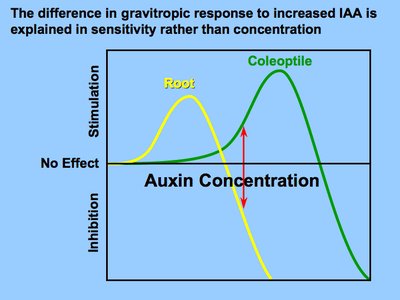
Auxin Distribution: Differential auxin concentration regulates growth direction in roots and shoots.
Plant Hormones and Their Actions
Overview of Plant Hormones
Plant hormones are chemical messengers produced in small quantities and transported to exert responses in different parts of the plant. Unlike animals, plants do not have specialized hormone-producing tissues.
Major Plant Hormones: Auxin, cytokinins, gibberellins, strigolactones, brassinosteroids, oligosaccharins, ethylene, and abscisic acid.
Auxin: Cell Elongation and Growth
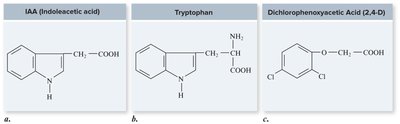
Auxin, particularly indoleacetic acid (IAA), is the most common natural auxin. It is synthesized from tryptophan and regulates cell elongation, root formation, and fruit development.
Cell Elongation: Higher auxin concentration on the shaded side of a plant causes faster growth, resulting in bending toward light.
Root Formation: Promotes root development at cut surfaces.
Parthenocarpy: Induces fruit growth without fertilization.
Synthetic Auxin: 2,4-D is used as a herbicide.
Cytokinins: Cell Division and Differentiation
Cytokinins, derivatives of adenine, stimulate cell division and differentiation, especially in combination with auxin. They are produced in root apical meristems and developing fruits.
Growth Regulation: Promote lateral bud growth, inhibit lateral root formation.
Anti-aging Effects: Retard aging of plant organs.
Commercial Use: Synthetic cytokinins include kinetin and 6-benzylaminopurine.
Strigolactones, Gibberellins, Brassinosteroids, Oligosaccharins, and Abscisic Acid
Other plant hormones have specialized roles:
Strigolactones: Derived from carotenoids, inhibit axillary bud growth, regulate vascular cambium.
Gibberellins: Promote stem elongation, seed germination, and fruit development.
Brassinosteroids: Structurally similar to steroids, overlap with auxin and gibberellin functions.
Oligosaccharins: Cell wall carbohydrates with hormone-like functions, signal defense responses.
Abscisic Acid (ABA): Induces dormancy, suppresses bud growth, promotes senescence, and regulates stomatal closure.
Abscisic Acid: Dormancy and Stomatal Regulation
ABA is necessary for seed dormancy and influences the closing of stomata by affecting potassium ion movement in guard cells.
Dormancy: Prevents premature germination in seeds.
Stomatal Closure: Helps plants conserve water during drought.
Hormone | Main Function | Example/Application |
|---|---|---|
Auxin | Cell elongation, root formation | Bending toward light, rooting of cuttings |
Cytokinin | Cell division, anti-aging | Promotes shoot growth, delays leaf senescence |
Gibberellin | Stem elongation, seed germination | Used to enlarge grapes, rescue dwarf mutants |
Abscisic Acid | Induces dormancy, closes stomata | Prevents premature seed germination, drought response |
Strigolactone | Inhibits axillary bud growth | Regulates branching |
Brassinosteroid | Cell elongation, vascular development | Stem bending, reproductive development |
Oligosaccharin | Defense signaling | Hypersensitive response to pathogens |
Additional info: The notes expand on brief points from the original slides, providing definitions, examples, and context for each hormone and developmental process. Images are included only when directly relevant to the explanation, reinforcing key concepts in plant development and hormonal regulation.
