 Back
Plant Diversity: Adaptations, Evolution, and Major Groups
Study Guide - Smart Notes
 Tailored notes based on your materials, expanded with key definitions, examples, and context.
Plant Diversity: Adaptations, Evolution, and Major Groups
Introduction to Plant Diversity
Plants are essential to terrestrial ecosystems, providing oxygen, food, and habitat for other organisms. Their evolutionary history is marked by key adaptations that allowed them to colonize land and diversify into the major groups we see today.
Plants supply oxygen and are the ultimate source of most food eaten by land animals.
There are approximately 290,000 living plant species, excluding algae.
Evolutionary Origins of Land Plants
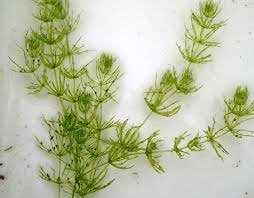
Land plants evolved from green algae, specifically a group called Charophytes. Both nuclear and chloroplast DNA comparisons support this relationship.
Charophytes are the closest relatives of land plants, but land plants are not descended from modern Charophytes.
Fossil evidence indicates that plants were present on land at least 470 million years ago.
Adaptations Enabling the Move to Land
Transitioning from aquatic to terrestrial environments required several adaptations to overcome challenges such as desiccation and lack of structural support.
Sporopollenin: A durable polymer that prevents zygotes from drying out, found in both Charophytes and plant spore walls.
Advantages of land: unfiltered sunlight, abundant CO2, and nutrient-rich soil.
Challenges: scarcity of water and lack of structural support.
Plants are defined as Embryophytes—organisms with multicellular, dependent embryos.
Major Plant Lineages
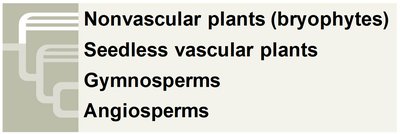
Plants are classified into several major groups based on the presence or absence of vascular tissue and seeds.
Nonvascular plants (Bryophytes): Liverworts, mosses, hornworts
Seedless vascular plants: Lycophytes, monilophytes (ferns, horsetails, whisk ferns)
Seed plants: Gymnosperms and angiosperms
Five Key Derived Traits of Land Plants
Nearly all land plants share five key traits absent in Charophytes:
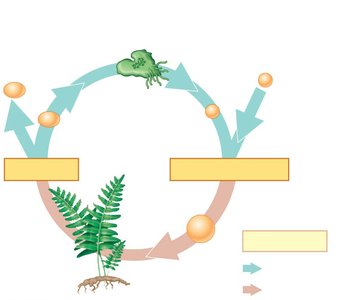
Alternation of generations: Life cycle alternates between multicellular haploid (gametophyte) and diploid (sporophyte) stages.
Multicellular, dependent embryos: Embryos are retained within female gametophyte tissue and receive nutrients via placental transfer cells.
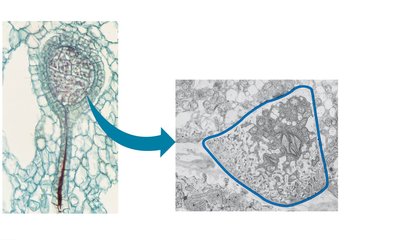
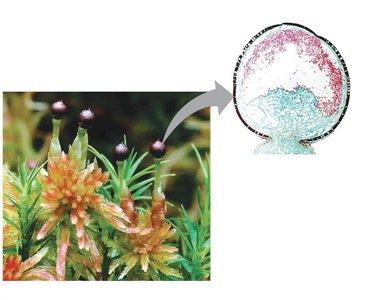
Walled spores produced in sporangia: Spores are produced in sporangia and protected by sporopollenin-rich walls.
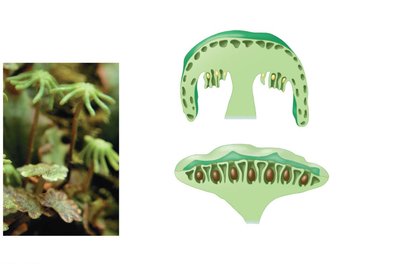
Multicellular gametangia: Organs that produce gametes—archegonia (female, produce eggs) and antheridia (male, produce sperm).
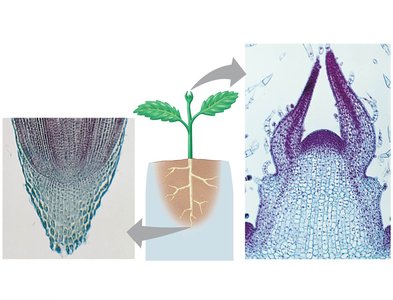
Apical meristems: Regions of cell division at the tips of roots and shoots, enabling growth in length.
Other Derived Traits
Cuticle: A waxy covering that prevents water loss.
Stomata: Pores that allow gas exchange.
Mycorrhizae: Symbiotic associations with fungi to aid nutrient uptake.
Origin and Diversification of Plants
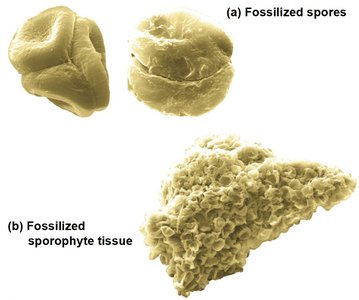
Fossilized spores and tissues provide evidence for the early presence of land plants. The major evolutionary events include the origin of land plants, vascular plants, and seed plants.
Bryophytes: Nonvascular Plants
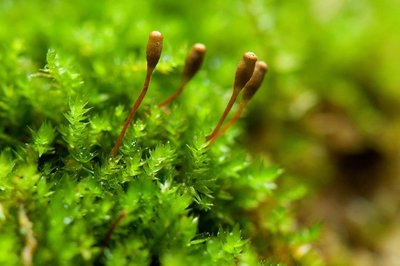
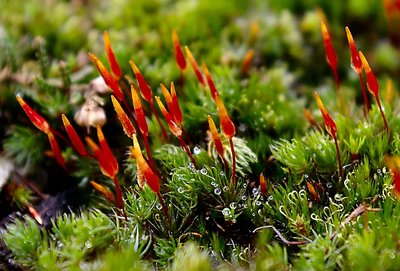
Bryophytes include liverworts, mosses, and hornworts. Their life cycle is dominated by the gametophyte stage, with sporophytes present only part of the time.
Bryophyte gametophytes are larger and longer-living than sporophytes.
They are especially common in moist forests and wetlands.
Bryophyte Life Cycle
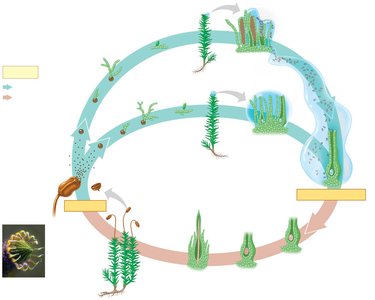
The life cycle of a moss illustrates alternation of generations, with a dominant gametophyte and a dependent sporophyte.
Spores germinate to form protonemata, which develop into gametophytes.
Gametophytes produce gametes in archegonia and antheridia.
Fertilization occurs in the archegonium, producing a sporophyte.
Sporophytes release spores to continue the cycle.
Economic and Ecological Importance of Mosses
Mosses help retain nitrogen and moisture in soil.
Sphagnum (peat moss) forms peat, an important carbon reservoir and fuel source.
Peatlands inhibit decay due to low temperature, pH, and oxygen levels.
Seedless Vascular Plants
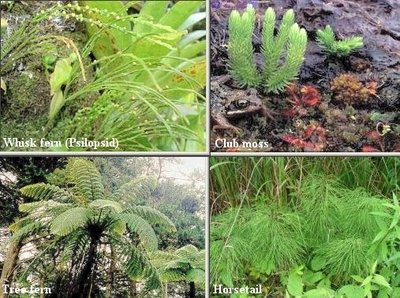
Seedless vascular plants include lycophytes and monilophytes (ferns, horsetails, whisk ferns). They have vascular tissues (xylem and phloem), roots, and leaves, allowing them to grow taller than bryophytes.
Life cycle is dominated by the sporophyte stage.
Gametophytes are small and often grow below the soil surface.
Vascular tissue provides structural support and efficient transport of water and nutrients.
Evolution of Roots and Leaves
Roots: Anchor plants and absorb water/nutrients; may have evolved from subterranean stems.
Leaves: Increase surface area for photosynthesis; two types—microphylls (single vein) and megaphylls (branched veins).
Sporophylls and Spore Variations
Sporophylls: Modified leaves bearing sporangia.
Most seedless vascular plants are homosporous (one type of spore), while seed plants are heterosporous (megaspores and microspores).
Classification of Seedless Vascular Plants
Phylum Lycophyta: Club mosses, spike mosses, quillworts (small herbaceous plants today).
Phylum Monilophyta: Ferns (most widespread), horsetails, whisk ferns.
Significance of Seedless Vascular Plants
Ancestors formed the first forests, contributing to global cooling and coal formation.
Seeds: A Major Evolutionary Innovation
Seeds enabled plants to dominate terrestrial ecosystems by providing protection and nourishment to the embryo and facilitating dispersal.
Seed plants originated about 360 million years ago.
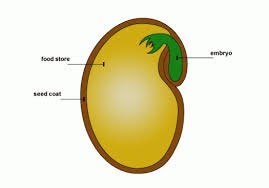
A seed consists of an embryo, stored food, and a protective coat.
Key Adaptations of Seed Plants
Reduced gametophytes (microscopic, dependent on sporophyte)
Heterospory (megaspores and microspores)
Ovules (contain female gametophyte and egg)
Pollen (male gametophyte, enables fertilization without water)
Major Groups of Seed Plants
Gymnosperms: "Naked seeds" not enclosed in ovaries (e.g., conifers)
Angiosperms: "Covered seeds" within fruits (flowering plants)
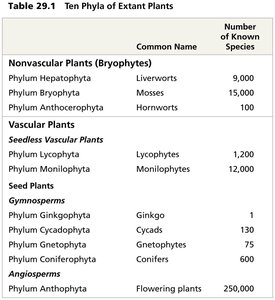
Table: Ten Phyla of Extant Plants
Group | Phylum | Common Name | Number of Known Species |
|---|---|---|---|
Nonvascular Plants (Bryophytes) | Hepatophyta | Liverworts | 9,000 |
Bryophyta | Mosses | 15,000 | |
Anthocerophyta | Hornworts | 100 | |
Seedless Vascular Plants | Lycophyta | Lycophytes | 1,200 |
Monilophyta | Monilophytes | 12,000 | |
Seed Plants: Gymnosperms | Ginkgophyta | Ginkgo | 1 |
Cycadophyta | Cycads | 130 | |
Gnetophyta | Gnetophytes | 75 | |
Coniferophyta | Conifers | 600 | |
Seed Plants: Angiosperms | Anthophyta | Flowering plants | 250,000 |
Summary
Plant evolution is marked by key adaptations: alternation of generations, multicellular embryos, walled spores, gametangia, and apical meristems.
Major groups include bryophytes, seedless vascular plants, gymnosperms, and angiosperms.
Seeds, vascular tissue, and flowers are major innovations that contributed to the success of plants on land.
