 Back
BackPlant Diversity and Evolution: Study Notes
Study Guide - Smart Notes
 Tailored notes based on your materials, expanded with key definitions, examples, and context.
Plant Diversity and Evolution
Overview of Plant Diversity
Plants are a diverse group of organisms classified into several major lineages, including red algae, green algae, non-vascular plants, seedless vascular plants, gymnosperms, and angiosperms. Understanding their evolutionary relationships and adaptations is fundamental to biology.
Red algae: Early diverging lineage within Plantae.
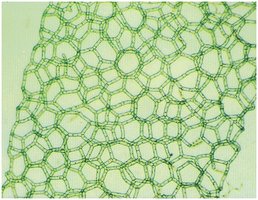
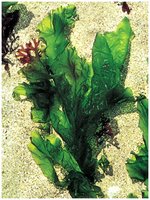
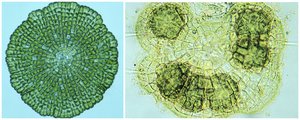
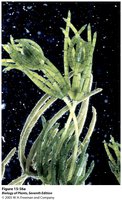
Green algae: Includes several groups such as Ulvophytes, Coleochaetes, and Stoneworts.
Land plants: Comprise non-vascular plants (bryophytes), seedless vascular plants, gymnosperms, and angiosperms.
Clade: A set of organisms sharing a common ancestor.
Plantae and Primary Endosymbiosis
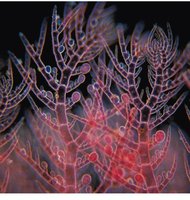
The kingdom Plantae includes red algae and green plants, all of which possess plastids derived from primary endosymbiosis. This event involved the engulfment of a cyanobacterium by a eukaryotic cell, leading to the formation of chloroplasts.
Plastid: Organelle responsible for photosynthesis, derived from cyanobacteria.
Primary endosymbiosis: Origin of plastids in Plantae.
Green Plants: Chloroplasts and Lineages
Green plants include green algae and land plants, characterized by modified plastids known as chloroplasts. Chloroplasts enable efficient photosynthesis and are a key adaptation for terrestrial life.
Green algae: Aquatic, photosynthetic organisms.
Land plants: Adapted for terrestrial environments.
Major Groups of Green Algae
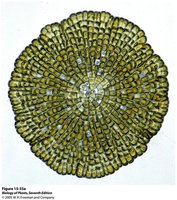
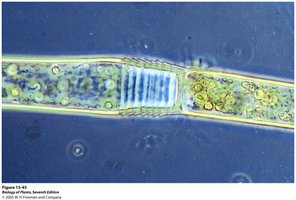
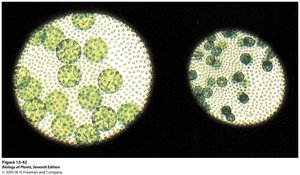
Green algae are a paraphyletic group, including several distinct lineages. They are important for understanding the transition to land plants.
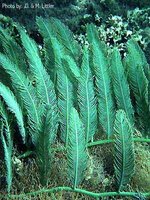
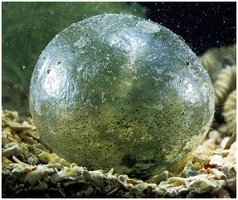
Ulvophytes: Marine and freshwater algae.
Coleochaetes: Freshwater algae, closely related to land plants.
Stoneworts: Charophyte algae, considered sister to land plants.
Adaptations for Terrestrial Life in Land Plants
Land plants evolved several adaptations to survive on land, including waterproofing structures and mechanisms for gas exchange.
Cuticle: Waxy layer preventing water loss.
Pores or stomata: Structures for gas exchange.
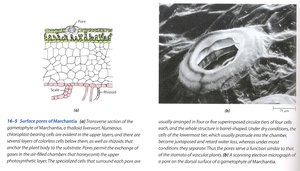
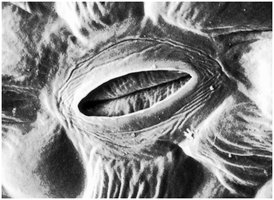
Additional info: The cuticle is essential for preventing desiccation, while pores and stomata allow for the exchange of gases necessary for photosynthesis and respiration.
Multicellular Embryo and Embryophytes
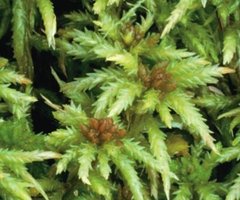
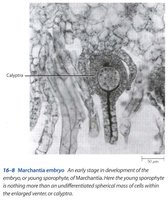
Land plants, also known as embryophytes, protect their multicellular embryos with sterile tissue and retain them on the mother plant. This adaptation is crucial for terrestrial reproduction.
Multicellular embryo: Protected by maternal tissue.
Embryophytes: Land plants with multicellular embryos.
Alternation of Generations in Land Plants
All land plants exhibit alternation of generations, alternating between haploid (gametophyte) and diploid (sporophyte) stages. This life cycle is fundamental to plant reproduction.
Sporophyte: Diploid generation, produces spores via meiosis.
Gametophyte: Haploid generation, produces gametes via mitosis.
Spore: Haploid cell capable of developing into an adult without fusion.
Syngamy: Fusion of gametes to form a zygote.
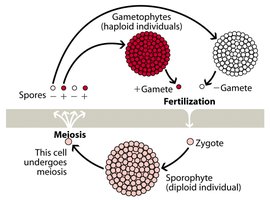
Additional info: The alternation of generations is also seen in some green algae, but is universal in land plants.
Bryophytes: Non-Vascular Land Plants
Bryophytes include mosses, liverworts, and hornworts. They lack vascular tissue and are characterized by a dominant gametophyte stage.
Mosses: Common bryophytes with leafy gametophytes.
Liverworts: Flat, thalloid gametophytes.
Hornworts: Elongated sporophytes.
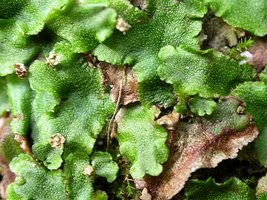
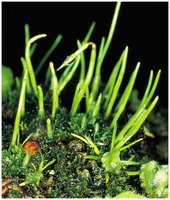
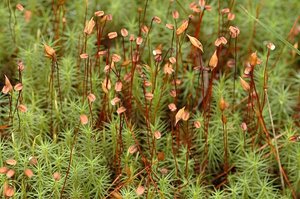
Additional info: In bryophytes, the sporophyte is attached to and dependent on the gametophyte.
Vascular Tissue and Vascular Plants
Vascular plants possess specialized conducting tissues, xylem and phloem, which allow for increased height and efficient distribution of water and nutrients.
Xylem: Conducts water and minerals.
Phloem: Conducts sugars and organic nutrients.
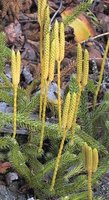
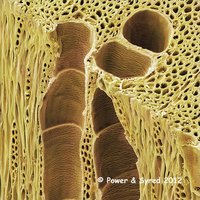
Additional info: Vascular tissue is a key adaptation for terrestrial life, enabling plants to grow taller and transport resources efficiently.
Seed-Free Vascular Plants
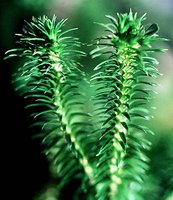
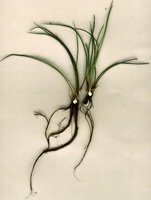
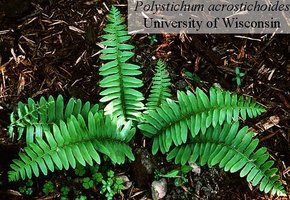
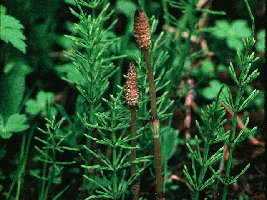
Seed-free vascular plants, such as ferns and lycophytes, reproduce via spores and have independent gametophyte and sporophyte generations.
Ferns: Possess true leaves and reproduce via spores.
Lycophytes: Ancient lineage of vascular plants.
Seed Plants: Gymnosperms and Angiosperms
Seed plants are characterized by the presence of seeds and pollen. The gametophytes are reduced and often retained within the sporophyte.
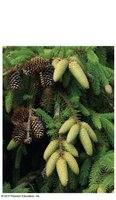
Gymnosperms: Include conifers, cycads, ginkgo, and gnetophytes.
Angiosperms: Flowering plants, the most diverse group.
Gymnosperms: Diversity and Adaptations
Gymnosperms are seed plants with exposed seeds. They include several lineages, each with unique adaptations.
Ginkgo: Deciduous, pollution-resistant trees.
Cycads: Tropical plants with large, compound leaves.
Gnetales: Diverse group including Ephedra, Gnetum, and Welwitschia.
Conifers: Tall trees, produce cones, mostly evergreen.
Conifers: Notable Species
Conifers are notable for their longevity, size, and ecological importance. They include some of the oldest, largest, and tallest trees.
Pinus longaeva: Great Basin Bristlecone Pine, oldest living organism (~5,000 years).
Sequoiadendron giganteum: Giant Sequoia, largest tree by volume.
Sequoia sempervirens: Coast redwood, tallest tree.
Angiosperms: Flowering Plants
Angiosperms are the most diverse group of plants, characterized by flowers and enclosed seeds. They are divided into monocots and eudicots based on structural features.
Monocots: One cotyledon, parallel veins, scattered vascular tissue, flower parts in multiples of three.
Eudicots: Two cotyledons, branching veins, circular vascular tissue, flower parts in multiples of four or five.
Summary Table: Major Plant Groups and Key Features
Group | Key Features | Examples |
|---|---|---|
Red algae | Plastids from primary endosymbiosis | Porphyra |
Green algae | Chloroplasts, aquatic | Chara, Ulva |
Bryophytes | No vascular tissue, dominant gametophyte | Mosses, liverworts, hornworts |
Seedless vascular plants | Vascular tissue, reproduce via spores | Ferns, lycophytes |
Gymnosperms | Seeds, pollen, cones | Conifers, cycads, ginkgo |
Angiosperms | Flowers, enclosed seeds | Monocots, eudicots |
