 Back
Plant Diversity: Evolution, Structure, and Reproduction
Study Guide - Smart Notes
 Tailored notes based on your materials, expanded with key definitions, examples, and context.
Plant Diversity and Evolution
Introduction to Plant Diversity
Plants are a diverse group of organisms that play a crucial role in Earth's ecosystems. They provide oxygen, food, and habitats for other organisms, and are essential for life on land. The study of plant diversity includes understanding their evolutionary history, structural adaptations, and reproductive strategies.
The Major Groups of Plants
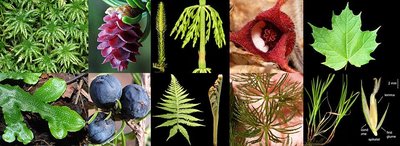
Nonvascular plants (Bryophytes): Includes mosses, liverworts, and hornworts. These plants lack vascular tissue and are typically found in moist environments.
Seedless vascular plants: Includes ferns, club mosses, and horsetails. These plants have vascular tissue but do not produce seeds.
Seed plants: Divided into gymnosperms (e.g., conifers) and angiosperms (flowering plants). These plants produce seeds, which protect and nourish the embryo.
Evolution and Diversification of Land Plants
Origin of Land Plants
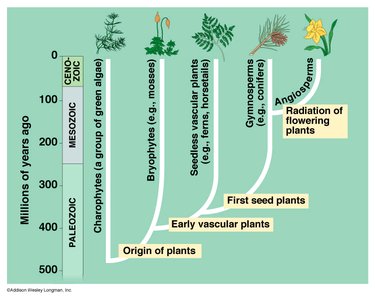
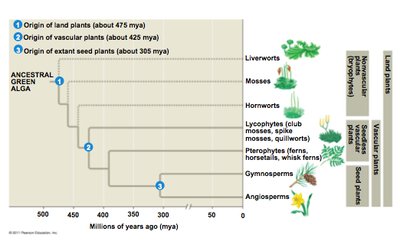
Land plants evolved from green algae (charophytes) over 475 million years ago. The transition to land required adaptations such as cuticles to prevent water loss, and structures for support and reproduction outside water.
Major Evolutionary Events
Origin of land plants: ~475 million years ago (mya)
Origin of vascular plants: ~425 mya
Origin of seed plants: ~305 mya
Seedless Vascular Plants
Characteristics of Seedless Vascular Plants
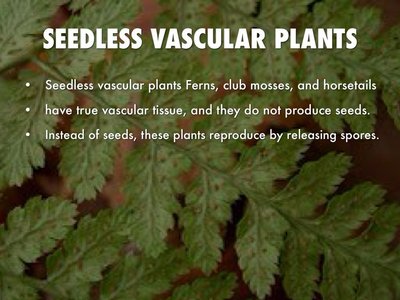
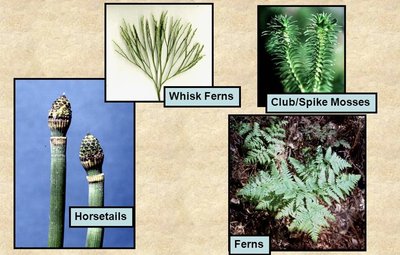
Seedless vascular plants, such as ferns, club mosses, and horsetails, possess true vascular tissue (xylem and phloem) for transport of water and nutrients. However, they do not produce seeds and instead reproduce via spores.
Examples: Ferns, club mosses, horsetails, whisk ferns
Reproduction: Release spores for dispersal
Life Cycle of Seedless Vascular Plants
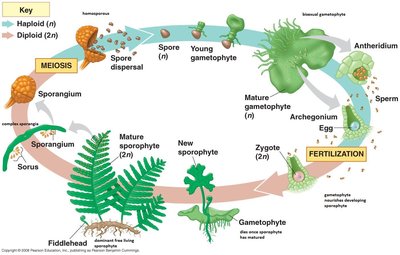
These plants exhibit alternation of generations, with a dominant sporophyte (diploid, 2n) and a reduced gametophyte (haploid, n). Spores are produced by meiosis in the sporangia of the sporophyte, and these spores grow into gametophytes that produce gametes.
Seed Plants: Gymnosperms and Angiosperms
Evolution of Seed Plants
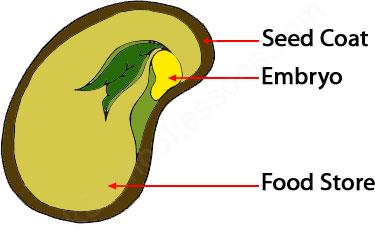
Seed plants evolved from earlier vascular plants and are characterized by the production of seeds, which consist of an embryo, a food supply, and a protective seed coat. Seeds allow plants to disperse offspring over long distances and survive harsh conditions.
Gymnosperms: "Naked seed" plants, such as conifers, cycads, ginkgos, and gnetophytes. Seeds are not enclosed in fruit.
Angiosperms: Flowering plants. Seeds are enclosed within fruits, which develop from flowers.
Heterospory in Seed Plants
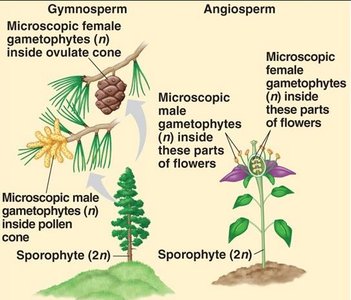
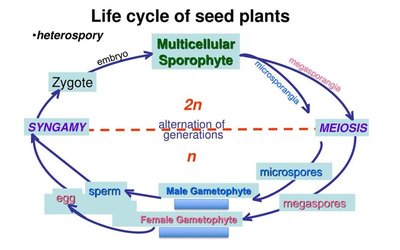
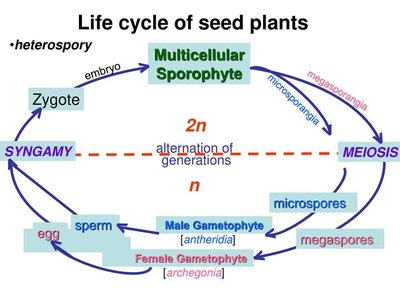
Seed plants are heterosporous, producing two types of spores: microspores (male) and megaspores (female). Microspores develop into pollen grains (male gametophytes), while megaspores develop into ovules (female gametophytes).
Seed Structure and Function
Seed coat: Protective outer layer
Embryo: Young plant
Food supply: Nutrients for the developing embryo (endosperm in angiosperms)
Life Cycle of Seed Plants
Seed plants have a dominant sporophyte generation. The gametophytes are microscopic and develop within the tissues of the parent sporophyte. Fertilization produces a zygote, which develops into a new sporophyte.
Comparison of Gymnosperms and Angiosperms
Feature | Gymnosperms | Angiosperms |
|---|---|---|
Seed Enclosure | Naked seeds (not enclosed in fruit) | Seeds enclosed in fruit |
Reproductive Structure | Cones | Flowers |
Examples | Pine, fir, spruce | Oak, maple, lily |
Reproductive Adaptations of Angiosperms
Flowers and Fruits
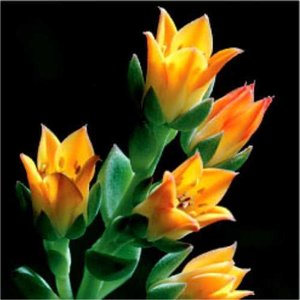
Angiosperms are distinguished by their flowers, which facilitate pollination, and fruits, which protect seeds and aid in their dispersal. The flower contains both male (stamens) and female (carpels) reproductive organs.
Summary Table: Major Plant Groups
Group | Vascular Tissue | Seeds | Flowers | Examples |
|---|---|---|---|---|
Bryophytes | No | No | No | Mosses, liverworts |
Seedless Vascular Plants | Yes | No | No | Ferns, horsetails |
Gymnosperms | Yes | Yes | No | Pine, fir |
Angiosperms | Yes | Yes | Yes | Oak, lily |
Conclusion
The evolution of plants from simple nonvascular forms to complex flowering plants represents a major transition in the history of life. Understanding plant diversity, structure, and reproduction is essential for appreciating their ecological importance and evolutionary success.
