 Back
BackPlant Diversity I: How Plants Colonized Land
Study Guide - Smart Notes
 Tailored notes based on your materials, expanded with key definitions, examples, and context.
Plant Diversity I: How Plants Colonized Land
Evolution and Classification of Land Plants
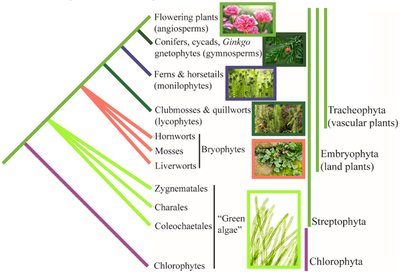
Land plants, or embryophytes, evolved from freshwater green algae and developed adaptations for terrestrial life. The major groups include nonvascular plants (bryophytes), seedless vascular plants, and seed plants (gymnosperms and angiosperms).
Nonvascular plants (bryophytes): First land plants, lacked tracheids, gametophyte-dominant life cycle.
Seedless vascular plants: Paraphyletic group, sporophyte-dominant, lignin enabled vertical growth.
Seed plants: Monophyletic, divided into gymnosperms (naked seeds) and angiosperms (enclosed seeds).
Example: The phylogenetic tree below shows the evolutionary relationships among major plant groups.
Adaptations for Life on Land
Plants evolved structural features to retain water and facilitate gas exchange, crucial for survival on land.
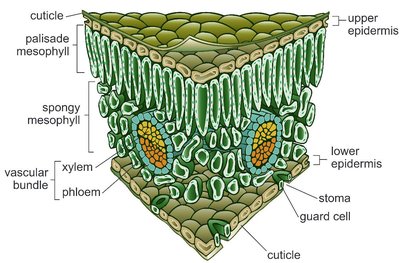
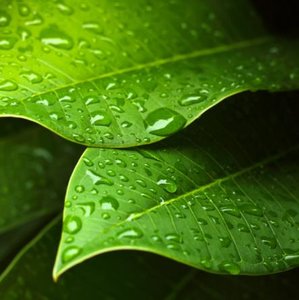
Cuticle: Waxy film covering the epidermis, prevents water loss.
Stomata: Pores for gas exchange, regulated by guard cells.
Guard cells: Specialized cells that open and close stomata based on turgor pressure.
Example: The cross-section of a leaf below illustrates these adaptations.
Example: The cuticle's effectiveness in preventing water loss is shown by water droplets on leaves.
Vascular Tissue and Vertical Growth
Vascular tissues enabled plants to transport water, minerals, and nutrients efficiently, supporting larger body sizes and vertical growth.
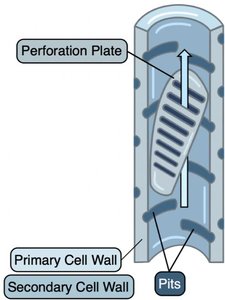
Xylem: Transports water and minerals; contains tracheids with secondary cell walls for rigidity.
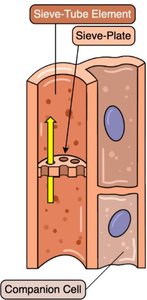
Phloem: Transports sugars, amino acids, and other nutrients.
Lignin: Strengthens cell walls, allowing tall growth.
Example: Structure of a tracheid cell in xylem.
Example: Structure of a sieve-tube element in phloem.
Roots and Leaves
Roots and leaves are specialized organs in vascular plants. Roots absorb water and nutrients, while leaves are adapted for photosynthesis.
Roots: Below-ground organs for water and nutrient absorption.
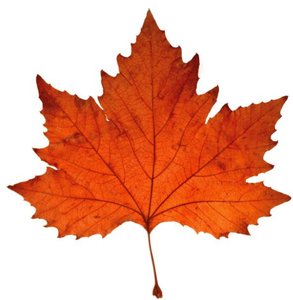
Leaves: Photosynthetic organs; classified as microphylls (single vascular strand) or megaphylls (branched vascular system).
Example: Megaphyll leaf structure.
Alternation of Generations
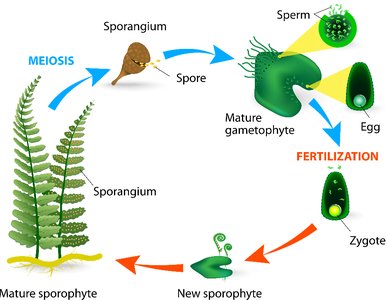
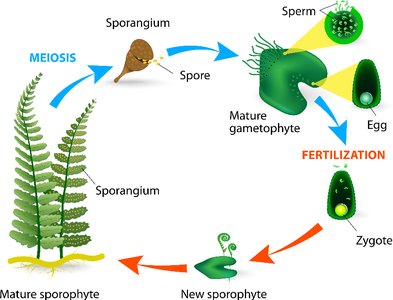
Land plants exhibit alternation of generations, with both haploid (gametophyte) and diploid (sporophyte) multicellular stages.
Gametophyte: Haploid, produces gametes.
Sporophyte: Diploid, produces spores by meiosis.
Sporophylls: Modified leaves bearing sporangia.
Example: Life cycle of a fern showing alternation of generations.
Homospory and Heterospory
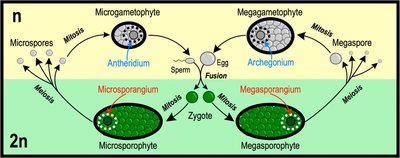
Plants may produce one type of spore (homospory) or two distinct types (heterospory).
Homospory: Single spore type.
Heterospory: Microspores (male gametophytes) and megaspores (female gametophytes).
Example: Diagram of heterosporous life cycle.
Pollen, Seeds, and Flowers
Seed plants evolved pollen, seeds, and flowers as reproductive adaptations.
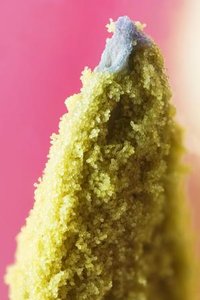
Pollen: Male gametophyte with protective sporopollenin coating.
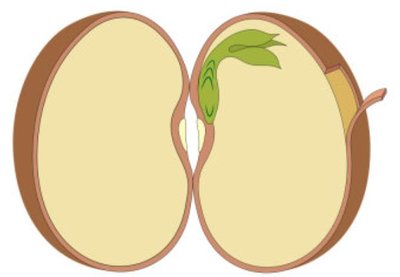
Seeds: Embryo and food supply encased in a tough coat.
Flowers: Reproductive structures of angiosperms.
Example: Pollen grain structure.
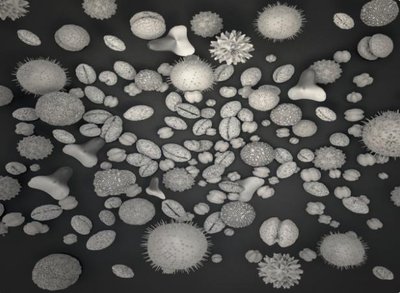
Example: Diversity of pollen grains.
Example: Seed structure.
Nonvascular Plants (Bryophytes)
Bryophyte Diversity and Life Cycle
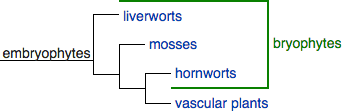
Bryophytes include mosses, liverworts, and hornworts. They lack lignin-reinforced vascular tissue and have a gametophyte-dominant life cycle.
Bryophytes: Homosporous, some have bisexual gametophytes, mosses have separate male and female gametophytes.
Example: Phylogeny of bryophytes.
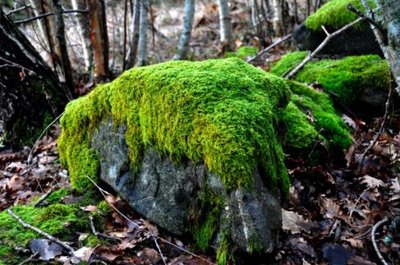
Example: Mosses in their natural habitat.
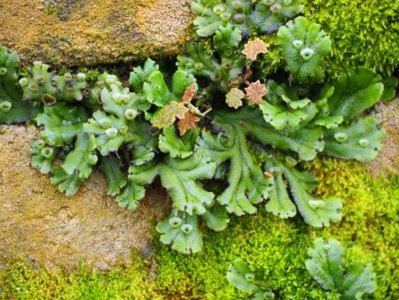
Example: Liverworts.
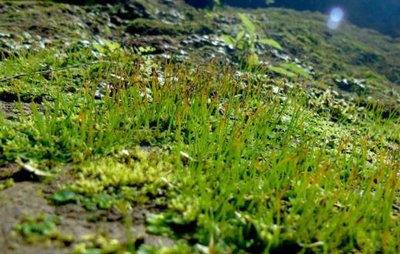
Example: Hornworts.
Bryophyte Reproduction and Structure
Bryophyte gametophytes produce gametes in specialized organs and require water for fertilization. Sporophytes are small and dependent on gametophytes.
Gametangia: Organs producing gametes; archegonia (female), antheridia (male).
Monoicious: Sperm and egg on same gametophyte; Dioicous: Sperm and egg on separate gametophytes.
Rhizoids: Root-like structures, not true roots.
Sporophyte: Contains foot, seta, and capsule (sporangium).
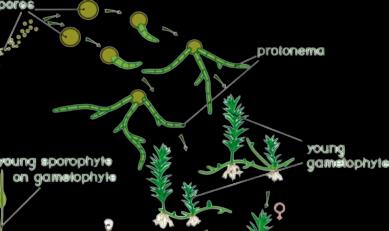
Protonema: Chain of cells from spores, develops into gametophyte.
Example: Protonema and young gametophyte development.
Seedless Vascular Plants
Characteristics and Ecological Impact
Seedless vascular plants have a sporophyte-dominant life cycle, are mostly homosporous, and reproduce via spores. They played a major role in reducing atmospheric CO2 and forming coal deposits.
Tracheophytes: Vascular plants with lignin-reinforced tissue.
Lycophytes: Club mosses, spike mosses, quillworts; only vascular plants with microphylls.
Monilophytes: Ferns and horsetails.
Fern Life Cycle and Reproduction
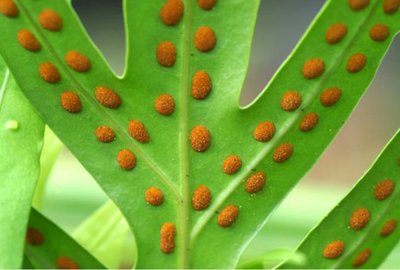
Ferns produce sori (clusters of sporangia) on the underside of leaves. Gametophytes contain both antheridium and archegonium, and water is required for fertilization.
Sori: Clusters of sporangia on fern leaves.
Gametophyte: Contains antheridium, archegonium, and rhizoids.
Embryo: Forms after fertilization, develops into new sporophyte.
Example: Sori on fern leaves.
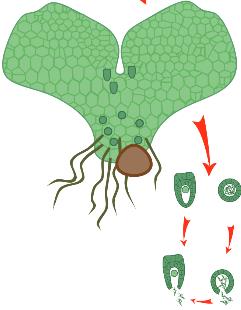
Example: Fern life cycle diagram.
Example: Fern gametophyte and sporophyte development.
Summary Table: Major Plant Groups
Group | Vascular Tissue | Dominant Generation | Reproduction | Examples |
|---|---|---|---|---|
Bryophytes | No | Gametophyte | Spore, water required | Mosses, liverworts, hornworts |
Seedless Vascular Plants | Yes | Sporophyte | Spore, water required | Ferns, club mosses |
Seed Plants | Yes | Sporophyte | Seed, pollen (water not required) | Gymnosperms, angiosperms |
