 Back
BackPlant Diversity I: How Plants Colonized Land
Study Guide - Smart Notes
 Tailored notes based on your materials, expanded with key definitions, examples, and context.
Plant Diversity and the Colonization of Land
Importance of Plants
Plants are fundamental to life on Earth, serving as primary producers in the biosphere. They generate their own food through photosynthesis, supporting nearly all terrestrial ecosystems. With over 325,000 species, most plants inhabit land, and their evolutionary history is closely tied to green algae, particularly charophytes.
Producers of the Biosphere: Plants convert sunlight into chemical energy, forming the base of food webs.
Charophytes: Green algae considered the closest relatives to land plants.

Major Developments in Plant Evolution
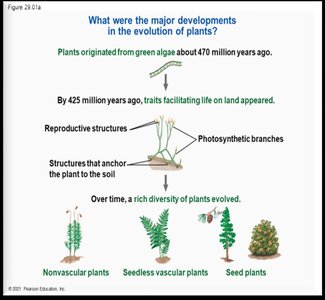
The evolution of plants from green algae involved several key adaptations that enabled life on land. These include reproductive structures, photosynthetic branches, and anchoring mechanisms. Over time, plants diversified into nonvascular, seedless vascular, and seed plants.
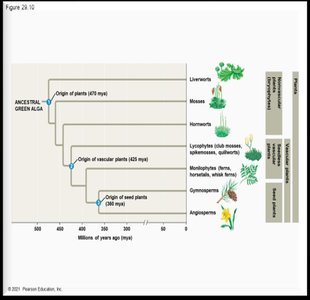
Origin: Plants originated from green algae about 470 million years ago.
Adaptations: Traits facilitating terrestrial life appeared by 425 million years ago.
Diversity: Evolution led to a rich variety of plant forms.
Plant Cell Structure and Cellulose
Cell Walls and Cellulose
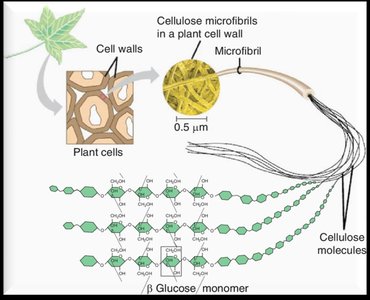
Plant cell walls are composed primarily of cellulose, the most abundant polysaccharide on Earth. Cellulose is a polymer of glucose monomers, providing structural support and rigidity to plant cells.
Cellulose: A fiber-forming polymer made of β-glucose monomers.
Function: Provides strength and protection to plant cells.
Algal Ancestry and Evidence
Shared Traits Between Plants and Algae
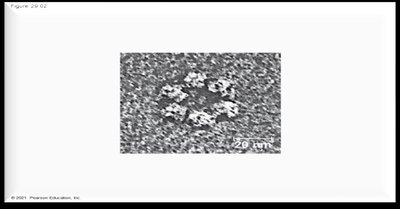
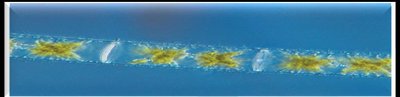
Plants and algae share several characteristics, including multicellularity, eukaryotic cells, cellulose-based cell walls, and chlorophyll a and b. Charophytes are the closest living relatives to land plants, sharing unique protein arrangements and genetic similarities.
Multicellularity: Both groups include multicellular forms.
Cell Wall Composition: Cellulose is present in both.
Chlorophyll: Both have chlorophyll a and b.
Genetic Evidence: DNA similarities in mitochondria, nucleus, and chloroplasts.
Phylogenetic Relationships
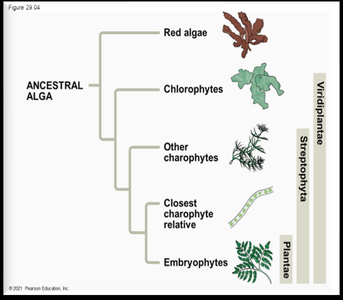
The evolutionary tree shows the relationship between ancestral algae, charophytes, and embryophytes (land plants).
Adaptations for Terrestrial Life
Key Adaptations
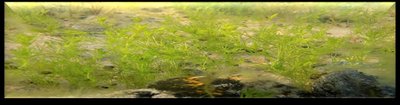
Charophytes adapted to shallow, periodically dry environments, developing features such as sporopollenin to prevent desiccation. These adaptations enabled the transition to terrestrial life, offering advantages like increased sunlight and CO2 availability, but also challenges such as water scarcity and structural support.
Sporopollenin: A durable polymer in spore walls, preventing drying out.
Terrestrial Advantages: More sunlight, CO2, and richer soils.
Terrestrial Disadvantages: Limited water and structural support.
Spores vs. Seeds
Comparison of Spores and Seeds
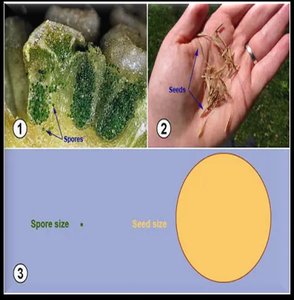
Spores and seeds are both reproductive structures with protective coverings, but they differ in cellularity, reproductive mode, and size.
Feature | Spores | Seeds |
|---|---|---|
Outer Covering | Sporopollenin | Hard coat |
Cellularity | Unicellular | Multicellular |
Reproduction | Asexual | Sexual (contains embryo) |
Produced by | Fungi, algae, primitive plants | Advanced plants |
Size | Very small | Large |
Derived Traits of Land Plants
Alternation of Generations
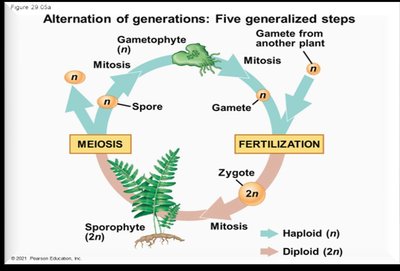
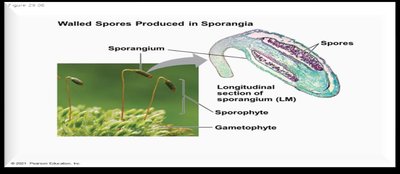
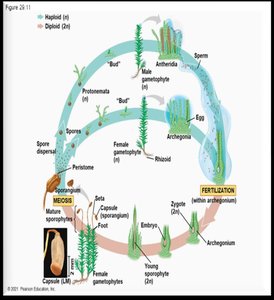
Land plants exhibit alternation of generations, a life cycle with both multicellular diploid (sporophyte) and haploid (gametophyte) stages. Gametophytes produce gametes by mitosis, and sporophytes produce spores by meiosis.
Gametophyte: Multicellular, produces haploid gametes.
Sporophyte: Multicellular, produces haploid spores.
Zygote: Formed by fertilization, grows into sporophyte.
Embryophytes and Nutrient Transfer
Embryophytes have specialized compartments in female gametophytes for embryo development, providing protection and nutrient transfer via placental transfer cells.
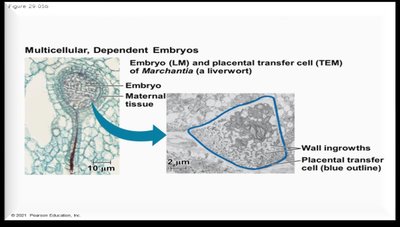
Apical Meristem
Apical meristems are regions of highly mitotic cells at the tips of roots and shoots, enabling growth and increased access to nutrients and sunlight.
Additional Derived Traits
Sporangia: Multicellular organs producing spores with sporopollenin-reinforced walls.
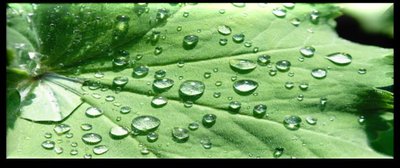
Cuticle: Waxy covering preventing desiccation.
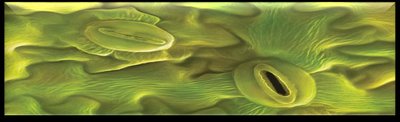
Stomata: Pores for gas exchange and water regulation.
Origin and Diversification of Plants
Vascular vs. Nonvascular Plants
Plants are classified as vascular or avascular. Bryophytes (liverworts, mosses, hornworts) are nonvascular, while vascular plants include lycophytes, monilophytes, gymnosperms, and angiosperms.
Vascular Tissue: Tubes for water and nutrient transport.
Seed: Embryo with nutrients in a protective coat.
Gymnosperms: Seeds not enclosed in chambers (e.g., conifers).
Angiosperms: Flowering plants with seeds in chambers.
Life Cycles of Nonvascular Plants
Mosses and Bryophytes
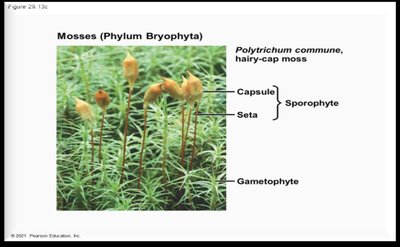
Nonvascular plants like mosses have a dominant gametophyte stage. Gametophytes are anchored by rhizoids and produce gametes in gametangia. Fertilization occurs in the archegonium, and the sporophyte develops attached to the gametophyte.
Protonemata: Extensions from spores for nutrient absorption.
Rhizoids: Anchor the plant, unlike roots which absorb water and nutrients.
Gametangia: Antheridium (male), archegonium (female).
Placental cells: Transfer nutrients to the embryo.
Ecological Role of Mosses
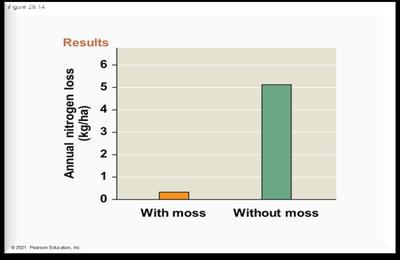
Mosses help retain nitrogen in the soil, stimulating plant growth and metabolism. Experiments show that moss-dominated soils lose less nitrogen annually.
Liverworts and Hornworts
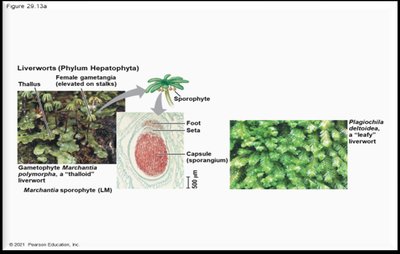
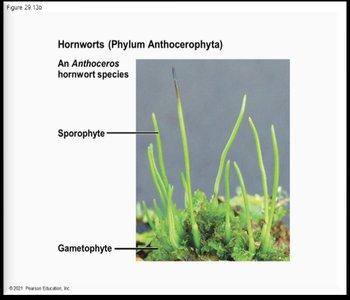
Liverworts have gametophytes resembling miniature trees and tiny sporophytes. Hornworts lack a seta and have only a sporangium, which releases spores upon maturation. Both interact with soil bacteria to maintain nitrogen-rich soils.
Seedless Vascular Plants: Ferns
Ferns and Vascular Tissue
Ferns are seedless vascular plants with vasculature that provides strength and allows them to grow taller than bryophytes. They require moist environments for reproduction due to flagellated sperm.
Sporophyte Dominance: Sporophyte is larger and longer-lived than gametophyte.
Vascular Tissues: Xylem (water/nutrient transport) and phloem (sugar/amino acid transport).
Roots and Leaves: Well-developed, including sporophylls bearing sporangia.
Recap and Evolution of Plant Organs
Plant Organs
Vascular plants have three main organs: roots, stems, and leaves. Roots absorb water and nutrients and anchor the plant. Leaves are photosynthetic organs, classified as microphylls (single vascular strand) or megaphylls (branched vascular system).
Microphyll: Spine-shaped, single vascular strand (lycophytes).
Megaphyll: Larger, branched vascular system (most vascular plants).
Sporophylls: Modified leaves bearing sporangia.
Spore Production
Homosporous vs. Heterosporous
Seedless vascular plants like ferns are homosporous, producing one type of spore. Vascular plants can be heterosporous, producing megaspores (female gametophytes) and microspores (male gametophytes).
Type | Spore | Gametophyte |
|---|---|---|
Homosporous | Single type | Produces both sperm and egg |
Heterosporous | Megaspore, Microspore | Female, Male |
Overview and Transition to Seed Plants
The next chapter will focus on seed plants, including gymnosperms and angiosperms, which represent further evolutionary advancements in plant reproduction and diversity.
Additional info: Academic context was added to clarify evolutionary relationships, cell structure, and ecological roles. All images included are directly relevant to the adjacent explanations.
