 Back
Plant Diversity I: How Plants Colonized Land
Study Guide - Smart Notes
 Tailored notes based on your materials, expanded with key definitions, examples, and context.
Plant Diversity I: How Plants Colonized Land
Introduction to Plant Diversity
Plants are a diverse group of multicellular, eukaryotic, photosynthetic organisms that play a crucial role in terrestrial ecosystems. Their evolution from green algae and subsequent adaptation to land environments have shaped the biosphere and provided the foundation for terrestrial life.
Over 325,000 known plant species exist today, most of which inhabit terrestrial environments.
Plants supply oxygen, serve as food sources, and provide habitat for many other organisms.
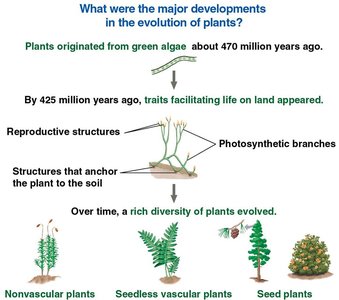
The closest relatives of land plants are charophytes, a group of green algae.
Key Traits Shared by Plants and Charophytes
Both are multicellular, eukaryotic, photosynthetic autotrophs.
Some have cellulose in their cell walls and chloroplasts containing chlorophyll a & b.
Adaptations Enabling the Move to Land
Benefits and Challenges of Terrestrial Life
The colonization of land by plants provided several advantages but also introduced new challenges.
Benefits: Unfiltered sunlight, abundant CO2, and nutrient-rich soil.
Challenges: Scarcity of water and lack of structural support against gravity.
Plants diversified as they evolved adaptations to overcome these challenges.
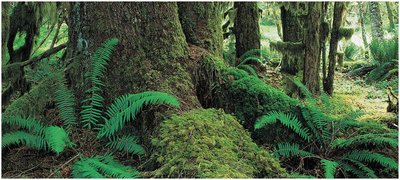
Derived Traits of Land Plants
1. Alternation of Generations
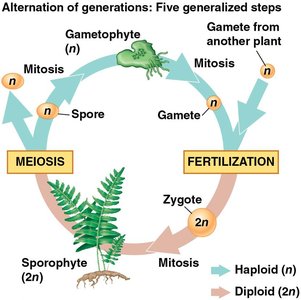
Land plants exhibit a life cycle known as alternation of generations, which alternates between multicellular haploid and diploid stages.
Gametophyte (n): Multicellular, produces haploid gametes by mitosis.
Sporophyte (2n): Multicellular, produces haploid spores by meiosis.
Fertilization produces a diploid zygote, which develops into a sporophyte; spores develop into gametophytes.
2. Multicellular, Dependent Embryos
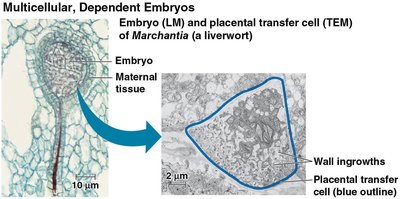
The diploid embryo is retained and protected within the tissue of the female gametophyte. Nutrients are transferred from parent to embryo through placental transfer cells. This trait is why plants are called embryophytes.
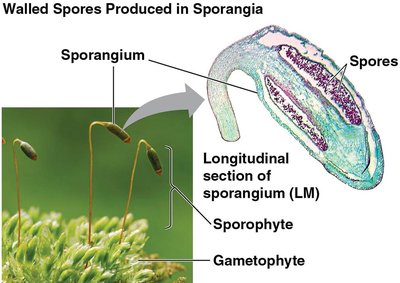
3. Walled Spores Produced in Sporangia
Sporophytes produce spores in multicellular organs called sporangia. The spore walls contain sporopollenin, making them resistant to harsh environments.
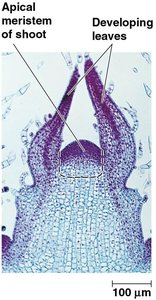
4. Apical Meristems
Plants have localized regions of cell division at the tips of roots and shoots called apical meristems. These regions enable the elongation of roots and shoots, facilitating resource acquisition.
5. Additional Derived Traits
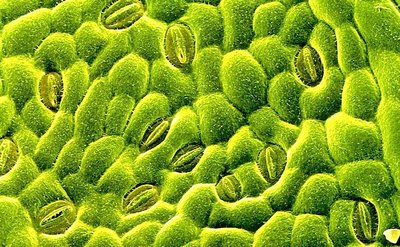
Cuticle: A waxy covering that reduces water loss.
Stomata: Pores that facilitate gas exchange.
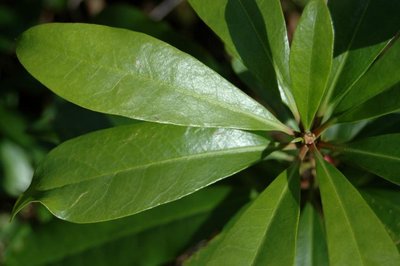
Early plants lacked true roots and leaves; symbiotic associations with fungi (mycorrhizae) helped with nutrient absorption.
The Origin and Diversification of Plants
Fossil Evidence and Major Groups
Plant spores first appear in the fossil record around 470 million years ago. Fossilized spores and sporophyte tissue provide evidence for the early evolution and diversification of plants.
Major Plant Groups
Nonvascular plants (Bryophytes): Lack extensive transport systems (e.g., mosses, liverworts, hornworts).
Seedless vascular plants: Have vascular tissue but do not produce seeds (e.g., ferns, club mosses).
Seed plants: Produce seeds; divided into gymnosperms (naked seeds) and angiosperms (seeds within flowers).
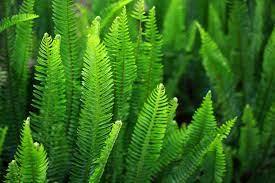
Bryophytes: Nonvascular Plants
Characteristics and Life Cycle
Bryophytes are small, herbaceous plants that include liverworts, mosses, and hornworts. They are characterized by a dominant gametophyte generation and a dependent sporophyte.
Gametophyte: Dominant, larger, and longer-living than the sporophyte.
Sporophyte: Usually present only part of the life cycle, attached to and dependent on the gametophyte.
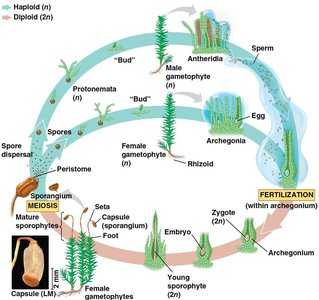
Bryophyte Life Cycle Details
Spores germinate into protonema, which develops into gametophytes.
Gametophytes produce archegonia (female, produce eggs) and antheridia (male, produce sperm).
Fertilization requires water for sperm to swim to the egg.
Sporophyte consists of foot, seta (stalk), and sporangium (capsule).
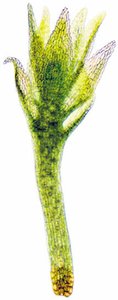
Bryophyte Diversity
Liverworts (Phylum Hepatophyta): Liver-shaped gametophytes, some with elevated gametangia.
Mosses (Phylum Bryophyta): Small gametophytes, visible sporophytes, common in moist environments.
Hornworts (Phylum Anthocerophyta): Long, horn-shaped sporophytes, form symbioses with nitrogen-fixing bacteria.
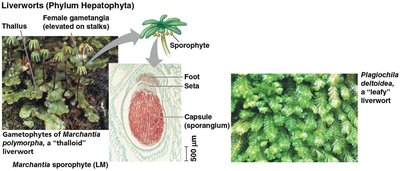
Seedless Vascular Plants
Evolution and Traits
Vascular tissue allowed plants to grow taller and colonize new environments. Seedless vascular plants are still restricted to moist habitats for reproduction.
Dominant sporophyte generation
Vascular tissues: Xylem (water/mineral transport, lignified) and phloem (organic material transport)
Well-developed roots and leaves
Sporophylls: Spore-bearing leaves
Life Cycle of Seedless Vascular Plants
Sporophytes are larger and more complex than gametophytes.
Ferns: Familiar leafy parts are sporophytes; gametophytes are small and grow on or below the soil surface.
Vascular Plant Organs and Tissues
Roots: Anchor plants and absorb water/nutrients.
Leaves: Increase surface area for photosynthesis; microphylls (single vein) and megaphylls (branched veins).
Sporophylls and Spore Types
Sporophylls: Modified leaves with sporangia (e.g., sori in ferns, strobili in lycophytes/gymnosperms).
Homosporous: One type of spore, usually bisexual gametophytes.
Heterosporous: Two types of spores—megaspores (female gametophytes) and microspores (male gametophytes).
Major Groups of Seedless Vascular Plants
Lycophytes (Phylum Lycophyta): Club mosses, spikemosses, quillworts; some are homosporous, others heterosporous.
Monilophytes (Phylum Monilophyta): Ferns (large fronds), horsetails (jointed stems), whisk ferns (branching stems, no roots).
Summary Table: Major Plant Groups
Group | Key Features | Examples |
|---|---|---|
Nonvascular plants (Bryophytes) | No vascular tissue, gametophyte dominant | Mosses, liverworts, hornworts |
Seedless vascular plants | Vascular tissue, sporophyte dominant, no seeds | Ferns, club mosses, horsetails |
Gymnosperms | Vascular tissue, seeds not enclosed in chambers | Conifers, cycads, ginkgo |
Angiosperms | Vascular tissue, seeds enclosed in flowers/fruits | Flowering plants |
Additional info:
Some academic context and definitions were expanded for clarity and completeness.
Images were included only when directly relevant to the adjacent explanation.
